Learning how to be a good cyber citizen
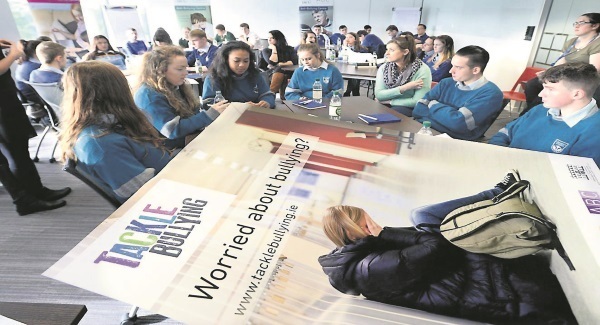
Teachers, student ambassadors, youth groups and the National Anti-Bullying Research and Resource Centre came together to discuss the importance of combating cyberbullying.
Intel’s digital safety ambassador programme has been running since 2012 and involves educating transition-year students across the city and county on the importance of being smart online.
The students progress to being ambassadors for online safety, and present their hints and tips to fifth and sixth-class primary school students.

The programme incorporates both the formal and informal education sector including youth groups like Foróige and Youth Work Ireland as well as the Transition Year Teacher Professional Network.
It has three main pillars: cyber security, cyber safety and cyber ethics.
Organiser of the project Irene Guedan, of Intel Security — which has its European, Middle East and Africa headquarters in Mahon in Cork — said involving students at both primary and secondary school level was the way forward.
“Why this programme is so important is because it’s their programme: it’s not ours.
“We want the ambassadors to take this programme to the next level and to really continue it and have the sustainability factor,” she said.
“We feel that if it’s embedded in the curriculum in schools and in the youth clubs that people go to, then it’s helping to sow the seeds and spread the word on digital safety.”
This year, Intel Security has teamed up with the National Anti-Bullying Research and Resource Centre (ABC) in Dublin City University (DCU) to further develop the cyber ethics element of the digital safety programme.
Helena Murphy, PhD student and researcher at the ABC, commended Intel on its ambassador programme.

Along with her colleague, psychologist Liam Challenor, the pair outlined to the students how people should behave online, how their behaviour may impact others and the importance of being a good cyber citizen.
“The fact that the kids are here and they’re so committed shows how much they want to be here and how much they want to learn more — and it just goes to show we’re on the right track with combating bullying,” said Ms Murphy.
“At the end of the day, bullying is bullying and cyberbullying is the same as traditional bullying.
“Once children are aware when somebody else was being victimised and are armed with ways to stop it — like intervening, standing up and telling somebody — that’s our aim,” she added.
The ‘year head’ at Gaelcholáiste Mhuire AG, North Monastery, Cork Seamus Ó Muimhneacháin said the digital safety project has been one of the most educational programmes he has ever been involved in.
“The internet is going to be an incredible part of young people’s lives and we can’t steer them away from it.
“We must embrace it and our experience in this programme, educating students about how to be smart online, has been fantastic,” he said.
Mr Ó Muimhneacháin said the programme has “really flowed” and has “completely changed the culture” of the school.
The fact the programme was student-driven was one of the main benefits of it, he said.

“We have gone to all the schools in the local area and the fact that you have students talking to students is incredibly powerful.
“The students go out to the primary schools to speak to the younger kids and we find that when our students come back from the primary schools they have learned even more and vice versa.”
He said the rise in social media was having a huge effect on schools and students and was one of the most consistent issues raised.
“Social media has been a huge problem and it continues to be a huge problem but it’s their world and I do think that this generation are prime candidates to accelerate learning, accelerate awareness and I can’t wait to see what will happen next,” he said.
While he regards it as a predominately positive tool, Mr Ó Muimhneacháin said social media can have negative consequences and programmes like Intel’s digital safety are vital in combating this.