Emergency case survival rates are worst in South
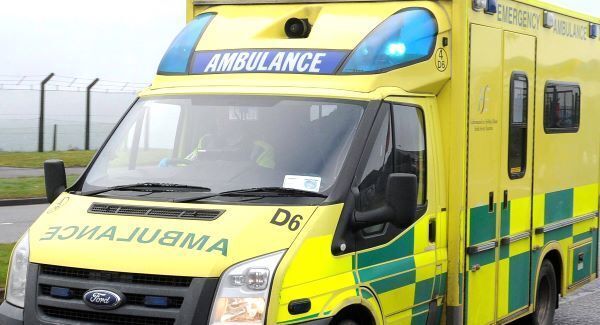
Patient survival rates for emergency cases such as heart attack and stroke have improved across the country, according to a study — but are still worst in the South.
The first phase of preliminary data from the Siren Study compares patient admission and outcome figures for two periods, 2000-2006, and 2007 to the end of 2012.
By comparing the total number of emergency deaths per 10,000 of the population, it has found survival rates improved in every region of the country.
But while the survival rate in Dublin was still the best in the country, the survival rate in the South — Cork and Kerry — was still the worst.
The data, which those behind the study have stressed is preliminary, indicates the Mid-West has the next highest number of emergency deaths per 10,000 of population, followed by the West/North-West region, and then the Midlands.
Those behind the study say up to 2012, there were better survival statistics in the East of the country versus the South and West — and that this regional pattern has not changed from 2000-06 to 2007-12.
The Study of the Impact of Reconfiguration on Emergency and Urgent Care Networks (Siren) project involves University College Cork (UCC), Trinity College Dublin (TCD), the HSE, the Royal College of Surgeons in Ireland (RCSI) and the Health Research Board.
Some of its initial findings will be outlined today at a conference in Cork by Siren principal investigator, Prof John Browne of the Department of Epidemiology and Public Health at UCC.
He said many of the changes implemented in urgent and emergency care came after 2007, such as changes to the emergency departments in smaller hospitals such as Mallow, Ennis and Roscommon, and the reconfiguration of ambulance services.
In comparing the two time periods, it uses the patient numerator — the deaths from conditions, coded by patient’s place of residence by the Central Statistics Office — and the denominator (the numerator and all live discharges from public hospitals for the same conditions after emergency admission, coded by patient’s place of residence. That information is provided by Hipe (Hospital In-Patient Enquiry).
The emergency cases reviewed included heart attack, stroke, and abdominal aortic aneurysm.
Prof Browne said the survival rate for these cases was now “significantly better” but added: “The interesting thing is that regional inequalities in your chances of survival seem to persist.
“We need to acknowledge the possibility that this problem exists and policy should be geared towards dealing with that problem if so.”
However, he said the data did not indicate exactly why there were variances in the survival rate and one aspect that needed to be reviewed was to what extent it was a function of distance from an emergency department.
He stressed the aim should be to get the rest of the country to achieve a similar survival rate as that in eastern regions, rather than redistributing resources.
But he said the trend of improving survival rates generally was in common with many other countries and likely a product of better training and technology.
“We need to continue down the track of trying to improve individual care for patients,” he said. “What has slipped off the radar is the regional focus: what can we do to try and address this regional problem?”
But he added: “If someone from Bantry or Mallow or Roscommon are saying ‘all these changes we have made have caused the problem’ - that may not be true. The same gap existed before.”
Prof Browne will speak at the Irish Association of Emergency Medicine academic conference in Cork’s County Hall today.