Pitchside blood test to reveal concussed players
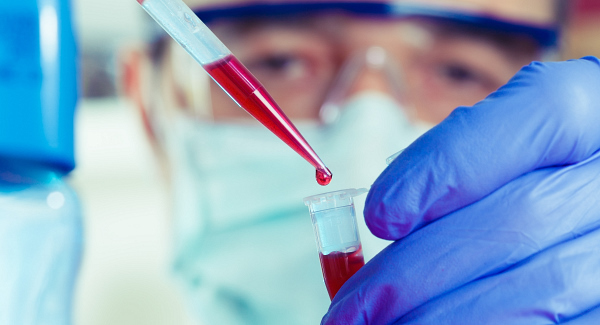
They hope that within a few years they could have a simple finger-prick test in a device similar to those used by many diabetes patients to check their blood sugar levels — with results available within minutes.
The research, based at Trinity College Dublin and backed by Leinster Rugby, is part of a major initiative aimed at producing a suite of tests that can definitely establish whether a player is concussed, to what degree, and how soon it is safe to let them back into the game.
Fiona Wilson, assistant professor in physiotherapy at Trinity, who is leading the blood-test project, said it could greatly increase accuracy in identifying concussion and improve management of the condition — not just in rugby but in all impact sports.
“Ironically, the easiest brain injury to handle pitch side is the serious one because if someone is knocked out, you know you’re getting them to hospital,” she said.
“But if a player walks off after a bang and passes the cognitive tests — the questions and answers test — or if they haven’t banged their head but have taken a knock to the body that sent shockwaves through their head, it’s much harder to tell what’s going on.
“There is a misunderstanding that an MRI will tell you everything but concussion is a mild trauma so often it won’t show on a scan.
“And when you’re in the middle of a game, decisions have to be taken very quickly. As a physiotherapist you have clinical intuition but to have objective, scientific, hospital-standard tests on the pitch or in the dressing room would be extremely helpful.”
Concussion has become a major talking point in impact sports, with evidence mounting that the condition is widely under-diagnosed despite its potentially devastating implications.
Dr Wilson is collaborating with the Steno Diabetes Centre in Denmark, a world leader in identifying blood biomarkers, which has funding from the NFL in the US for the project.
She supplies the centre with blood samples taken from Leinster Rugby players before and after matches, as well as samples from elite rowers who enjoy an impact-free sport so that normal readings can be established.
“Ultimately, we would see the blood test becoming a standard post-match test for all players, regardless of whether they’ve been in an obvious collision,” said Dr Wilson.
In tandem with the blood biomarker research, Ciaran Simms from the Trinity Centre for Bioengineering is leading a project to produce analytical tools that can view a collision or fall and calculate from the movement of the head the force of impact and likelihood of concussion.
Prof Simms is working with data from brain-injury patients at the renowned Addenbrooke Hospital in the UK, as well as video of player collisions, to build better understanding of how much force and damage a knock can cause at any given speed, force, location, or direction.
“If you can understand a player’s movement patterns in a specific collision incident, you have a very good starting point for developing counter measures,” he said.
“Different playing strategies could be developed to avoid getting into particular movement patterns that are more likely to cause concussion-type injuries.”
The research is expected to continue over the next four years.