‘You must hope you make the right decision’ in surgery

An expert in reproductive medicine has described the judgement call a doctor under review faced when conducting the surgery in question. One must “hope you make the right decision”, the fitness-to-practise inquiry at the Medical Council heard yesterday.

‘You must hope you make the right decision’ in surgery

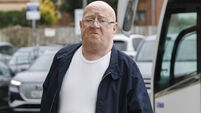
Consultant obstetrician and gynaecologist Declan Egan, of Dangan, Co Galway, is facing one allegation of poor professional performance in relation to the procedure he carried out on Lorna McKeogh on June 2, 2010, at University College Hospital Galway.

Specifically it is alleged that he clipped her right and her left fallopian tubes in circumstances where this was not consistent with the consent form she signed on the day of her surgery.

The inquiry previously heard that Ms McKeogh was referred for a laparoscopy after she had endured four miscarriages.

It had been discovered that she had a hydrosalpinx (a fallopian tube blocked by fluid) of her right side.

As this was toxic to an embryo, Ms McKeogh understood the tube may have to be clipped to allow her to bring an embryo to full term.

She was referred to Dr Egan because her own obstetrician could not carry out the procedure because of her hospital’s Catholic ethos.

During the surgery on June 2, 2010, Dr Egan found what he believed to be a hydrosalpinx on the left side, in addition to the right-hand side. He decided to ‘clip’ the left tube as well as the one on the right-hand side.

Previously Dr Egan said it was his understanding that Ms McKeogh had given express consent for him to clip her right fallopian tube. The consent form also mentioned further or alternative measures or treatments, should they be found necessary.

Ms McKeogh, however, claims that she did not consent to having her left tube clipped.

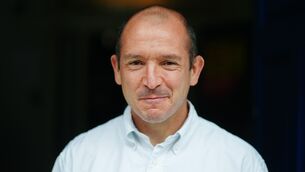
Dr Mary Wingfield, an expert in reproductive medicine who is based at the National Maternity Hospital, yesterday said that throughout her career, she has seen the number of hydrosalpinges increase due to the rise of infections such as chlamydia.

Dr Wingfield said it was not uncommon to come across situations that one does not expect — in the case of Ms McKeogh, the hydrosalpinx on the left side — while performing a laparoscopy. In these difficult situations, “you have to take a judgement taking a whole picture into account… and hope you make the right decision”.

Under cross-examination from JP McDowell, who is taking the case against Dr Egan on behalf of the chief executive of the Medical Council, Dr Wingfield said: “These situations arrive despite everyone’s best efforts and you have to make a judgement call… They’re not easy judgements to make.”

Asked whether the clause in the consent form allowed for further or alternative measures or treatments, Dr Wingfield said: “I think it’s open to interpretation.”

Some doctors would believe that the clause does not cover them, and others would believe that it does, she said.

She said that although the climate around consent is changing, in 2010, when Dr Egan was performing the surgery, “it was in keeping with what other doctors would have done”.

However, she added that “patients need to be informed and need to be involved in their care”.

A decision in the case is expected next month.

DISCOVER MORE CONTENT LIKE THIS

More in this section

Lunchtime News

Newsletter

Keep up with stories of the day with our lunchtime news wrap and important breaking news alerts.

Cookie Policy Privacy Policy Brand Safety FAQ Help Contact Us Terms and Conditions

© Examiner Echo Group Limited