Varadkar rejects claims of lack of action on obesity
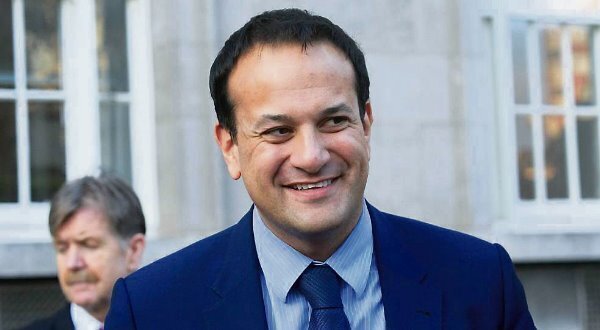
Health Minister Leo Varadkar has hit back at suggestions the Government is not doing enough to combat obesity, after research from the World Health Organisation predicted that Ireland would be the most obese country in Europe by 2030.
The WHO said 89% of men and 85% of women in Ireland will be classed as obese or overweight within the next 15 years.

Mr Varadkar said the figures should be taken as projections, not as fact, and are based on figures that are “quite old”.
“Research and numbers that we do have indicate childhood obesity has probably plateaued and we’ll have figures on adult obesity later in the year when the Healthy Ireland survey is published, so I think it’s important to stick to the facts and not sensationalise what is a serious issue,” he said.
“But it’s absolutely the case that obesity is a major personal and public-health problem and we need, in the next couple of years and in the future, to treat it as seriously as we treated tobacco in the past.”
Mr Varadkar outlined a number of initiatives to combat obesity that are already under way.
“The National Physical Activity Plan is at draft stage and will be published in the next few months; the Cabinet has agreed that we’re going to legislate for calorie posting on menus; and as well as that the special action group on obesity will be advising us on our new obesity policy which will be published by the end of the year.”
He stopped short of advocating a tax on junk food. “I think the jury’s still out on the sugar tax; we need to see if it’s worked. We’ll have some results from Mexico, where they’ve introduced it, quite soon. But if it doesn’t work then it’s just another tax.”
Medical experts have criticised this standpoint and say the Government must do more if it is to avoid the predictions made by the WHO.
Francis Finucane, a consultant endocrinologist at University Hospital Galway, said on RTÉ radio that the Government “needs to take action to legislate”.
“And it’s going to be the legislators in this country who change the obesity epidemic.
“We could use the money we generate from a health-related food tax to fund things like hospital-based services for people who are worst affected by this problem. The fact of the matter is we haven’t done enough to develop those services nationally.”
Prof Donal O’Shea, head of weight management at St Columcille’s and St Vincent’s Hospitals, said obesity was driving a diabetes epidemic, a cancer epidemic, and a heart-disease epidemic that “the health service is currently not coping with”.
Meanwhile, the Irish Cancer Society is funding new research to decrease the risk of cancer by changing dietary habits. According to the WHO, there is a strong link between obesity and many types of cancer.