O’Hara ‘began having fantasies at the age of 12’
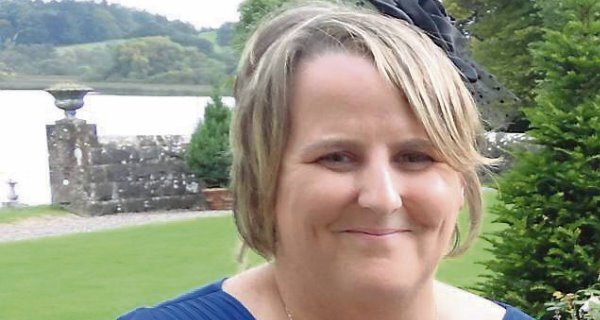
The Graham Dwyer trial has heard that Elaine O’Hara began having persistent, obsessional thoughts and fantasies at the age of 12. As an adult, she had allowed someone to inflict harm on her, but had asked this man to stop some years before Mr Dwyer, 42, is alleged to have murdered her.
The jury heard the evidence from the psychiatrist who treated her from 2007 until the day she went missing in August 2012 when, he said, she gave no indication of suicidality.
Mr Dwyer is charged with murdering the 36-year-old childcare worker at Killakee, Rathfarnham, on August 22, 2012 — hours after she was discharged from a mental health hospital.
The Cork-born father-of- three of Kerrymount Close, Foxrock, Dublin has pleaded not guilty.
Dr Matt Murphy of St Edmundsbury Hospital in Lucan testified yesterday on the 16th day of Mr Dwyer’s trial at the Central Criminal Court. He said he became Ms O’Hara’s psychiatrist in late 2007 following the death of her previous psychiatrist, Professor Anthony Clare. She had first presented to Prof Clare in August 1992 with persistent, obsessional thoughts and fantasies.
The court heard she had been getting these thoughts from the age of the 12 and also had a play in her head.
She was concerned about being restrained and imprisoned and she acted out those thoughts herself to some degree. She saw Prof Clare and a number of other therapists and had cognitive behavioural therapy in more recent years. Over the years, she was prescribed a combination of anti-depressants and tranquillisers.
By her late teens, there had been a little bit of concern about her diagnosis and the gradual emergence of a possible psychotic illness.
However, Dr Murphy said she had never been diagnosed with psychosis and the tranquillisers were used because of her agitation.
“I think the diagnosis we’d all have concurred with would have been borderline personality disorder,” he said, explaining this illness involved extremely low self-esteem, feeling worthless and valueless. He said self-harm could also be a feature and that patients with the disorder could get extremely depressed. This was the case with Ms O’Hara.
However, he said there were also indications of harm being inflicted by others in a context where she participated. He described this as masochistic behaviour, which was when a person had pain inflicted on him or herself. He said that she had spoken about this in an indirect and evasive way and that the first mention of it had been to Prof Clare in late 2006.
She had reported from April 2008 that she had told the man in question that she wanted to desist from the practice. By February 2009 she reported that it had stopped but that she felt like contacting the man again.
In July 2011, she reported that she had been pregnant but that she had lost the baby at four or five weeks.
Dr Murphy said that by 2012 she was on a reduced dose of medication and was receiving cognitive behavioural therapy.
“I would have thought she was doing pretty well,” he said. “Particularly in the last year of her life, there was a significant improvement.”
He said he could see distinct progress in that year.
“There was a sense that she was maturing and able to manage her moods and feelings in a more capable way.”
However, he said she phoned the hospital in July 2012 to say she felt depressed and was contemplating suicide. He made the decision to admit her. He said he didn’t want her to feel rejected by the hospital as she was prone to feelings of rejection.
The doctor said she was pretty calm as her stay progressed. Over her four weeks there, she was in much better mood, he said, “probably as good as I have ever seen her”. He said that she was planning the immediate future and had plans to get back to work and on with her life. Asked if there was any indication of suicidality at her discharge on August 22, he replied: “No, none”.
Under cross examination by the defence, Dr Murphy agreed her 14 admissions to the hospital over the years were more than the average number.
He agreed that, following her disappearance, he told gardaí that her final admission was “something of an emergency in that Elaine had suicidal thoughts”.
When asked about the triggers for self-harm, Ms O’Hara had said she just wanted to mark her mental pain “by it becoming physically real”.
“Some people get relief from mental anguish by replacing it with physical pain,” explained the doctor.
He was asked would the risk to patients be higher on discharge. “The immediate aftermath is seen as a high-risk period,” he confirmed.
However, he said what was impressive in Ms O’Hara’s case was that she had immediate plans in place to do certain things. He said he thought the immediate risk was low. “It was the commonly held view in the hospital that she was making ground,” he said.