A&Es ‘are not preprared’ for ebola
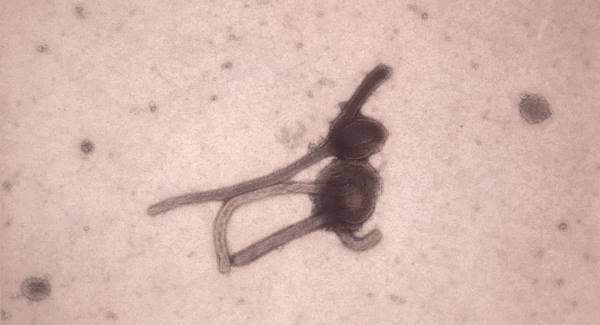
The IAEM says it is not reassured by Department of Health or HSE claims of “full preparedness”.
It wants the chief medical officer at the Department of Health, Dr Tony Holohan, and the HSE’s acting national director of emergency planning, Gavin Maguire, to urgently visit EDs and see the “intolerable levels” of overcrowding.
The health officials could then decide whether EDs and preparations made to date were compatible with ebola virus disease assessment and treatment protocols issued by the HSE and Health Protection and Surveillance Centre.
“In our view, they are not,” the IAEM states.
As well as the continued crowding of EDs with admitted inpatients on trolleys, the IAEM has serious safety concerns about insufficient isolation facilities and the HSE’s dependence on locum staff.
It points out that hospitals serving the country’s major airports — Beaumont Hospital in Dublin, University Hospital Limerick and Cork University Hospital — were most at risk with particularly high rates of crowding.
It says “a daily reality” is that ED crowding is resulting in more deaths and greater morbidity right now than the risk ebola presents. “Ebola will simply add to this reality,” it warns.
The IAEM suggests the HSE and all hospitals should immediately identify areas to receive and treat patients suspected of having ebola away from crowded EDs.
It also wants a suitable pathway for patients referred by GPs, public health and the ambulance services and the introduction of mandatory training for frontline staff in the use of protective equipment and other infection control measures.
Mark Doyle, president of the IAEM, said they were worried about a “blanket description” in some of the guidance from the HSE that suspected ebola cases should, almost automatically, go to the EDs.
“Some departments are very small and they are very overcrowded. They won’t have the space to deal with their patients the way they are supposed to be dealt with,” he said.
Mr Doyle, a consultant in emergency medicine at Waterford Regional Hospital, said: “In our hospital we have identified another area outside the ED where we are going to, as far as possible, direct patients as early as possible in the process to assess them. Every hospital should be able to identify some place in their structure to fulfil that role.”
CONNECT WITH US TODAY



Be the first to know the latest news and updates