Albert Reynolds: Host of dignitaries to attend state funeral
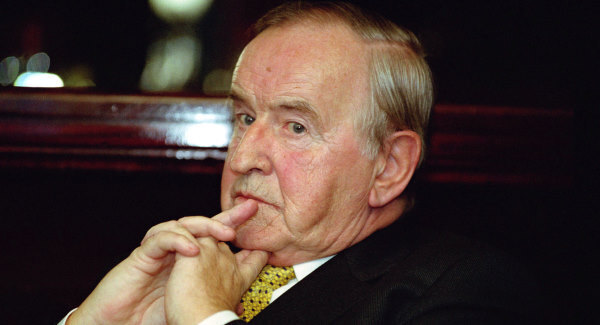
A string of dignitaries, including politicians, former presidents and business figures, are expected to attend the state funeral of former taoiseach Albert Reynolds, which will be broadcast on television.

Albert Reynolds: Host of dignitaries to attend state funeral

Former British prime minister John Major will be among the mourners, while a number of former taoisigh will also attend. Members of the public will today get a chance to pay their respects to Mr Reynolds, whose remains will lie in repose in Dublin’s Mansion House ahead of the state funeral on Monday.

A series of books of condolence has been opened and tribute messages can be left at Fianna Fáil’s headquarters; the GPO; Government buildings and Dublin City Hall. Books have also been opened in departments where Mr Reynolds was a minister, including in finance, transport and communications.

Mr Reynolds’ remains lie in repose at the Mansion House today between 1pm and 6pm, where the public can file past the coffin sign a book of condolence. Traffic restrictions are expected in the area.

His remains will then be received this evening at 7.30pm at the Sacred Heart Church, Donnybrook, Dublin 4, for a service.

The funeral Mass will be held there on Monday at noon. President Michael D Higgins and Taoiseach Enda Kenny will attend, as will former British prime minister Mr Major and the North’s secretary of state Theresa Villiers.

Mr Major signed the 1993 Downing Street Declaration with Mr Reynolds, that paved the way for the Good Friday Agreement and peace in the North.

Fr Brian D’Arcy will be chief celebrant at the ceremony. Seating will be limited in the Dublin church.

RTÉ confirmed it will broadcast live coverage on television, radio and online.

Mr Reynolds will then be buried at Shanganagh Cemetery, Shankill, Dublin.

The cortege is expected to arrive at the cemetery between 2pm and 2.30pm.

The businessman, showband promoter and politician has been remembered as a courageous peacemaker.

Mr Reynolds, 81, who had been suffering from Alzheimer’s disease, is survived by his wife Kathleen, two sons and five daughters.

Born in November 1932 in Rooskey, Co Roscommon, he was elected to the Dáil in 1977 and went on to become taoiseach in February 1992.

Former US president Bill Clinton said Mr Reynolds had worked hard and risked much to advance the peace process.

The courage to do what was in the public interest

By Máire Geoghegan-Quinn

TIME was when a roll of the eyes and a reference to the man singing “put your sweet lips a little closer to the phone” on TV was enough to let the critics of Albert Reynolds believe they had put him in his place and that he would never get out of that place. He was just one of the “country and western brigade”.

The reality is that he was certainly into country music, and unashamedly so. He was also unselfconscious about singing an old song if invited. But to dismiss him on that basis was to grievously underestimate a clever and driven high achiever.

His background experience running dance halls made him rich, not because he came along at the right time, but because he was a good judge of trends and people. You could be trusted or you weren’t trustworthy. If you could be trusted, he would leave you to do your job, whether that was to take care of tens of thousands of pounds handed over at the door of a ballroom, or to run a complex government portfolio.

He didn’t second-guess people and he didn’t waste time. His famous “give it to me on one page” instruction had been issued by other leaders, including Ike Eisenhower, as a way to prevent enmeshing the top man in a morass of pointless and irrelevant detail.

The acronym MBO (management by objectives) could be amended to fit his leadership style. It was PBSO (politics by stated objectives. From the moment he took over as taoiseach, he made it clear that peace in Northern Ireland was his prime objective, a decision surprising to those who had expected him, given his business background and earlier success as Minister for Posts and Telegraphs, to concentrate on economic progress.

Having identified peace as a goal, he went after it with a dispassionate determination born of a conviction that the guns would not be silenced by rhetoric or passion but by relentless negotiation and focus. He was right.

Albert Reynolds owned — in spades — the archetypal political trait. He liked people. He would stand at a party — when he wasn’t dancing — clutching a soft drink, and listen to one friend, acquaintance or stranger after another, the head tilted to one side, half-smiling, genuinely interested in what they had to say to him.

He had a genius for finding commonality with a huge variety of individuals, notably building a strong, honest and deeply affectionate relationship with John Major, who spoke of Albert’s marvellous capacity for ‘red in tooth and claw’ disagreement, followed by good-humoured onward progress.

In Northern Ireland, people are alive today who would have died were it not for his efforts. In the Republic, a generation of gay people have grown up in a nation where they are no longer criminalised, thanks to a taoiseach with the courage to do what was in the public interest, rather than what fitted with his traditional and deeply held Catholicism.

An honourable leader who put peace before politics

By David Andrews

I THINK one of the most memorable phrases from Albert Reynolds was at an ard fheis where he asked “who was afraid of peace?”. His legacy without any doubt will be that of Albert the peacemaker.

The younger generation wouldn’t remember Albert Reynolds but history will remember his legacy. The legacy of a man who was prepared to take risks; a man of decency and courage, a man who put his hand out to the unionists in the North, the nationalists and republicans in that part of the country.

At the time it wasn’t a popular process and Albert and others who pursued peace, who were seen speaking to the IRA, were seen as being unpatriotic.

But Albert continued to speak to the IRA and others and finally the peace process was put into being, ending up with the Good Friday Agreement.

Of course the apprentice to Albert and the other main instigator of the Good Friday Agreement was Bertie Ahern. He cannot be left out of the process or equation.

The other personal element in Albert’s life was Kathleen, his dear wife, and his family were so hugely supportive of him in his personal and his political life and that must not be forgotten. My heart goes out to them at this time.

It was Sean Duignan, as a broadcaster, who brought Sean Doherty, the former justice minister, on television and exposed the phone-tapping which brought about the downfall of Charles Haughey, leading to the leadership of Albert Reynolds. It was a brief leadership but it was a very historic and honourable leadership. He took risks for peace; he was a man who made peace a fundamental policy.

The other matter is the fact that he put peace before politics and knew that it should come first.

Some politicians might have taken the other view, that politics should come first and peace might follow.

Albert was absolutely right and this was the nature of his character.

He was a man who knew how to negotiate; he was a man who was well liked.

Another ingredient in the process was the fact that he was so close to John Major, the former British prime minister. He has spoken in glowing terms about his close relationship with Albert Reynolds. That was another ingredient leading to the Good Friday Agreement.

Altogether it was a sad day, hearing of the demise of a good and decent man.

Ireland at the same time owes him a legacy, a legacy that was brought about by an unusual person; a man for his time; a man whose name must now be writ large in the history of our country.

David Andrews is a former minister for foreign affairs, defence and marine under Albert Reynolds.

More in this section

Lunchtime News

Newsletter

Keep up with stories of the day with our lunchtime news wrap and important breaking news alerts.

Cookie Policy Privacy Policy Brand Safety FAQ Help Contact Us Terms and Conditions

© Examiner Echo Group Limited