Kenny ‘regret’ over medical cards
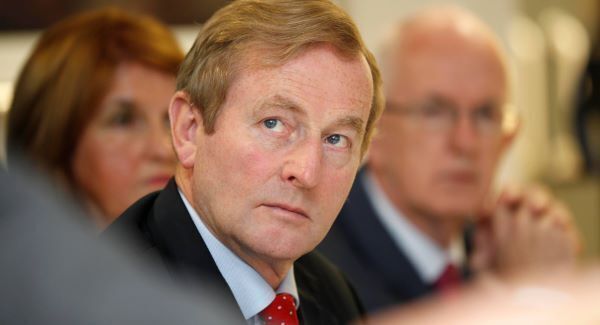
Days after the Government said 15,000 people would have their cards restored in the next three weeks, Enda Kenny said the system was centralised “to bring equality to it”. However, he said: “The computer doesn’t have nature.”
Mr Kenny, who consistently denied the problem over the past year — despite a number of cases being reported since October and raised regularly in the Dáil — said he regretted what happened. “I react with sadness that it got out of hand; it shouldn’t,” he said.
The acceleration of card losses throughout 2013, and a “probity” review announced in last October’s budget, resulted in a number of cases coming forward where people with motor neuron and other terminal diseases, and children with profound disabilities, lost the cards they said were crucial to accessing vital care.
The issue featured strongly in last month’s local and European elections where Fine Gael and, in particular Labour, suffered losses.
“In changing the system to have equality of assessment, it forgot that that assessing process left aside, or presented enormous strains for people, so I hope we can rectify that,” said Mr Kenny.
He was speaking in a wide-ranging interview with Gay Byrne on RTÉ’s The Meaning of Life, in which he also discussed personal issues, including his faith, meeting his wife Fionnuala, his move to Dublin at the age of 23, and his late mother.
Mr Kenny took credit for a role in changing the relationship between Church and State, but also said he believes Ireland is “very much” a Christian country.
He said he got “a bashing from some quarters in the Church” for the closure of the Irish Embassy in the Vatican but that he “never took it personally”.
He said: “I think the relationship now between Church and State in Ireland is actually healthier and stronger than ever before. And if I have done something in that regard, then I think that’s progress.
“Yes, some do give out to me; some look at you slightly differently. But by and large, people say ‘this is better’.”
The Taoiseach also expressed pride in his famous Dáil speech on the Cloyne report which he made shortly after coming into office. In it, he said the rape and torture of children had been “downplayed or managed” in order to uphold the primacy and power of the Vatican.
Reflecting on that speech, Mr Kenny said: “The sort of glorious Ireland that was often-times painted were [sic] not in fact the good old days at all.
“And in that sense, I’m happy in myself that because of speaking out, not just me speaking out, but because of the position that I actually hold in speaking out, [that] has made a difference in that the Church has moved.”
He defended his decision to impose the party whip in the Oireachtas vote on laws allowing abortion in limited circumstances, which resulted in the loss of five Fine Gael TDs.
While agreeing politicians who act on their conscience are needed in the Dáil, he said “under the party political system, when you sign on for membership, you sign on for certain rules and regulations”.
He said: “The party puts its resources behind certain candidates to get elected in the first place. Everybody understands when they join, why they are joining and what they are joining.”
Mr Kenny also indicated his intention to lead his party into the next general election, ruling himself out of running for the role of President of the European Commission. He had been mentioned as a possible compromise candidate in the context of Britain’s opposition to the job going to former Luxembourg premier, Jean-Claude Juncker.
“We have a process at European level. Next week, I expect that the EPP nominee Jean-Claude Juncker will be nominated and I expect he will be appointed president,” Mr Kenny said.
“I’ve a job to do here and have been privileged to that job as Taoiseach.”