Almost 25% of households are jobless
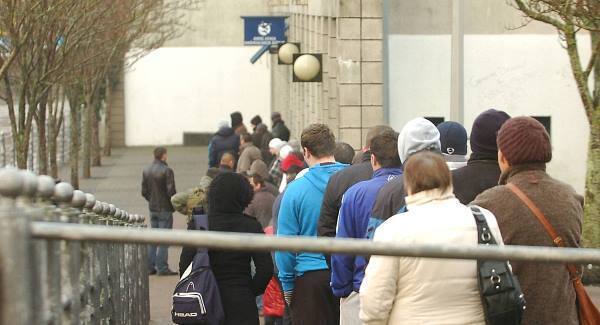
A report by the National Economic and Social Council (NESC) states, according to the latest figures, 23% of Irish households were “jobless” compared with an EU15 average of 11%. The next highest percentage after Ireland was 13% in Britain and Belgium.
Taoiseach Enda Kenny said the figure here was not acceptable: “56% of these jobless households are families with children. If this situation is not addressed it will perpetuate the cycle of joblessness, hopelessness and welfare dependency. The sharp increase in jobless households, from an already high level, will have lasting economic and social consequences for generations to come unless we have specific, targeted solutions.”

The NESC report, Ireland’s High Level of Jobless Households, found the risk of being in a jobless household was related to the employability of those in the household and the household structure.
“Thus, those who live in jobless households are more likely to have no educational qualifications, to have never worked or to be in the unskilled social class,” it said. “They are also more likely to be renting their accommodation, to be single or parenting alone, and to either have a disability or to live with someone with a disability.”
It also pointed to a number of issues raised in relation to high household joblessness including:
- A risk of poverty — they experience high levels of deprivation and economic stress, “with a risk of an intergenerational transmission of poverty”;
- Cost to the social welfare system — there are questions about the overall financial sustainability of the social welfare system if the high level of household joblessness is not addressed;
- Barriers and traps, whether real or perceived — NESC said the interactions between the social welfare system, the taxation system, and access to services and employment are complex and, depending on people’s circumstances, can facilitate, or in some case hinder, the transition from social welfare into employment;
- Understanding household decision-making — in making decisions about employment, individuals take into account the overall finances of the household as well as the needs of others in the household, especially children.
Mr Kenny said the problem of jobless households was a “complex one” and required an ambitious programme of reform. “One of the Government’s top priorities is to continue our plan to dismantle the passive welfare system that abandoned such large numbers of households to lifelong dependency on the State. This is essential if we are to break the cycle of poverty and unemployment associated with jobless households.”