PAC a-buzz with talk of sweetening guards to avoid sting in tail
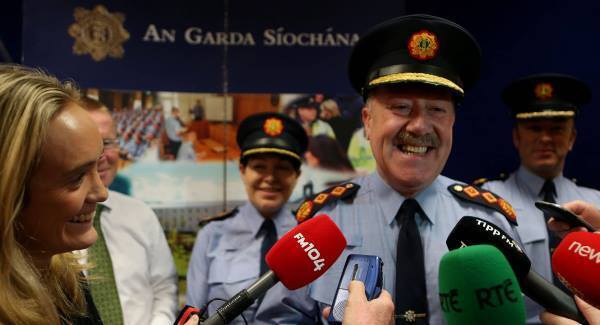
The commissioner had a sting or two to deliver himself. He described the actions of two whistleblowers within the force as “disgusting” and “irresponsible”.
But he didn’t have it all his own way. It was put to him that whistleblowers had come to the committee because they had lost all confidence in the system of reporting wrongdoing within the gardaí.
In a functioning democracy, the meat of yesterday’s hearing would be heard in another forum. The PAC is concerned with public money. It was drawn into this affair when two whistleblowers separately furnished the committee with files that point to abuses in terminating fixed-charge notices for driving offences, to which penalty points are attached.
Terminations of these notices result in a loss to the exchequer, and this loss was the ostensible focus of the committee.
Both men, one still a serving officer, claim to have gone to the PAC because they had been frustrated in attempts to highlight the issues through other avenues. They believe an internal Garda report, published last April, showed a sanitised version of widespread abuse.
That’s where the “bees annoying livestock” came into proceedings. That was one of a range of what appear like ludicrous reasons given for canceling notices.
Mr Callinan told the committee that that example was a case of a beekeeper who was genuinely rushing home to deal with bees attacking livestock. He did not, however, provide any supporting evidence to that claim, something which is supposed to be supplied when a notice is cancelled.
Labour’s Derek Nolan got to the heart of the penalty points matter when he put it to the commissioner that there is a perception that if you know a guard you can get penalty points cancelled. The witness rejected any such notion.
Yet that very perception persists among the general population, even through, since this issue blew up last year, the volume of cancellations has plummeted.
Beyond the money lost through cancellations, many committee members turned to how the whole affair has spilled out into the public domain.
The commissioner quite obviously believes that the men he described as “so-called whistleblowers” are troublemakers pursuing an agenda other than outing the truth. Callinan described their actions as “irresponsible”.
He went further: “There isn’t a whisper anywhere else from any other members about this practice, this corruption, anywhere else levelled against their fellow officers. Quite frankly I find it disgusting.”
Sinn Féin’s Mary Lou McDonald wasn’t having that. “We can’t allow the committee to be a platform to disparage those who did come forward,” she said.
So two conflicting scenarios emerged from the day’s hearings. The commissioner believes the issue concerns two disgruntled employees — one since retired — out to discredit the force. The alternative view is that the whistleblowers have only gone to the lengths they have because they found no satisfaction through the channels set out for blowing a whistle.
The first stop for a whistleblower in the gardaí is the confidential recipient, an office set up in 2008 in the wake of the Morris Report into Garda corruption in Donegal. The recipient’s office is designed to receive information and pass it back to the commissioner through the minister for justice.
According to the law, the commissioner then investigates the matter. Once investigated, the recipient returns to the whistleblower and relays the outcome. The whistleblower’s identity is supposed to remain anonymous in this process.
That sounds fine and dandy, in theory, but it presupposes that the commissioner wants a matter investigated.
What if, as it was put to Callinan yesterday, the matter is one of a systemic problem? The commissioner insisted he would, and has, thoroughly investigated anything brought to him through the process.
“I have no concerns about the confidential reporting mechanism,” he told the committee.
“It has been working well for a number of years.”
He refused to say how many officers have used the mechanism since it was set up. This is crucial information. If, for instance, it is hardly used at all, does that suggest that next to nobody in the 13,000-strong force ever sees wrongdoing that merits addressing? Or is it that few believe the process could result in change without affecting their careers?
The hearing was told that one of the whistleblowers went to the confidential recipient in Apr 2012 with a complaint about a senior officer canceling four notices. It sounds like a straightforward investigation, yet by the back end of the summer, there had been no result back from the commissioner.
By then, one of the whistleblowers was so frustrated that he contacted both the Taoiseach and the transport minister with his information. That was forwarded to the minister for justice and ultimately ended in the internal Garda investigation being set up.
The whistleblowers were unhappy with the outcome, a position somewhat vindicated by a subsequent review by the Comptroller and Auditor General. A result to the initial complaint was only furnished in Dec 2012, eight months later, after the whistleblowers had gone to politicians with their grievance.
Now the serving whistleblower wants to give evidence to the PAC. Callinan intimated yesterday that he would be very unhappy with such a development as it would be an affront to his authority. As of now, this man, a sergeant in the Midlands, is scheduled to give his evidence next Thursday, in public or private.
Transport Minister Leo Varadkar has met this man and described him as “credible”. PAC chairman John McGuinness has also met him and told Morning Ireland yesterday that he accepted the sergeant’s “bone fides”. Justice Minister Alan Shatter has positioned himself foursquare behind the commissioner.
There could yet be a sting in the tail of this affair.
CONNECT WITH US TODAY



Be the first to know the latest news and updates