2,500 turfcutters allowed back onto protected bogs after ban lifted
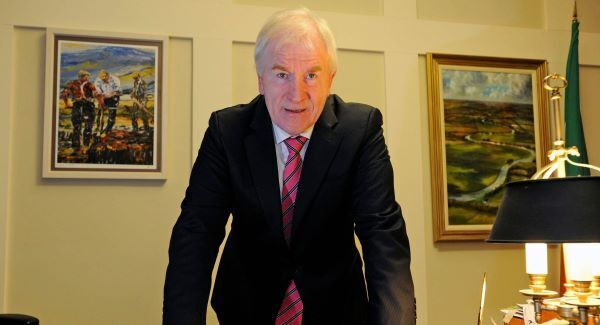
Under the review announced by Heritage Minister Jimmy Deenihan, the majority of raised bogs listed as Natural Heritage Areas of Conservation — mostly privately owned — will be “de-designated” to allow turfcutting continue in these areas.
Draft National Peatlands Strategy, National Raised Bog SAC Management Plan, & Review of Raised Bog NHAs available at http://t.co/h83OfhbVUc
— Jimmy Deenihan (@JimmyDeenihanTD) January 15, 2014
Of the 45 sites affected by the review, the ban would be completely lifted on 38, while the remaining seven would be split with the sites partially exempt from the ban.
The turfcutting ban, issued under an EU directive and enforced from 2010, prohibited 3,000 active turfcutters from cutting in the country’s 75 heritage areas.
Yesterday’s changes now mean only 500 turfcutters will be affected by the ban. Turfcutting on the remaining 36 heritage areas, which include sites that had been split, will be completely banned after 2017.
People will be able to continue cutting on the bogs until then — but only with a permit.
Meanwhile, a further 25 bogs are to be considered for addition to the heritage areas with the ban in force.
The Government has been dogged by protesting turfcutters since the ban was enforced three years ago. While compensation was offered to turfcutters, many rejected it, insisting it is their age-old right to harvest peat.
Some have appeared before court in connection with illegal turfcutting and faced fines to the tune of thousands of euro.
Outlining the Government’s long-term strategic plan for the country’s peatlands, Mr Deenihan said a long-term vision had been lacking until now.
“Most of our peatlands have been altered by human activity over the centuries, but there still exist areas of unique, but threatened, habitats,” he said.
“For all our benefit, we need to protect and preserve a sample of these for ourselves and future generations, whilst also working with communities that are affected by conservation requirements.
“Since the habitats directive was signed in 1992, Ireland has lacked a coherent, long-term vision for our peatlands. This package of documents now sets out that vision.
“These documents clearly recognise that turfcutting is a valued traditional activity that will continue, but that the State must also meet conservation obligations.”
The European Commission is to check the documents published by the Government to ensure its plans “are in line with EU legislation”.
A spokesman said the commission welcomed Ireland’s strategic approach in tackling the issue.
“It very much welcomes the development by the Irish Government of a national peatlands strategy, which sets out a long-term vision for the entire national peatland resource, aimed at ensuring its conservation and sustainable use and identifying the role of different authorities and stakeholders in ensuring that this is achieved,” the commission spokesman said.
Environmental campaigning group Friends of the Irish Environment insisted that it was in the public interest to stop cutting turf on bogs.
Director Tony Lowes said: “Turfcutting is wrong not only because we have an international responsibly to preserve increasingly rare raised bogs, but because cutting turf destroys our best carbon store and releases greenhouse gases.”