The lender: ‘We won every lawsuit’
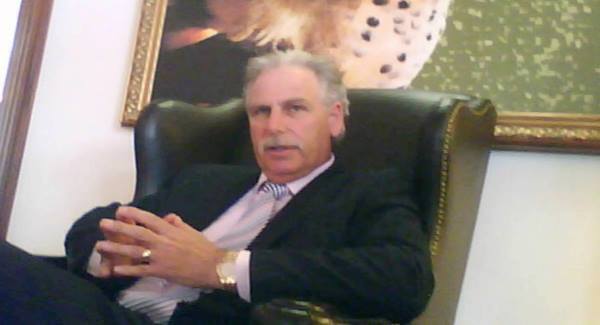
His trade was offering quick loans to people. He did so by deciding not to demand the level of detailed questions that the banks required for business loans.
When people wanted to speculate for a quick return he stepped into the breach.
A €100,000 loan could be available with days once people promised to meet €1,500 in interest payments every month for 12 months.
Weisz was not concerned with whether somebody had the wherewithal to pay off the principal of the loan on a monthly basis.
All he required was a commitment to meet those interest payments for one year.
“We lent the money. We gave the money very, very quickly if people could prove that they had property they could put up as security,” Weisz said.
After the 12-month term borrowers had to pay off the principal as a lump sum by whatever means they could.
“[Compared to business loans from the banks] we are able to give them a loan within weeks, sometimes within days, depending on how much capital finance we had ourselves,” he said.
If the borrower did not come up with the money he moved to seize their property.
“The model worked very well for a while. In a rising market it worked very well because people were becoming speculators and they were buying a couple of properties and needed money very quickly and the banks were not lending that quickly,” he said.
Even when the bubble started to burst, Weisz continued to lend money, in some cases to people already in difficulty and who he was chasing for debt.
Now every single one of his borrowers is in default. He has initiated more than 45 High Court actions in recent years in a bid to seize properties.
“Every single loan I have is in the courts. Every one,” he said.
Land Registry and Registry of Deeds records show he has possession orders against more than 800 hectares of property in 15 counties.
He is trying to sell or has sold more than 20 residential or development sites.
He has charges and orders out against bars, a hotel, petrol station and a large number of farms.
He said there are cases where he leant large sums and cannot get a buyer for the properties, despite asking firesale prices.
But he is unapologetic about the outcomes because, he said, he pioneered efforts to present all of his loan documents in simple, clear language and nothing was hidden from borrowers. He said he had always insisted that people had proper legal representation.
“We had nothing in small print. We were up front about everything we did,” he said.
Weisz is annoyed the courts in Ireland will not let him get his hands on properties quickly enough. He said people tell blatant lies to get loans and again in court. He said most of the applications he received contained statements that he believed were not entirely truthful.
“It beggars belief, you have a court system in this country that allows someone up to 15-17 years to play the system before they lose their property,” he said.
But, he said, despite the litigious nature of borrowers, and his complaints about the courts’ willingness to entertain their tactics, the company has done very well before judges.
“We fought every single lawsuit and we won every single lawsuit,” he said.
His company did find itself on the wrong side of the famous Dunne judgment in 2011, which handicapped repossession efforts for pre-2009 loans.
This related to the case of a Co Clare farmer but Weisz believes his company was wrongly included under the same umbrella as the lead case and he will win out in the Supreme Court.
The activities of his company, Secured Property Loans, have been done under the eyes of the Central Bank who granted his company a retail credit licence after he spent years lobbying to have his sector regulated.
Weisz said despite getting the licence relative recently he has had to take a step back from the market because people are not paying him back.
“For a long time it worked very well. Then of course the property market crashing and people losing jobs and not being able to pay.
“We find ourselves with so many lawsuits where people can’t pay or are unwilling to pay or are being obstructive and challenging us in the courts.
“And we wouldn’t be in this situation if people paid us the money,” he said.