Noonan: Irish people are real heroes
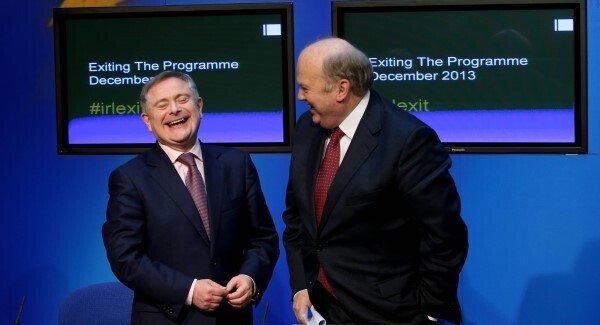
Finance Minister Michael Noonan said yesterday Ireland could still get its debt levels down significantly without retrospective recapitalisation of the banks.
His comments came as the Coalition marked the exit from the troika programme this weekend, with ministers saying that they would be in charge of Ireland’s decisions from next week.
The Government has until now continuously suggested the need to offload some of the estimated €30bn in bank debt paid to the pillar banks through the European Stability Mechanism (ESM), the EU’s rescue fund.
However, Mr Noonan said: “Without any retrospective or any retroactive recapitalisation of the banks, we think we can get the debt down very, very significantly.”
His remarks come after ESM chief Klaus Regling last week said it was not “very likely” the future fund could be used to recoup some of the debt.
He said the people of Ireland were the real heroes and heroines of the bailout story.
In a series of press conferences yesterday, Cabinet members also flagged the possibility of future income tax cuts. However, Mr Noonan said “we can’t go mad again”, insisting that the Coalition was committed to making “prudent” economic and social decisions.
Opposition members dismissed the marking of the end of the three-year programme, saying it was “pointless” and that billions of euro still needed to be paid back to lenders.
The last scheduled repayment under the bailout programme will be on Nov 15, 2042.
However, Taoiseach Enda Kenny said the exit from the troika programme was an “important moment psychologically” for Ireland.
He added: “They [the troika] were making the decisions about what had to be done here. Those shackles are gone on Monday.”
Mr Kenny will make a televised address tomorrow night to mark the exit from the bailout and flag some of the Coalition’s proposed economic plans.
In Washington last night, IMF chairwoman Christine Lagarde welcomed the successful completion of the programme, added the economy remained at risk.
“Unemployment is too high, public debt sustainability remains fragile, and heavy private sector debts and banks’ slow progress in resolving non-performing loans weigh on domestic demand,” said Ms Lagarde.
“Continued concerted policy implementation is therefore necessary for Ireland to recover fully from the crisis.”