'Diagnostic test could have caused a stroke'
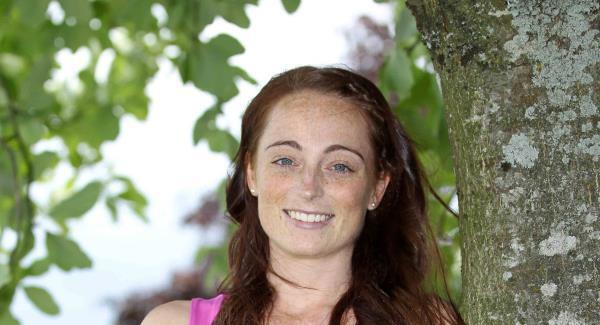
Aimee Foley, 26, from Midleton, Co Cork, said the near-miss was further proof of the lack of expertise here to treat her condition, known as Ehlers Danlos Syndrome (EDS). Despite that lack of expertise, the State has refused to fund her treatment overseas.
The test which could have had catastrophic consequences for Aimee was carried out at a Cork hospital. Called a “tilt” test, it’s used to diagnose why someone is prone to fainting. The test involves use of a drug called isoproterenol to lower blood pressure and increase heart rate. Although this is normal procedure for the test, Aimee was told by her UK doctor, who is a specialist in treating EDS, that giving the drug to an EDS patient is dangerous. “I didn’t know that until I was read the report and it was said to me during a consultation. My risk of stroke during the procedure was extremely high,” Aimee said.
She was also given a neck rub (known as carotid sinus massage) following the tilt test, a procedure to see if the heart is prone to slowing down. The neck rub is not recommended for anyone under the age of 40 because it also carries risk of stroke if the artery wall in the neck is already damaged. EDS is a connective tissue disease which affects the blood vessels, as well as the joints, muscles, bones, and organs.
The incorrect manner in which the test was administered in Cork only came to light when Aimee underwent a second tilt test at the Hospital of St John and St Elizabeth in London and she questioned her neurocardiologist about the different approaches. He told her she was fortunate not to have suffered a stroke.
“I have been left petrified at the thought of what could have happened, especially as I felt so unwell up to two days following the test,” Aimee said. She said her experience with the tilt test highlights “why sending me to London is best”.
“There’s not enough research on EDS in Ireland to know what ‘not’ to do,” she said.
Aimee sought funding from the Health Service Executive (HSE) for treatment in the UK under its Treatment Abroad Scheme (TAS), but was refused on the basis that she was seeking a specialist opinion and not treatment. She wrote to Health Minister James Reilly to highlight her plight and received a reply from his private secretary Dave O’Connor earlier this month advising her that there were suitable services for EDS patients at Our Lady’s Hospice in Harold’s Cross, Dublin. Aimee said the hospice is “not a centre of excellence nor does it carry out research into rare illness”. She is paying for her UK treatment through fundraising.
Recently Dublin North East TD Tommy Broughan called for greater supports for EDS patients in Ireland during a Dáil debate.
The Independent TD said he understood one of the issues for EDS sufferers was “the lack of a dedicated clinician in Ireland specialising in treating EDS”.
Mr Broughan said that he also noted that there was a lack of research undertaken in Ireland in relation to the prevalence of EDS.
Health minister of state Alex White confirmed that there was “no specific research” on the prevalence of any form of EDS in Ireland at present.
However this would be addressed, he said, in the context of the National Plan for Rare Diseases, due for publication next month.