Revision of junior cycle for students in 2014
Under the new curriculum, more emphasis will be placed on continuous assessment rather than end-of-year testing, and students will engage in more practical work, group work, and project-based learning.
Traditional subjects will continue to be taught, but with revised course content. Details of the new English curriculum will be revealed soon and a public consultation has begun on proposed changes to Irish and science.
The biggest change is the introduction of new short courses in practical subjects that will take up roughly half the time of the traditional courses.
Schools will be encouraged to offer as many different short courses as possible, and will also be assisted to develop their own, and students will be able to combine performance grades from both short and long courses to give their overall result.
Draft curriculums have been prepared for four short courses — Civic, Social, and Political Education; Physical Education; Social, Personal, and Health Education; and Programming and Coding.
A period of public consultation has begun with details available from the National Council for Curriculum and Assessment on www.juniorcycle.ie.
It is intended that the content of these courses will be finalised in time for the Sept 2014 intake of first year students, along with several other courses — Artistic Performance; Caring for Animals; and Digital Media Literacy.
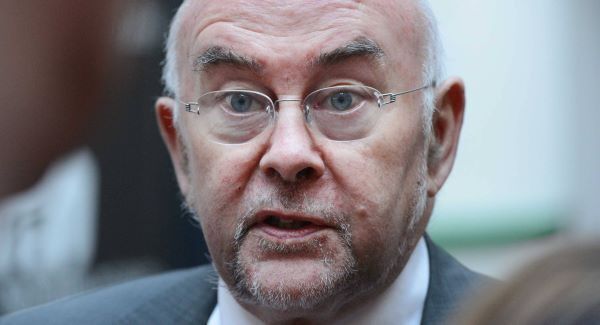
Minister for Education Ruairi Quinn said the overhaul represented a “big change”. “I respect the fact that this change has to be embarked upon carefully which is why we are moving very slowly,” said Mr Quinn.
He said the fully revised junior cycle would not be in place until 2020 and he pledged full and continuous consultation with schools throughout the phase-in period.
Fianna Fáil education spokesman Charlie McConalogue welcomed the changes, but said he had concerns about how they would be implemented.
“Issues around funding, teacher-training and assessment need to be clarified by Minister Quinn,” said Mr McConalogue. “In particular, we believe that independent assessment of the exams must be central to a reformed Junior Cert exam regime.”
Mr Quinn said the rationale behind the changes was to move away from learning by rote and allow second-level students “learn by discovery”, much as they had done in primary school and would go on to do at third level.
He also said he wanted more teenagers to complete their secondary education, and he felt that a major exam in the middle of it discouraged them from continuing further.

CONNECT WITH US TODAY



Be the first to know the latest news and updates