Effort to develop premature birth test
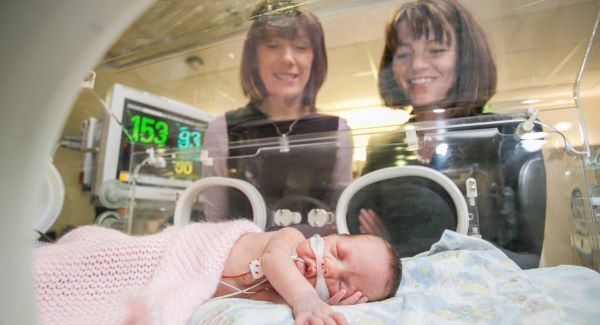
Such a test would mean women identified as being at risk could potentially avail of emerging drug treatments to prevent giving birth inside 37 weeks.
The advantages of developing such a screening test for early pregnancy were outlined by Professor Louise Kenny, head of INFANT, the countryâs only perinatal research centre, following an announcement yesterday that the UCC-linked centre is to receive âŹ13.6m in funding.
Prof Kenny said they still had a âhuge amount of work to doâ before they developed a âclinically-useful testâ but their task should be made easier by the fact they have already developed a screening test for pre-eclampsia, a condition linked to high blood pressure that can be fatal if untreated.
âWe were working on the pre-eclampsia test for 12 years and we learned a lot in that scientific programme, which means that weâll be able to shortcut using the same technology to the application of other conditions,â said Prof Kenny.
She is âhopefulâ the test âwill be ready for clinical trials in about two or three yearsâ.
Currently, because doctors âdonât have any idea in early pregnancyâ which women are at risk of pre-term birth, doctors were limited in prescribing âinnovative therapies coming on streamâ and women were reluctant to take such drugs, she said. The introduction of a sensitive screening test would âmake a big difference in that respectâ.
She said research to date âseems to suggestâ they will be able to screen for pre-term birth as early as 15 weeks.
âAside from actually altering antenatal care, that will also make a massive difference to our colleagues, who are developing therapies in this area.â
The INFANT research team, based at Cork University Maternity Hospital (CUMH) is going to clinical trial next month with its pre-eclampsia screening test, with the first of 1,000 women due to be recruited in Cork, out of total of 5,000 across Europe.
The breakthrough work of the INFANT centre was commended yesterday by Research and Innovation Junior Minister SeĂĄn Sherlock, who made the funding announcement. Of the âŹ13.6m, âŹ7.6m will come through Science Foundation Ireland (SFI) and a further âŹ6m from 15 industry partners.
Mr Sherlock said the investment would address âthe largely unmet need for effective screening tests for the most common complications of pregnancy and the most significant problems for newborn babiesâ.
SFI director general Mark Ferguson said intellectual copyright for any breakthrough tests developed by INFANT and adapted by industry for the marketplace would depend on who had invested what.
âWhat happens there is that we assign all of the intellectual property from SFI, from the government, to the university... and, in simple terms, it depends who has invested, so if the industry is heavily invested, then obviously the return to the university would be less. If the SFI investment through the university was the predominant feature, then the return would be more,â said Prof Ferguson.