Rules aim for school enrolment transparency
Some of the most serious cases have involved claims that parents are directed to nearby schools and informally told they are better equipped to cater for students with special needs or Traveller children, for example.
In order to discourage such so-called ‘soft’ barriers to enrolment, the proposed amendments to education law would require all schools to include an explicit statement in this area. It must state that the school will not discriminate for admission on grounds of disability, special educational needs, sexual orientation, family status, membership of the Traveller community, race, civil status, gender, faith or religious tradition, or being of no faith.
Under the proposals published today by Education Minister Ruairi Quinn, the National Council for Special Education may have power to decide a particular school must admit a child with special educational needs. The same power will be given to the National Educational Welfare Board in limited circumstances where other children have no school place and any such designation by either body can be appealed by a school to an appeals committee.
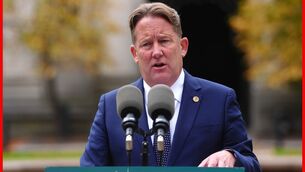
“I believe there is a better way of dealing with school admissions. These measures are about what might be described as ‘good housekeeping’ and will bring about greater transparency, fairness and consistency in the way schools operate their admission processes,” the minister said.
It is also proposed that a school may refuse enrolment where gardaí or the HSE has given a written opinion that admitting a student could have a seriously detrimental effect on student or staff safety.
Among the more controversial rules will be a stipulation that schools will no longer be allowed to give priority to students on the basis of relations, other than siblings, having attended. Schools can apply to be allowed to give priority to children of former students, but only if they have admitted students under such a policy in at least three of the last five years and provided no more than one-quarter of places are filled under such a rule.
Schools would not be allowed to open applications until Oct 1 immediately before the start of each school year. But the department is open to proposals by the Oireachtas Education Committee for an earlier timeframe, probably no longer than two years before enrolment at primary level or three years for second-level schools, and once at least 10% of places are held for late applicants in the year up to enrolment.
The minister may allow exceptions for up to five years to the ban on waiting lists, but similar conditions to those around past-pupil criteria would also have to be met.