Hope and history rhyme
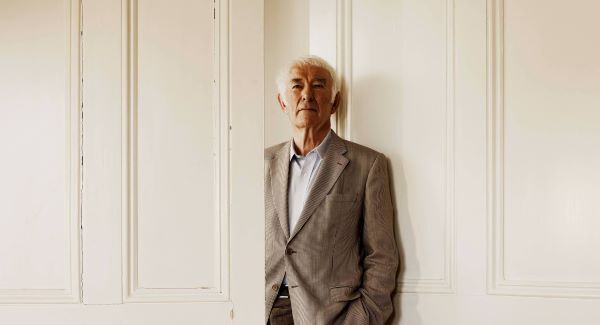
Former US president Bill Clinton praised Seamus Heaney as “our finest poet of the rhythms of ordinary lives” and a “powerful voice for peace” in a tribute.

Hope and history rhyme

The farmer’s son, who went on to become a world-renowned Nobel laureate, died in hospital in Dublin aged 74 after a short illness.

Mr Clinton and his wife Hillary said they were saddened to learn of the death of their friend.

“Both his stunning work and his life were a gift to the world,” they said. “His mind, heart, and his uniquely Irish gift for language made him our finest poet of the rhythms of ordinary lives and a powerful voice for peace. And he was a good and true friend.

“We loved him and we will miss him. More than a brilliant artist, Seamus was, from the first day we met him, a joy to be with and a warm and caring friend — in short, a true son of Northern Ireland.

“His wonderful work, like that of his fellow Irish Nobel Prize winners Shaw, Yeats, and Beckett, will be a lasting gift for all the world.”

Mr Heaney is survived by his wife, Marie, and children, Christopher, Michael, and Catherine Ann.

A funeral Mass will take place on Monday at the Church of the Sacred Heart in Donnybrook, south Dublin, followed by burial in his birthplace of Bellaghy, Co Derry.

The Nobel prize-winner was born in April 1939, the eldest of nine children, on a small farm called Mossbawn near Bellaghy in Co Derry.

His rural upbringing often played out in the poetry he wrote in later years.

He was educated at St Columb’s College, Derry, a Catholic boarding school, and later at Queen’s University Belfast, before making his home in Dublin, with periods of teaching in the US.

His world-renowned poetry first came to public attention in the mid-1960s with his first major collection, Death Of A Naturalist, published in 1966.

As the Troubles took hold, his experiences were seen through the darkened mood of his poems, such as the 1975 work, North.

He addressed the violence and often discussed it in a wider historical context and wrote elegies to friends and acquaintances who were killed.

But he always appeared cautious of being too closely associated with sectarianism and division.

Mr Heaney was never afraid to hide his Irish identity, however. In 1985, he wrote An Open Letter during a spat with contemporaries Andrew Motion and Blake Morrison, who included his work in The Penguin Book of Contemporary British Poetry.

Mr Heaney objected and used the 198-line poem to remove any doubt as to his patriotism: “Be advised/ My passport’s green/ No glass of ours was ever raised/ To toast The Queen.”

His colourful objection to the British monarchy was discreetly put to one side in 2011 when he sat at the Queen’s table for a banquet on her state visit to Ireland in 2011, the first such trip for a ruling British monarch.

Mr Heaney was just as comfortable in the US as he was in Ireland, forging firm friendships with the likes of Mr Clinton, who regarded him so highly that he quoted him regularly during major speeches.

Mr Clinton chose a phrase from Mr Heaney’s play, The Cure At Troy, in a speech during a visit to Derry: “Hope and history rhyme.”

He went on to use the phrase in a book that detailed his vision of the US in the 21st century.

President Michael D Higgins hailed the Nobel laureate as a man of “extraordinary depth and warmth” while Northern Ireland deputy first minister Martin McGuinness said Mr Heaney was a “colossus of literature”.

“We’re all much poorer as a result of his passing... and I feel it very deeply,” said Mr McGuinness.

Blackberry picking

Late August, given heavy rain and sun

For a full week, the blackberries would ripen.

At first, just one, a glossy purple clot

Among others, red, green, hard as a knot.

You ate that first one and its flesh was sweet

Like thickened wine: summer’s blood was in it

Leaving stains upon the tongue and lust for

Picking. Then red ones inked up and that hunger

Sent us out with milk cans, pea tins, jam-pots

Where briars scratched and wet grass bleached our boots.

Round hayfields, cornfields and potato-drills

We trekked and picked until the cans were full,

Until the tinkling bottom had been covered

With green ones, and on top big dark blobs burned

Like a plate of eyes. Our hands were peppered

With thorn pricks, our palms sticky as Bluebeard’s.

We hoarded the fresh berries in the byre.

But when the bath was filled we found a fur,

A rat-grey fungus, glutting on our cache.

The juice was stinking too. Once off the bush

The fruit fermented, the sweet flesh would turn sour.

I always felt like crying. It wasn’t fair

That all the lovely canfuls smelt of rot.

Each year I hoped they’d keep, knew they would not.

x

More in this section

Lunchtime News

Newsletter

Get a lunch briefing straight to your inbox at noon daily. Also be the first to know with our occasional Breaking News emails.

Cookie Policy Privacy Policy Brand Safety FAQ Help Contact Us Terms and Conditions

© Examiner Echo Group Limited