Blasket’s great culture captured for posterity
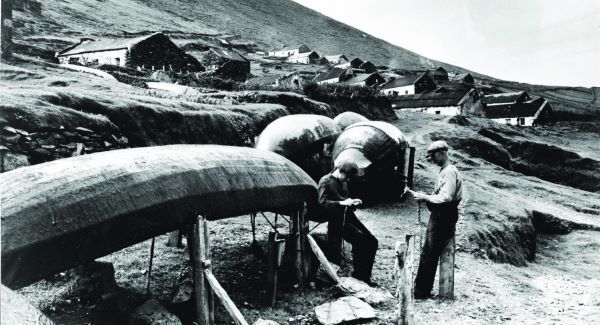
A remote island outpost, renowned for its peace and captivating beauty, has been a magnet for photographers for well over a century.

Blasket’s great culture captured for posterity

Since American Alma Curtin took the earliest known images of the Great Blasket in 1892, countless thousands of shots have been captured by professional and amateur photographers alike.

There’s a mystique about the place, lying off the west Kerry coast, but the images which linger are of the people themselves, especially the weather-beaten faces of the islanders, who battled all their lives with the sea.

The latest book in the growing Blasket library is composed of rare pictures, mainly by amateur photographers and visitors to the island, and is not unduly focused on some of its leading writers, such as Peig Sayers and Tomas Ó Criomhthain.

The Great Blasket was evacuated in 1953 and, 60 years later, very few native islanders are alive. So this book of portraits celebrates the lives of a people who are slowly dying out.

Fortunately, the legion of visiting anthropologists, linguists, historians, and other scholars brought their cameras with them, something not always appreciated by islanders, who were at times too busy, putting a boat afloat or unloading sheep, to pose.

Thousands of photographs feature in The Great Blasket Centre in Dunquin, where some of the islanders settled after the evacuation. The father and son team of Micheál and Dáithi de Mórdha, also from Dunquin, have developed a photographic archive from which they have drawn for the book.

It shows islanders going about their daily lives, working in the fields, laughing, chatting with strangers around firesides, and riding the waves.

The photographs, with bilingual captions, tell us something about the spirit of the community and portray their zest for life, often in trying conditions.

The de Mordhas also give context to the photographs with brief and informative chapters, detailing discovery in the late 19th and early 20th centuries, the year 1916 when the Blasket population reached its peak of 176, through to the heyday of the 1930s, the decline of the 1940s, and the legacy since 1953.

Blasket folk can thank Protestant missionaries for introducing literacy to the island.

An astonished Mrs D P Thompson reported, in 1846: “These people are in a state of extreme ignorance, not a single individual in the island could read, write or speak a word of English.” But the islanders learned to read and write and penned books in Irish, based on their rich lore.

Authors such as Ó Criomhtháin and Muiris Ó Súilleabháin are synonymous with the Blasket while Peig Sayers — whatever pupils of yesteryear thought — had an impact on generations.

Micheál de Mórdha, a journalist, author and broadcaster, is director of The Great Blasket Centre.

Dáithí works in the centre and has studied the literary heritage, language, and culture of the island. He is a graduate of the Department of Folklore and Ethnology at UCC.

The Great Blasket — A Photographic Portrait /An Blascaod Mór — Portráid Pictiúr is published by The Collins Press, and is priced €24.99.

More in this section

Lunchtime News

Newsletter

Keep up with stories of the day with our lunchtime news wrap and important breaking news alerts.

Cookie Policy Privacy Policy Brand Safety FAQ Help Contact Us Terms and Conditions

© Examiner Echo Group Limited