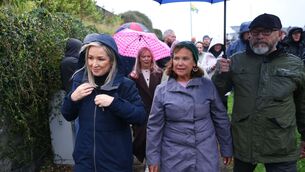
Kenny: Abortion bill about bringing clarity
This late in a pregnancy, he said, the termination of the pregnancy will likely “mean the birth of the child”.
“Clearly the regulation under the constitution is to do whatever is practicable to save the life of the unborn. In circumstances where a pregnancy is near full term, the termination could mean the birth of the child and the saving of two lives,” he said.
“Clearly there is a requirement on medical personnel to do everything possible, as far as is practicable, to save the life of the unborn. The constitutional right is for termination of pregnancy and where the foetus is viable this clearly means the birth of the child.”
He also said it was “purely coincidental” that the Savita Halappanavar report was published the day after the abortion legislation was made public.
The Taoiseach denied that he was personally bothered by any of the abusive material that he had received because of the abortion legislation that was published.
Mr Kenny yesterday revealed he has received “letters written in blood” over the legislation.
“It has made no impact on me personally and I haven’t had any reaction since and nor do I want any. I would say that I haven’t been critical of any sector in particular and just have pointed out that public representatives have received a volume of material that doesn’t add to the quality of the debate that’s needed about an issue as sensitive as this,” he said in Cork yesterday.
Mr Kenny appeared somewhat confident that his parliamentary party will toe the party line on the abortion legislation.
“I have made it clear to our party that people who have anxieties or difficulties... that I have always been open to speak to them about it and I have spoken to quite a number.
“Obviously people may take it upon themselves to make statements about their intentions, obviously the consequences of those are very clear from a [political] party point of view. I would hope that the rational debate that we can have now will allow people to understand that what we are doing here is regulating and bringing clarity and legal certainty to constitutional rights... which are important for women and their unborn children.”
Meanwhile, Fine Gael’s Peter Mathews insisted he would vote against the legislation and said he plans to put forward a motion for a free vote in the Dáil.
Mr Kenny has ruled out such an option and said the whip will be enforced for Government TDs.
Mr Mathews said the motion for the “personal conscience vote” would be raised at next Wednesday’s parliamentary party meeting.
The Dublin South TD said he had “misgivings” about the bill and that it had not changed since the first draft.
Senator Paul Bradford also said he had problems with the bill. His concern was over the section dealing with suicidal ideation, he said.
He told RTÉ that the section, if introduced into law, could lead to “abortion on demand”.
However, he said it was too early to say if he would vote against the bill as it had a long way to go before it reached the Seanad.
“I have major doubts and concerns at the moment” he said.
Pro-choice campaigners are criticising the bill for retaining the 14-year jail sentence for assisting in an abortion. Independent TD Clare Daly yesterday said that she was concerned about this, particularly if there was a scenario where someone who had raped a woman might not be given a jail sentence at all.
The Protection of Life During Pregnancy Bill will go before the Dáil next Thursday.
TDs have been promised that the legislation will not be rushed through via “guillotining” debate and everyone will have a chance to speak on it.
The bill will then return to the Oireachtas Health Committee who will examine it and consider any amendments.
After that, the bill returns to the Dáil in early July for its final stages before going to the Seanad.
If any changes are made in the Seanad, it would then return to the Dáil for a final time.
Then it would go to the President for him to sign.
The Government hope to have the process completed by mid to late July.