Craft beers go from strength to strength
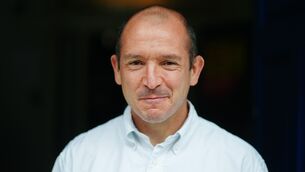
In the past week, the brewery was bought by Molson Coors in a multimillion-euro deal, but for its first six years of operation, one of the owners, Shane Long, wasn’t sure if they would make it.
Two days after the sale, Mr Long is sitting in the bar getting the final specifications ready for the machinery the investment will bring.
At the back of the premises, four stills sit in a small room covered by a corrugated plastic roof.
But the owners of the micro-brewery had never intended to be pulling pints that they brewed themselves.
“There was a manufacturing license out the back, Watermans printers used to be there, so it was just to keep the manufacturing license. Through that it was decided to set up a micro-brewery as that came under manufacturing,” said Mr Long.
He had returned from London in 1998 with the intention of running a pub and had no plans on becoming one of the most prominent members of the Irish craft beer movement.
“I had no brewing experience, I had come back to run the bar side of things, I had been running an Irish club in London called The Swan and I was looking to come home. The opportunity came up and I never looked back.”
The biggest problem with brewing your own beer in Ireland in the late 1990s was getting past the perception that you were making home brew from a kit in a bathtub in an attic.
“For the first six years I didn’t think we would be in business the next year. It was very tough. People associated it with home brew as opposed to commercially produced beer. We used to have people coming in asking for a pint of home brew, but that is after fading out now.”
The demand has grown so much, that last March the brewery stopped opening new accounts as they had hit production capacity.
Although Mr Long says it is hard to pinpoint exactly what has brought people around to craft beers, publicans have told him that just as with food, it is the search for quality and novelty.
Mr Long explained because they did not have any money to take on the marketing fight of the “neon lights behind the bar”, they decided to focus on the quality of their beer and that alone.
“We didn’t have the money for marketing so we had to find another way to do it. The best way to do that was to produce good quality beer.”
The results speak for themselves, best European stout, gold medal for Rebel Red at the Blas na hÉireann awards, and best beer of the year from Beoir, an Irish organisation seeking to promote Ireland’s native craft breweries.
Since the announcement of the buyout by Molson Coors, there has been a slight backlash from the craft beer purists, with some people claiming that they have sold out.
“Personally I thought it was going to be an awful lot worse. The vast majority of it was positive, of course there are going to be people saying we sold out, that it is now just a macro-brewery instead of a micro-brewery. In reality we were expanding anyway, we were going to build a 65-hectolitre brewhouse, Molson Coors are coming in with an investment for a 70-hectolitre brewhouse,” he said.
Key to the deal was that the Franciscan Well Brewery would get to keep its independence. Mr Long went to Cornwall to talk to Sharp’s brewers, who had been bought over by Molson Coors. He said that they had been left independent and this was key to the sale.
“I saw we would be left independent and not be brought into a huge production site, that we would be left do speciality brews on our own site here, which is something that was very high on my list of priorities for the staff to keep their interest, but so the consumer won’t lose out by us just settling on one or two brands.”
The most successful speciality brew has been Friar Wiesse which now accounts for 20% of the brewery’s business, but they rarely have a grand plan when it comes to planning a new beer.
“Myself and Peter [Lyall] the head brewer were in Germany looking at equipment and we had a drink in the Schneider Weisse beer hall in Munich. We were tasting their hoppy wheat beer and we had the napkins out on the table working out how we were going to do a Hopfen Weisse, which we have just produced. So how do we come up with new concepts... combination of something like that and listening to our customer.”
The most expensive speciality beer that has been produced in the Franciscan Well was selling for between €13 and €15 and 900 bottles were gone within two weeks.
The project was born out of looking for a way to increase margins on exports to the American market. Beers aged in whiskey casks are commanding a premium in the US market so the Franciscan brewers decided to try one.
“We’d never used whiskey casks before so we had to do a lot of research on it, going as far as Scotland to see a process. I didn’t want one that just tasted like whisky. I just wanted a subtle taste. So myself and Peter worked out a formula, basically just in theory. And it worked. 100 days later what you got was what people described as an Irish coffee. Subtle whisky taste and roasted malt,” said Mr Long.
Jameson, which provided the casks, was so impressed that it allowed its crest to be carried on the bottles.
“I never thought I would see the day that a bottle of beer in Ireland would be selling for €13 never mind our beer selling for €13,” he said.
CONNECT WITH US TODAY



Be the first to know the latest news and updates