‘Love/Hate’ opens a window to reality
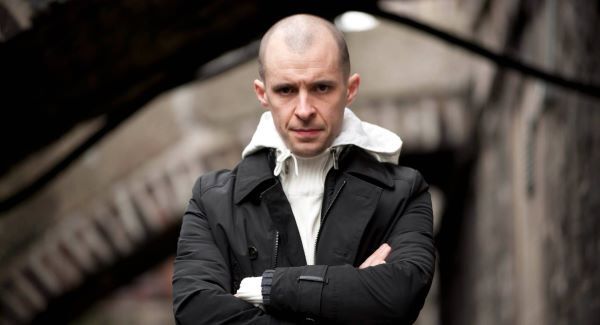
More than 800,000 people are expected to tune in tomorrow night for the final episode in the third series of Love/Hate.

‘Love/Hate’ opens a window to reality

The following day the full box-set will go on sale and is set to be a popular stocking filler.

We can’t, it seems, get enough of the gritty gangland series, which has upped its levels of explicitness in terms of bloody and sexual violence.

A fourth series is, according to RTÉ, under “active development”.

While a contract has not yet been signed, it is expected to get the official green light soon.

Its success is spreading outside Ireland. Last week, on-demand video service Hulu started broadcasting the first series in the US.

The third series has been acquired by Australia and South Korea, with previous seasons already aired in Scotland, Australia, New Zealand, Asia, and the Middle East.

While obviously popular, how does Love/Hate stand up to an expert analysis — from those who research and investigate the hidden worlds of gangs and the drugs trade?

Johnny Connolly is one of the most established criminologists working in this area and has a long record of research. He is co-author of a major study on drug markets, the first of its type, due to be published soon.

“I think it’s very powerful, extremely intense, well-made and obviously popular.

“It is a dramatisation of events that do happen.

“Does it provide an insight? Yes, it does, but it is a dramatisation and as a consequence of that certain factors are highlighted, exaggerated.”

He said the media has long lavished publicity on the bosses who inhabit gangland and the violence within it and this carries over to Love/Hate.

“There’s always a need for a John Boy or a Nidge and for them to be the most violent.”

He pointed out that violence was a reality of gangland: “There is a tendency in the media to highlight the violence. But drug markets have become increasingly violent, often due to a lack of credit and drug debts.”

Asked whether the characters reflect the reality on the streets, he said: “In terms of dependent drug users, the typical profile has been well established by research: low socio-economic background, early school- leavers, family members who use drugs and areas [with] high local authority housing.

“There are some untypical characters [in Love/Hate], but that’s probably part of the industry.”

One character that has attracted criticism for not being believable as a gang figure is that of Darren, played by the striking Robert Sheehan.

But Mr Connolly added: “Having said that, there is a certain degree of class snobbery in some of the comments. There are good- looking people in gangs.”

He doesn’t think it’s fair to accuse the series of glamorising gangs and drugs. He said some young men in certain areas see drug gangs as offering a route to money, power, and women, and the series illustrates this: “It shows that lifestyle, but I’m not sure how you get around that.

“It also portrays the nasty environment. The life of those in gangs is, as Thomas Hobbes [philosopher] said, ‘nasty, brutish, and short’.”

He didn’t think the series showed the impact on communities from the drugs trade, including the problem of intimidation, nor did the show feel like it was set in a community. In addition, he said Love/Hate didn’t have the political/social commentary that series such as The Wire had.

However, he believes Love/Hate does benefit people’s understanding of a little-known world: “It certainly opens a window. Dramatisation can be an extremely powerful medium that research and reporting can’t match. It can’t replace proper research, but does complement it.”

x

More in this section

Lunchtime News

Newsletter

Keep up with stories of the day with our lunchtime news wrap and important breaking news alerts.

Cookie Policy Privacy Policy Brand Safety FAQ Help Contact Us Terms and Conditions

© Examiner Echo Group Limited