3D laser scans Cliffs of Moher
The project, which could only be undertaken from the sea, required specialised equipment to scan the cliffs on a moving platform while a boat alongside, captured data accurately.
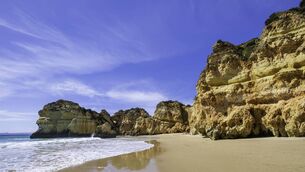
Irish surveying firm Coastway carried out the exercise completing a laser scan, 3D model, and high definition video of a 2km section of 8km-long cliffs which are 214m (702ft) high at their highest point
As the cliff face is only accessible and visible by boat, the biggest challenge was how to laser scan from a moving platform and how to achieve sufficient resolution, coverage, and accuracy from a place of safety.
After considering the various options, Coastway approached Measurement Devices Ltd (MDL), a firm which manufactures and provides ruggedised laser scanning equipment.
MDL proposed a solution using the Dynascan 3D mobile mapping system that can be mounted on both vehicles and vessels and used to capture 3D LiDAR data of topography.
Using up-to-date laser scanners and surveying equipment, the research was complete after an hour.
The data was collected on the same grid allowing for seamless integration between the two data sets.
Equipment mobilisation, data acquisition on the vessel and vehicle, demobilisation, and data download was completed successfully within a single day.
Coastway director Mark Hudson said: “We were looking for a location to try out new scanning equipment we had acquired and what better place than the Cliffs of Moher. It’s a stunning place and the scan went exceptionally well for us. It was a great success and we are very excited about it.
“We hope to carry out a further 3D scan of the cliffs from the air in the future but now we know we have the capability to laser scan the entire Irish coastline if it’s ever required,” he said.
A coastal scan of the cliffs could also be used to further the attraction’s chances of acquiring Unesco World Heritage status.