‘Prisoners are in charge... they bully officers’
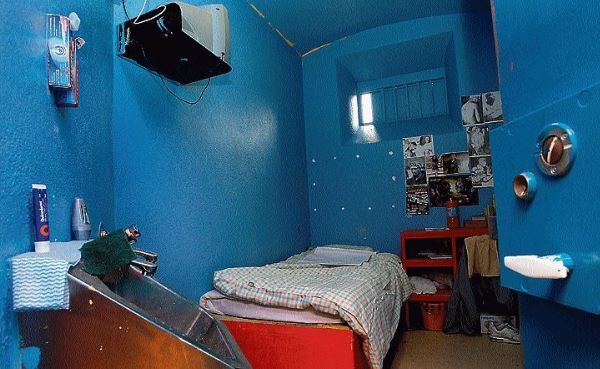
Jason leans back in his seat and smiles.
A fresh-faced 19-year-old with a tanned, bright, complexion that could sell anything from smoothies to male grooming products, he says the Inspector of Prisons “got it all wrong”.
“It’s the other way around,” he says, shaking his head. “It’s the prisoners in charge up there. It’s the prisoners bullying them. It’s so violent up there that prison officers try and control the violence by just trying to keep the animals in. Being in lockdown 23 hours a day isn’t for punishment, it’s for protection from the other gangs. That’s how the place works. Everyone knows it.”
It was revealed last month by this newspaper that St Patrick’s is the most violent jail in the State, with far more assaults than at adult prisons such as Mountjoy. There were 367 assaults on prisoners by other inmates in St Patrick’s in 2011 — one third of all assaults in the prison system last year.
Over the past three days, the Department of Justice, Irish Prison Service, and the Prison Officers’ Association have been lambasted over conditions at St Pat’s. A report by Judge Michael Reilly outlined how its juvenile and young adults prisoners are bullied, denied visits as punishment, put on 23-hour lock up, and forcibly stripped of their clothes. The judge said the human rights of vulnerable children and young adults are repeatedly violated.
Jason is having none of it. Having watched TV reports about this latest investigation, he contacted the Irish Examiner to give his version of events.
“People are choosing to go on 23-hour lockdown so they can’t be cut up. It only takes two seconds to strip someone. All the Cork fellas are segregated from the Dublin gangs because they hate each other, really hate each other. They’re on 23-hour lock up, on protection. It’s very violent. Knives, blades, loads of weapons. There are massive fights in main jail. Young fellas kicked and beaten so badly you don’t know them, heads kicked in. For the last two years it’s the Cork guys on protection.”
St Pat’s is divided up according to where the prisoners originate and what gangs they are members of. B Wing is U18s, C1 and C2 are all from Dublin. C3 can be Cork, while D are “mostly from the country”.
Once a young man or child arrives at St Pat’s, he is housed in a section of the jail that holds other prisoners from his part of the country or from his particular gang.
“There were eight of us from Cork and as soon as I arrived up to the wing, I was brought to the Cork [section], the Cork lads threw me a bag of clothes and gave me my colours. You put those on you. The Cork guys’ colour was orange. The Cork guys all look out for each other, you need that. Limerick look out for each other and then there’s all the Dublin gangs. That’s the way it works.”
A wire mesh covers some of the exercise yards at St Pat’s. It’s supposed to be a way of stopping drugs getting to prisoners. But “parcels” of heroin, grass and tablets are regularly thrown into the mesh and they are removed relatively easily — by the prisoners.
“A parcel will come in. We’ll know it’s coming, they’ll know it’s coming. The lads will be selling it over the landing beforehand and then in it comes and the lads are there hitting it down with a shoe. Beating the mesh ’til it opens and the officers are just standing there in the yard. They don’t stop it, they’re afraid. They don’t want to be off work for six months after getting a battering; they don’t want to be bladed. The prisoners have the control, the officers have lost the control. The prison officers don’t want to open the can of worms.”
Thomas is a prison officer who recently retired from St Pat’s. He contacted RTÉ’s Liveline to highlight the “subculture” that permeates the prison.
“They operate in a subculture of selling drugs to one another, taking drugs and selling mobile phones. They all go around in groups, they don’t go around individually. You’ll have a gang from Limerick, gang from Dublin and you have to have protect one from the others. That’s why the guys are on protection for 23 hours.”
Everyone is bored at St Pat’s, according to Jason. Days are spent playing games like cards or handball. Sometimes there’s a soccer game in the yard, during the one to three hours they get in yard, depending whether they are on protection or not.
“Loads of young fellas come in and they’re not really into drugs and then they start smoking weed or heroin or something just to pass the time of day. It’s a headwreck being locked up so long.
“I was in Cork Prison before Pat’s and in Cork Prison the prison officers have more of a run. The difference in Cork is that the fellas, the prisoners, are older, more mature. People are crazy at Pat’s. There’s fellas in Cork for drink driving who just want to keep the head down and serve their time. Pat’s is way more serious. You see vicious assaults and you just have to sink or swim. I chose to swim to get on with the fellas. Soon you find yourself shouting out over the landing just like the rest.”
Jason’s first four days at St Pat’s were spent in isolation before he went to his cell. He has no idea why. No television, no library, nothing. “I knew its reputation going, but I thought you know there’s no point being worried or scared. I just thought, what’s moaning going to do? But in isolation I couldn’t hack it at all. I was being punished for doing nothing wrong. That’s not right. I have no idea why they did it.”
The violence is coming from all quarters. Prison officers are rough, he says: “They’ll chicken wing you [grab your hands behind your back] and throw you into your cell but lots of the prison officers are sound and you’ll respect them. But if you put a foot wrong with some, you know you’ll get a battering. But they also know they can get a battering too — prison officers.”
Jason tells of one guy he knew in St Pat’s that was “mad to get out of there and back down to Cork Prison”. He had a girlfriend and child in Cork and was really missing them.
“He walked up to one of the officers and showed him this razor blade. It was cut in half. He told the officer the other half of the blade was somewhere in the cells. One by one, he said, the prison officers would be slashed unless they got him moved. He was moved.
“And they’re letting that happen.”