Consular team arrive in Libya to evacuate Irish citizens
Six members of an emergency civil assistance team, who have obtained visas to enter Libya, will base themselves at the airport in Tripoli until all trapped Irish citizens are safely airlifted as the uprising against Libyan leader Muammar Gaddafi verges on the brink of outright civil war.
The establishment of the emergency team was organised after an Aer Corps aircraft which landed at Tripoli airport on Wednesday evening was forced to return to its temporary base in the Maltese capital, Valletta, without any passengers.
A Department of Foreign Affairs spokesperson confirmed yesterday that the crew had been prevented from entering the terminal building or making contact with any Irish citizens located in the airport.
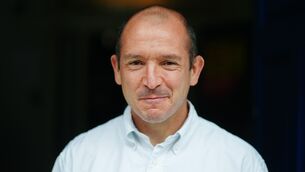
Peadar Carpenter, coordinator of the department’s emergency crisis centre, said it was “very regretful” that there had been “a distinct lack of co-operation” from Libyan security officials at the airport.
The Casa aircraft which can transport up to 25 persons remained on the ground at Tripoli for about five hours but returned to Valletta where it remains on standby to go back to Libya.
The Irish authorities have formally applied to Libya for permission to land an Air Corps aircraft at Tripoli airport to assist with the evacuation of Irish citizens.
However, Mr Carpenter said there had been no official response to the request to date.
Last night, the Department of Foreign Affairs confirmed 26 Irish citizens remain in Tripoli, and that evacuations by air are continuing. Twelve Irish citizens remain in Benghazi, and evacuations by sea were due to take place last night dependent on local conditions. Another six Irish citizens are “elsewhere” in Libya “and, where safe to do so, are making their way to departure points including Tripoli, Benghazi, and the border with Egypt”, the department said.
Another 21 are known to have got out of Libya on Wednesday.
Two of six Irish passport holders based in a remote desert part of Libya are understood to be trying to make their way to Tripoli, while another is believed to be travelling by road to the Egyptian border.
The Department of Foreign Affairs said efforts to evacuate Irish nationals from Libya had been hampered by the lack of an embassy in Tripoli as well as difficulties with communications as many phone and internet connections were not functioning.
However, Mr Carpenter said staff at its crisis centre in Dublin were maintaining contact with Irish citizens in Libya as well as their families in Ireland.
He also expressed surprise at criticism by one Irish citizen who managed to flee Libya on Wednesday, claiming a group had been on a bus on the tarmac at Tripoli airport but was unable to find the Air Corps aircraft.
Professor Helena Sheehan, 66, a lecturer at Dublin City University, said people had relied on help from officials of the British Foreign Office and they had managed to get on a flight operated by a British carrier.
“Libya is descending into hell. The airport is like nothing I’ve ever seen. It’s absolute chaos. There are thousands and thousands of people trying to get out,” said the lecturer.
Prof Sheehan said she had heard gunfire and seen burning buildings as she travelled through Tripoli on the way to the airport.
Mr Carpenter acknowledged it was very difficult to provide direct assistance to Irish citizens in Libya in the absence of having the department’s own officials on the ground.
“It is a very messy situation,” he remarked.
CONNECT WITH US TODAY



Be the first to know the latest news and updates