Campaigns motto: It’s the economy, stupid

IT’S become a tired cliché now, but the phrase, “It’s the economy, stupid”, had its origins in the 1992 US presidential race, when Bill Clinton’s advisor, James Carville, coined the phrase to keep campaign staff focused on the central issue.

Economic issues have always dominated elections in every country. But this campaign has brought it to a whole new level — the arrival of the IMF in November saw to that. Rather than just dominate, economic issues have overwhelmed the campaign, leaving very little room for anything else. Here, political correspondent Paul O’Brien analyses the issues that were central stage during the campaign, the side-issues that were also touched on, and the issues that simply failed to get a look in.

- The bailout and banks: The terms attached to the EU/IMF bailout are too expensive — and every party says so. Even Fianna Fáil, which negotiated the deal, is talking up the possibility of securing a lower interest rate through talks at EU level — an implicit admission that something needs to change.


The parties likely to form the next government, Fine Gael and Labour, want both a lower interest rate and some form of debt restructuring to ensure taxpayers don’t bear the full burden of the banks’ losses. Although they have modified it since, both parties began this campaign by talking aggressively of securing a better deal. The pressure will be on them to deliver in government.

- Jobs: The number-one issue on the doorsteps, according to politicians. With over 400,000 out of work, many thousands more fearful of losing their jobs, and forced emigration having returned to blight families, it’s easy to see why. All the parties have talked big in this campaign — promising jobs funds and tens of thousands of new placements and training opportunities, if not more. But an unemployment crisis usually does not recede until a solid economy recovery is well under way. And we’re a long, long way from that stage yet.

- The universal social charge: A key reason, according to Fine Gael strategists, why it is prospering and Labour has fallen back in this campaign — even though none of the parties had anything to do with it. The USC was introduced by the outgoing Government in the December Budget, and took effect last month, having a devastating impact on workers’ pay packets.

The prospect of years more of the same — or even worse — has shadowed this election. The party offering the least amount of new taxes was always likely to do well. Fine Gael offered an approximate 3:1 ratio of spending cuts to taxes. Labour spoke of a 1:1 ratio. And even though there was much more nuance involved than that, Labour quickly lost the argument, being successfully tagged by Fine Gael as a “high-tax” party.

- Mortgage repayments: A nightmare for struggling home-owners, and a catch-22 for the parties. Home-owners are facing a perfect storm of job losses, pay cuts, rising interest rates, and an Exchequer strapped of cash to assist them.

The political parties would like to help, and have offered various proposals. But the only one likely to make a real difference — debt forgiveness — is off the table, because the money isn’t there.

Only Sinn Féin are talking about debt forgiveness, and they know they’re not going to be in government. And so the main parties are hoping that those struggling with mortgages will somehow be able to limp through the recession. But that seems head-in-the-sand stuff, for this looks like a problem that is simply going to grow and grow.

- Political reform: Don’t hold your breath. All of the parties knew they had to sound serious about political reform. All of them offered proposals as a result, some of which were routine, some of which were radical. The headline-grabbing one was the reduction of the Seanad, a proposal on which the likely next partners, Fine Gael and Labour, agree. But a referendum would be required to abolish it.

Before the referendum is held, the new Seanad will be appointed for a five-year term. In other words, the Seanad is going nowhere until 2016 at the earliest.

And one suspects many of the other major political reforms may also be heavily delayed.

- Health: Firmly relegated to secondary-issue status in this campaign, despite the fact the HSE is broken and in desperate need of repair. Fine Gael is proposing the most radical solution: doing away with the HSE altogether and setting up a new system in its place. Labour disagrees, meaning some form of patched-up compromise seems likely if the two parties form a coalition. And such a compromise, in turn, offers little room for optimism.

- Compulsory Irish: It was in 2005 that Fine Gael first proposed abolishing Irish as a compulsory language for the Leaving Cert. That policy came back to haunt party leader Enda Kenny in this campaign. More than 15,000 people signed a petition against the policy. There was a silent protest of students outside the Dáil. And while Fine Gael’s momentum in this campaign has largely seemed unstoppable, its position on Irish may lose it a few crucial votes — not alone in the Gaeltacht but in middle-class suburbs where parents who send their children to Irish schools deeply resent the policy.

- NAMA: Not exactly absent from the campaign — Fine Gael and Labour have reiterated their opposition to it — but for the most part, there has been little debate about the National Asset Management Agency and the massive amount of risky property loans which it — meaning the Irish taxpayer — is now assuming control of.

- Corporate tax: All the main parties agree Ireland’s low-corporate tax regime should be kept intact. As a result, it has been a non-issue in the campaign — the parties are simply too petrified of scaring off US investment in Ireland to suggest even a minimal increase.

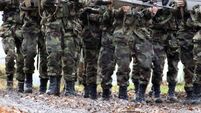
- Neutrality: Might have featured in elections past, but not this one — despite the fact Fine Gael is proposing to alter the so-called “triple lock” mechanism relating to the deployment of Irish troops overseas. Under the triple lock, UN, Government and Dáil approval is required for any deployment. Fine Gael says this should be modified to exclude the need for UN approval.

“The failure of the UN Security Council to pass a resolution should not prevent us from taking part in overseas missions. We believe Irish troops should be capable of being deployed at short notice, if requested, to assist in emergency relief efforts at times of humanitarian crises,” the party’s manifesto states.

- Stag hunting: Another element of Fine Gael’s manifesto which featured little in the debate — namely that it wants to reverse the ban the Government introduced last year.

- Climate change: In the 2007 General Election, climate change was a big issue, and not just for the Greens. The other parties realised they would have to jump on board and devise credible policies to reach out to what was seen as a sizeable “green” vote. By stark contrast, the parties have paid lip service at best to the issue. Even the Greens have admitted job creation is the central issue, and climate change forms the last section of their manifesto.

- Abortion: In the X case in 1992, the Supreme Court ruled abortion was permissible in Ireland in cases where the mother’s life was at risk. Ever since then, successive governments have failed to introduce legislation to clarify the instances where a mother’s life is deemed to be at risk. Last December, a ruling by the European Court of Human Rights made clear Ireland would have to introduce such legislation. It seemed likely abortion would become an election issue. It has — but not in the parties’ campaigns. Unsurprisingly, they are keen to avoid it. But it has come up on the doorsteps — repeatedly. For the record, here’s where the parties stand:

- Fine Gael has said it would set up an all-party committee to examine the ruling by the ECHR. But party leader Enda Kenny has previously vowed not to legislate for abortion were he elected Taoiseach.

- Labour believes the ECHR judgement means Ireland must legislate to provide for abortion in circumstances where the life or health of a mother is at risk.

- Fianna Fáil has said its position remains unchanged — the party “will maintain Ireland’s ban on abortion”.

- Sinn Féin says legislation should be introduced to deal with the ramifications of the X case.

- The Greens have taken no clear stance, saying they have traditionally left it to their members to express their own personal views.

More in this section

Lunchtime News

Newsletter

Get a lunch briefing straight to your inbox at noon daily. Also be the first to know with our occasional Breaking News emails.

Cookie Policy Privacy Policy Brand Safety FAQ Help Contact Us Terms and Conditions

© Examiner Echo Group Limited