Cowen seeks to hide policies from bank probe

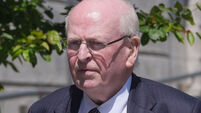
BRIAN COWEN is seeking to prevent the banking inquiry from examining the policies he implemented as Finance Minister which added “fuel to the fire” and helped stoke the crisis in the sector.

Cowen seeks to hide policies from bank probe

Two devastating preliminary reports published yesterday found that policies adopted by the Government during the boom helped cause the overheating of the economy and the subsequent banking crisis.

They laid bare Mr Cowen’s culpability as Finance Minister from 2004 to 2008, when the Government failed to apply the brakes and rein in spending.

Mr Cowen last night expressed regret for what had happened but stopped short of an apology.

The reports will form the basis for a Commission of Inquiry into the causes of the banking crisis, which will begin work in the summer and conclude within six months.

But despite the reports’ indictment of fiscal policy, the Government does not intend to allow the commission to examine the decisions it took during the boom.

The Cabinet has agreed draft terms of reference for the commission which exclude any mention of Government policy during the period under investigation – January 2003 to September 28, 2008. The timeframe also means Government actions taken to solve the crisis from September 29, 2008, onwards are set to be off limits to the commission.

Instead, if the draft terms are passed, the commission will look at the failures by the banks themselves, the Central Bank and the Financial Regulator. These failures were outlined in yesterday’s preliminary reports, but the documents also extensively criticised Government policy during the boom.

In addition, the reports destroyed the myth that the Irish banking crisis was caused primarily by international factors such as the collapse of US bank giant, Lehman Brothers.

The first report, carried out by international experts Klaus Regling and Max Watson, found the crisis was “home made” in crucial ways.

“Fiscal policy, bank governance and financial supervision left the economy vulnerable to a deep crisis, with costly and extended social fallout,” the authors state.

They found the Government spent excessively and implemented tax cuts that left revenues “increasingly fragile”, since they were dependent on property taxes and high consumer spending.

The second report, conducted by Central Bank governor Patrick Honohan, who was appointed last year as part of the clean-up of the regulatory system, blamed the banks in the first instance.

But he was no less damning of the Government, saying budgetary policies “contributed significantly to the economic overheating”. The Government had helped foster a climate that led the public to believe the “party could last forever”.

Mr Honohan did largely absolve the Government on both the bank guarantee scheme and the Anglo bailout, however, finding that both actions were ultimately necessary.

More in this section

Lunchtime News

Newsletter

Keep up with stories of the day with our lunchtime news wrap and important breaking news alerts.

Cookie Policy Privacy Policy Brand Safety FAQ Help Contact Us Terms and Conditions

© Examiner Echo Group Limited