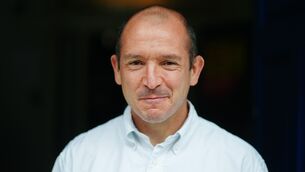
Adams leads tributes to Hughes
The former IRA hunger striker died on Saturday following a short illness. He was 59.
A member of the IRA from the start of the Troubles in 1969, he was involved in a number of attacks on the British army and Royal Ulster Constabulary.
Having joined the Provisional IRA when it broke away in 1970 from the Official IRA, he was arrested in 1973 along with Adams and Tom Cahill after the British army raided a house on the Falls Road.
They were detained in Long Kesh, which later became the Maze Prison.
Six months later Hughes escaped in a rolled-up mattress in a refuse lorry and fled over the border, assumed a new identity, Arthur McAllister, and returned to Belfast pretending to be a toy salesman but had a big say in PIRA operations.
After five months, however, his new identity was rumbled and the army raided the house in Myrtlefield Park.
In 1977 he was transferred to the H-Blocks where he became the officer commanding of the IRA prisoners.
Republican inmates insisted they were prisoners of war and refused to wear uniforms. In 1978 he ordered an escalation of their campaign with a no-wash protest.
The prisoners refused to empty their chamber pots and ended up smearing their own excrement on the walls of their cells.
Two years later, the prisoners decided to go on hunger strike. Hughes and six other prisoners — Raymond McCartney who is now a Sinn Féin assembly member, Leo Green who is now a party adviser, Tom McFeeley, Sean McKenna, Tommy McKearney and Irish National Liberation Army inmate John Nixon — started to fast.
The hunger strike lasted 53 days after republicans believed they had struck a deal with the authorities.
Hughes called the strike off as McKenna was on the verge of death.
Bobby Sands, who had been a close aide of Hughes, took over as officer commanding in the Maze.
When republican disillusionment with the prison authorities intensified, Sands, who would become MP for Fermanagh and South Tyrone, ordered a second hunger strike in 1981 in which he and nine other prisoners died.
In 1986 Hughes was released from prison and became active again in republicanism.
However, he was haunted by the hunger strikes.
“I blamed myself for years,” he later said. “I used to believe that if I had let Sean die, that would have ended it, which would have stopped 10 men dying.”
But in the years after the 1994 and 1997 IRA ceasefires and the 1998 Good Friday agreement, he became increasingly disillusioned with the direction being taken by Sinn Féin.
Living in Divis Flats on income support and fighting blindness in one eye, he cut a bitter and lonely figure while his one-time Long Kesh comrade Adams played a prominent role on the international stage.
Adams though, paid tribute to Hughes, despite a reported rift.
“Brendan was a very good friend and comrade over many years of struggle,” he said.
Adams insisted that, although Hughes disagreed with the direction he had taken in recent years, he still held him in high esteem.
CONNECT WITH US TODAY



Be the first to know the latest news and updates