The boys who defied a government
GARDAÍ were under instruction to prevent shots being fired over the coffin of deceased hunger striker Frank Stagg but, in the end, their efforts were thwarted by two gunmen — aged just 13 and 15.
Tensions had risen sharply in the days before the funeral of the Co Mayo man, brother of sitting Labour TD Emmet Stagg, who died in prison in Yorkshire on February 12, 1976, after two months on hunger strike.
The 34-year-old Republican, jailed three years earlier on a charge of conspiracy to commit arson, had been protesting at the authorities’ refusal to transfer him to a prison in Belfast where he would have political prisoner status.
At one point during his fast, his desperate wife, Bridie, sent a telegram to Taoiseach Liam Cosgrave from her home in Coventry, England, asking for his help. The telegram betrayed its English origins by arriving addressed to “The Tea Shop, Lencister [sic] House, Dublin”.
In it, Ms Stagg pleaded simply: “I beg you please don’t let my husband die.” She also sent a telegram to President Ó Dalaigh urging: “Please intervene and help prevent my husband Frank Stagg from dying.”
The day after he died, 10 explosive devices were detonated in Dublin and five others were defused, while throughout the North there was street fighting and bombings and seven deaths attributed to the violence.
After his death, some of his family sought to have a private burial in the family plot in Mayo but Stagg had left a will requesting his burial in a Republican plot — an alarming prospect for the government which believed the event would be used by subversives for propaganda purposes.
When the airplane carrying Stagg’s remains from England approached Dublin Airport on February 18, the pilot was ordered by then Irish government to divert to Shannon.
Family members and supporters of Stagg were left standing at Dublin Airport in an act which Republicans denounced as “body-snatching”. The government’s plan was to hold on to the body and oversee the funeral in Mayo with Special Branch detectives digging the grave at Leigue Cemetery in Ballina.
A note from a Cabinet meeting that day records Justice Minister Paddy Cooney saying gardaí on the route of the proposed military-style funeral to Ballina had been alerted and every effort was to be made to ensure no shots would be fired over the coffin.
A later note from February 24, three days after the funeral, lamented that shots were in fact fired at the cemetery “by two boys — one age 15 and a half years and the other not quite 14”. The note recorded that consideration was being given to criminal charges against the youthful pair.
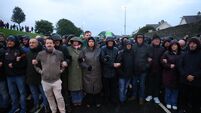
The day after the funeral, Provisional Sinn Féin held a commemoration rally and more than 1,000 gardaí and troops were on duty to police the 5,000 sympathisers. There were scuffles, rubber bullets were fired at protestors and seven gardaí were among 11 people injured.
Republican leader Joe Cahill had earlier threatened to exhume Stagg’s body and give him a military-style burial if the government did not hand over his remains and the same Cabinet note from February 24 records the decision to leave a guard at the grave for a further “short interval”.
The government didn’t seem to have any long-term plan to handle the situation, however. The note simply states: “If the IRA dig up his remains, consideration would be given to charging those taking part.” In November that year Republicans carried out Cahill’s threat, digging up the coffin and re-burying it in a Republican plot in the same cemetery.