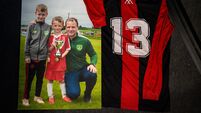
Shortt accepts State apology over false conviction
The 71-year-old Donegal man was falsely convicted of allowing drug dealers free reign to sell ecstasy to clubbers at the popular Point Inn on the Inishowen Peninsula in 1992.
After years battling for justice, last autumn he was awarded €1.9 million compensation in the High Court and that was followed yesterday with the State finally apologising for his suffering.
Speaking after appealing to the Supreme Court to increase his damages, Mr Shortt said he accepted it in the manner it was intended.
“We finally have received an apology, so long in coming after so many years, and we certainly are pleased in receiving it,” he told RTÉ Radio. “And I have to say this on behalf of myself and Sally [his wife] we accept that apology in the spirit that it was given.”
Mr Shortt was the victim of a grave miscarriage of justice at the hands of disgraced former Superintendent Kevin Lennon and his shamed side-kick Noel McMahon, who resigned from the force following the damning findings of the Morris Tribunal.
The pair orchestrated a case against the successful businessman which led to him wrongly standing trial for knowingly allowing drugs to be sold on his premises. The officers convinced both the DPP and the courts that Mr Shortt had turned a blind eye to dealers in his club.
In fact, Mr Shortt had already approached gardaí to ask for their help in catching the dealers.
Upon conviction he was locked up in Mountjoy Prison in 1995, put on antidepressants and lost two-and-a-half stone in a few months.
Mr Justice Joseph Finnegan, President of the High Court, awarded him €1.93m in October last year stating that he had suffered an outrageous abuse of power. But Mr Shortt is appealing the award in the Supreme Court claiming it is insufficient.
Yesterday during hearings, one of the senior appeal judges Mr Justice Adrian Hardiman urged the State to apologise unreservedly. He said it was extraordinary that no apology had been made at any stage for what was one of the worst cases of wrongdoing ever seen.
The Supreme Court heard Mr Shortt, a recovering alcoholic, had fallen off the wagon as he was faced with trial after trail.
His lawyers said he had suffered back, heart and mental problems as a result of his incarceration and that the damage to his character was sustained.
CONNECT WITH US TODAY



Be the first to know the latest news and updates