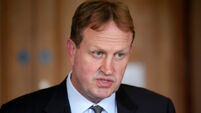
Budget invests €1.12bn into welfare projects
Social Affairs Minister Seamus Brennan had over €1.12 billion to spend and those that benefited most were young families, carers and people on low incomes.
He also pointed out that total expenditure on welfare next year would be €13.5bn - double what was spent in 2000.
Lowest social welfare rates were increased from €148.80 to €165.80 per week, up 11%.
And next year the monthly rate for the first and second child will increase to €150 while the rate for the third and subsequent child will increase to €185.
Mr Brennan said the Government had now fully honoured its commitment on child benefit and believed it would make a significant contribution to the alleviation of child poverty and support for children.
The minister also said he had responded to increasing fuel costs by increasing the fuel allowance by €5 a week, or 55%, to €14 at a cost of almost €40 million, with effect from the beginning of January.
He added that the earnings threshold for Family Income Supplement (FIS) was being increased by amounts ranging from €19 to €282 a week and would be targeted at larger families.
Combat Poverty welcomed the package but pointed out that the continued freeze of child dependent allowances meant that older children in low income families would gain very little from it.
Barnardos, who gave a guarded welcome to the budget, said the child benefit increase and special payment of around €19 a week was not enough to tackle the childcare crisis.
SIPTU’s National Women’s Committee said the special payment only represented about 10% of the actual cost of childcare and hoped it would be increased in the future.
The Carers’ Association said they were very happy with the budget and saw it as a positive step for family carers but added that around 25,000 full-time carers - about 50% of all carers - still do not qualify for the carers’ allowance.
The Society of St Vincent de Paul (SVP) welcomed the increase in welfare rates but was disappointed at the absence of a targeted payment for poorer families and their children.
And the SVP pointed out that fuel increase was just over half of what they believed was necessary. They had called for a doubling of the fuel allowance from €9 a week to €18.
* Carers’ allowance increased from €153.60 a week to €180 a week (under 66 years) and from €169.80 to €200 a week - up 17% and the largest single benefit increase (from January 2006).
* Child benefit (children’s allowance) increased to €141.30 to €150 a week (from April 2006).
* Maternity benefit increased to 80% of weekly earnings and extra four weeks paid leave in 2006 from March and a further four weeks in 2007.
* Upper earning income threshold for lone parents increased by €82 per week to €382 (June 2006).
MINISTER Cowen has promised to allocate €300 million to the Strategic Innovation Fund for higher education over the next five years, as part of a major education initiative. The creation of a “fourth level” of Ph.D education will, according to Mr Cowen, “stimulate excellence through competition and change.” Full details will be announced by the Department of Education. Such a programme is “fundamental to economic and social development”, according to the minister.
Some €900m will also be allocated to third-level institutions for capital investment - €630m of which will come from the Exchequer, the rest sourced from public private partnerships (PPPs). The minister has also called for change in all third-level institutions, to end duplication and enhance collaboration.
A €150m package of measures to support people looking to be cared for at home or in the community has been announced as part of the Budget. The package will include new home care initiatives, more day care support, more palliative care and increased home help solutions.
The move is aimed at helping people avoid unnecessary residential care and prolonged stays in acute hospitals. Also announced was an increase in the Respite Care Grant to €1,200. There will also be an enhanced Carer’s Allowance rate of €200 a week for people aged 66 and over and €180 a week for those aged under 66 years of age. Minister Cowen also announced that old age and related pensions will rise by €14 per week. This brings the Old Age Contributory Pension to €193.30.
Non-contributory pensions will rise by €16 per week. A change means that earnings from employment up to €100 a week will be disregarded for means test purposes for such pensions.
ANOTHER high point of Minister Cowen’s Budget was his five-year childcare strategy, which features a new Early Childcare Supplement. This will take the form of a direct payment of €1,000 every year being made available to all parents, whether they are fully employed or not, for each of their children up to their sixth birthday.
The payments will be exempt from income tax and associated levies and will be paid on a quarterly basis to more than 350,000 children under the age of six. The first payments will come on stream by the middle of next year. The scheme is likely to cost some €265m next year and €353m in a full year.
In a related development, the minister announced that the monthly child benefit rate for the first and second child in a family will increase to €150, while the rate for the third or more children will increase to €185.
The five-year childcare strategy will include measures to increase the supply of childcare places.
MOTHERS of newborn children can look forward to an additional four weeks paid maternity leave from March as part of next year’s budget. This move will extend the duration of their paid leave to 22 weeks.
A further four weeks paid maternity leave will be added in 2007, according to the Minister. Mr Cowen said unpaid maternity leave will increase by four weeks in 2006 and a further four weeks in 2007. This will bring total unpaid maternity leave to 16 weeks by 2007.
SMALL firms are to benefit from Minister Cowen raising the VAT registration thresholds for them from €25,000 to €27,500 in the case of services and €51,000 and €55,000 in the case of goods. According to the minister, this will remove some 2,000 businesses from the VAT net and 74,000 firms will benefit from a higher €30,000 threshold below which PAYE and PRSI can be paid on a quarterly basis.
In addition, the 0.5% companies capital duty was abolished yesterday.
THE minister surprised many with the decision to extend the deadline for certain property-related tax incentives from July to December 2006.
He described schemes for hotels, holiday cottages and student accommodation as too expensive and no longer of practical use - but just a few sentences later, he went on to say they couldn’t be scrapped just yet because “we should not do anything that disrupts unnecessarily an industry (construction) that is such an important driver of jobs“.
So the Government is happy to keep tax incentives in place just to give builders something to do?
THERE were some fine words on pensions and moves to prevent abuses of pension incentives with a new cap on tax-free lump sums. But there was considerably less noise on the taxpayer-funded pension bonanza that awaits public sector employees when they retire.
Why is it acceptable to place caps on private sector pensions (even if it is a relatively high one) but allow senior State employees (top civil servants and politicians) to have unlimited, uncapped pension funds that are State guaranteed?
THE minister continued to bang on about the banks and said he would encourage them to become better corporate citizens.
But anyone who complains that their bank is ripping them off on charges should remember the Government hits typical bank customers for €60 every year- €40 for the privilege of having a credit card and a further €20 for a Laser/cash card.
Ireland lags most of Europe for electronic payments and is still alone in levying charges on payment cards.
THERE was a move in the right direction on the betting tax front by cutting the duty from 2% to 1%. But this continues to ignore the fact that gamblers with a mobile phone or internet access pay nothing at all.
The punters in the local bookmaker are an easy target. Bookies have known it for years - it seems Mr Cowen has learned from them. But at least it’s a far cry from the crazy days of a 20% tax.
THE tourism industry was left unimpressed by this year’s budget with no movement to cut the VAT rate on business-related tourism, such as conferences and major events.
Ireland’s 13.5% rate is the second-highest in the Eurozone, according to the Irish Hotels Federation (IHF), while other countries allow businesses to reclaim VAT paid on events of this nature.
IHF president Richard Bourke said: “Unless this anomaly is addressed, Ireland will not be in a position to compete for a fair share of the €40 billion global conference and incentive travel business.
The Government, through its Tourism Policy Review Group, has set ambitious targets to increase visitors to Ireland to 10 million by 2010. The fact that this VAT disadvantage hasn’t been rectified will impede this target being achieved.”

CONNECT WITH US TODAY



Be the first to know the latest news and updates