Labour outlines economic direction
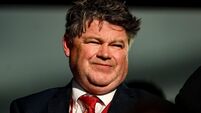
Unveiling a major policy paper outlining his economic vision, Mr Rabbitte said much of the resources needed will come from economic growth.
However, he said given the scale of infrastructural investment required in Ireland, “it will be appropriate to borrow limited amounts to fund capital spending, rather than squeezing current spending on public services as at present”.
Mr Rabbitte also said there may be a requirement for greater tax revenues.
While saying it was premature three years before a general election to spell out the specifics, he did give a broad indication of some aspects of his approach.
“Such revenues should be raised in the first instance through developing a fairer tax system, ending the tax breaks which have been built into the system to benefit wealthy individuals, and generating a fairer share of revenues from taxes on capital gains, inheritances, and profits from land speculation.”
While accepting that they might not raise significant revenues, he said more needed to be done in environmental taxation.
Mr Rabbitte chose Sheriff Street youth club in Dublin’s North Inner City, only yards from the Irish Financial Services Centre, to unveil his 20-page pamphlet, The Fair Economy.
Conceived as the economic underpinning for the ‘Fair Society’ speech he delivered at his party’s 2003 national convention, Mr Rabbitte argued for a social democratic approach to the economy, rather than what he claims is the Government’s “neo-liberal approach”.
“My purpose is to set out the framework of a social democratic alternative, based on the long-held values of the political left, but adapted to modern conditions and attuned to the needs of one of the most open economies in the world,” he said.
Saying that market-based competition was vital, Mr Rabbitte argued markets must be placed in a wider social context and be subject to effective regulation.
He set out 10 principles which would be necessary. They are: unlocking human potential; embracing, but also regulating, the market; investing in people and good public services; reducing inequality in society; respecting the citizen-consumer; designing a new strategy for enterprise; building a sustainable economy; ensuring adequate resources and political will are allotted to care of the elderly, children and the disabled; and facing up to Ireland’s obligations to build a fairer world.
CONNECT WITH US TODAY



Be the first to know the latest news and updates