Killer who won the sympathy of a nation
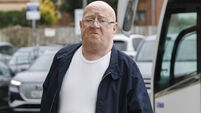
But as Wayne O’Donoghue was transferred to the prison van under the glare of television lights and camera flashes, there was no anger.
Just one middle-aged Cork woman who tapped the darkened windows on the side of the van.
“We’ll say a prayer for you, boy,” she said.
It would be fair to say this element of sympathy was reflected both in the jury’s verdict and in the national reaction to the high-profile case.
O’Donoghue’s solicitor spoke of the many people who had said prayers, sent cards and made telephone calls to him.
O’Donoghue and Robert were next-door neighbours in the quiet rural area of Ballyedmond, Midleton, in Co Cork.
During the trial, the jury heard that Robert saw O’Donoghue as an older brother and often played soccer and video games with him.
O’Donoghue had even built a treehouse for the schoolboy and brought him on regular trips to Midleton town in his car for DVDs or meals in McDonald’s.
But on January 4, Robert called round to ask O’Donoghue if he would take him to McDonald’s for a milkshake.
O’Donoghue refused, saying he had study to do.
O’Donoghue told gardaí how Robert had then begun throwing pebbles at his car. He grabbed hold of him and put him in a headlock. He then released him from the headlock and held him by the throat.
The post-mortem examination on Robert’s body found that he died as a result of compression to the neck causing asphyxia.
Mr Justice Paul Carney told the jury that it was the prosecution’s case that the ingredients were there for a finding of murder.
The defence case was that the evidence did not support a verdict of murder and that O’Donoghue was provoked into momentarily losing control when Robert started throwing stones.
The jury had heard that Robert had been diagnosed with Attention Deficit Hyperactive Disorder and had been prone to temper tantrums.
He had been prescribed one Ritalin tablet a day to improve his concentration at school, but had been taken off them for the Christmas holidays.
The prosecution had put great emphasis on O’Donoghue’s cover-up in the aftermath of the killing, which included his taking part in the eight-day search operation and attempting to burn the plastic bags around Robert’s body.
But on January 16, the day after the funeral, O’Donoghue finally cracked and told his father what he had done.
By opting for the verdict of manslaughter, the jury accepted the defence’s version of O’Donoghue as a normal person caught up in tragic circumstances rather than the cool and collected killer portrayed by the prosecution.