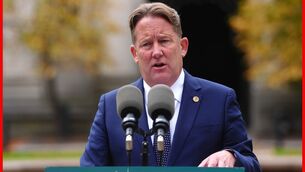
Quinn’s goal is to help young soccer players who fail to shine in Britain
The former soccer international says far too many set out on the glory path, signing up with clubs in Britain at 15 or 16 years of age, only to be dropped after three or four years with no education or alternative plan.
“Certain safeguards need to be brought in for young players. Nine out of 10 are home before they have developed as people,” Quinn said, as he was welcomed onto the Irish Sports Council in Kilkenny.
He said his role on the council would be more a watching brief, but he hoped others would learn from his experience.
“I hope that, as my part on the council, I can help improve the lot of athletes, particularly professional footballers.
"I feel that we took a certain glory path, with no regard for what would happen if we did not succeed. Certain safeguards need to be brought in for when a young player, plucked out at 14 or 15, is thrown back again.
“Parents and players should insist on an education. John O’Shea did this. He had a Leaving Certificate and didn’t sign up for (Manchester) United until he was 18. It was a far better option to going when he was 14 or 15. My own niece has signed up to a basketball scholarship but she will also have a degree after her four years.
“We need to implement a programme like the Scandinavians. Their younger players have a 50/50 application to football and an education. Those who are not necessarily academically-minded get an opportunity to develop a skill,” he said.
Irish Sports Council chief executive John Treacy said the body would soon set up four sports partnerships around the country. It is also working on the world anti-doping code, to be implemented next January.
CONNECT WITH US TODAY



Be the first to know the latest news and updates