Ambulances took over an hour to respond to 6,200 urgent cases
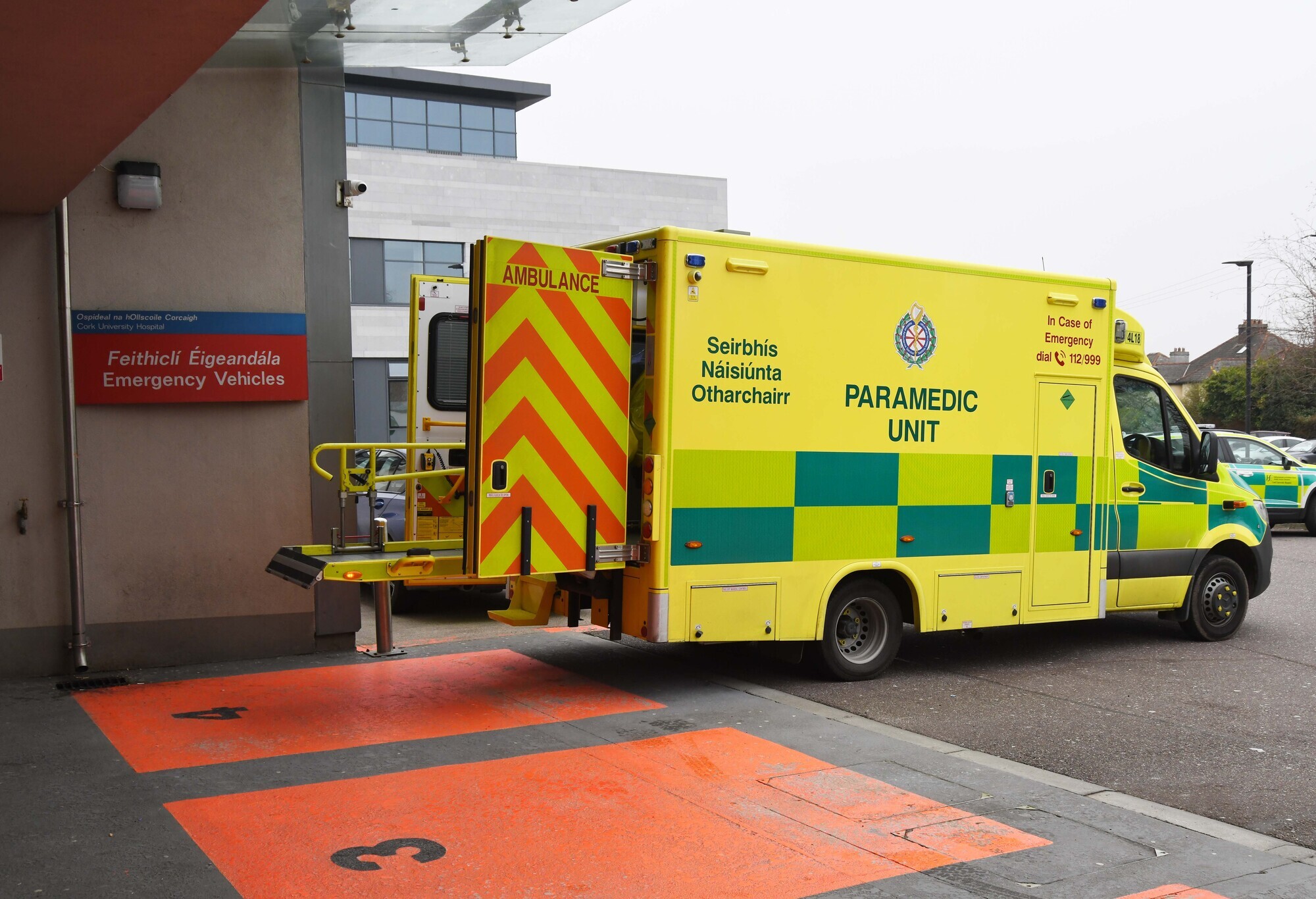
The HSE aims to respond to life-threatening heart and respiratory calls within 18 minutes and 59 seconds in 80% of cases. Picture: Denis Minihane.
It took over four hours for an ambulance to arrive to 94 life-threatening emergency calls last year.
According to Freedom of Information figures, on 21 occasions the wait time was over five hours.
The HSE aims to respond to life-threatening heart and respiratory calls in under 19 minutes in 80% of cases.
Other life-threatening emergencies should be responded to within the same timeframe in 50% of cases.
On almost 6,200 occasions last year, it took over an hour for an ambulance to respond to either of these types of calls.
The longest was almost seven hours and 10 minutes to a call in Waterford that was followed by over six hours to calls in Cork and Westmeath, according to the figures obtained by .
A total of 233 response times were over three hours.
The National Ambulance Service Representative Association (Nasra) warns that the service is under "significant strain" with pay and conditions being so poor that they are losing in the region of ten staff a month.
The staff and resources are not there to meet the demand, Nasra representative and paramedic Brendan Flynn said.
"Since 2019 we brought in 472 staff that commenced training and we lost 55 of those. 251 of them have been deployed to frontline duties and 166 assuming they qualify and they are still with the service will be deployed in December 2023 and January 2024.
"Staff retention is obviously a significant issue. And we have been waiting for remuneration for changes we made since 2002 and we had a laws and responsibilities review which still hasn't reported.
Dublin Fire Brigade passed over on 53,000 occasions in 2022 and they asked for National Ambulance Service assistance in covering those calls, Mr Flynn told RTÉ Radio's .
"We weren't able to provide resources in 76% of those occasions."
He said there has been a massive increase in demand with calls last year up 15% on 2021.
"The National Ambulance Service had 115,603 calls in December 2022 and January 2023. Over those two months, that is an average of 1,865 calls a day.
"Those months compared to Dublin 2021 and January 2022 is an increase of 19%."
Chief executive of Lifeline Ambulance Service, David Hall, said that HIQA needs to look at the clinical outcome in these cases to see if there were any adverse outcomes for the patients.
"By definition, these are patients who are very, very sick and to have so many people waiting so long would be very worrying and very concerning," he said.
Mr Hall said the report is disturbing for patients and healthcare representatives.
Patients in need of urgent care may now give calling an ambulance a second thought as they do not know how long they will be left waiting.
"How long do you wait for such transport? There is also an inherent danger and risk here as people then become tempted to transport themselves or a loved one to hospital which is very ill-advised."
The Oireachtas health committee will discuss ambulance services, including response times, with the National Ambulance Service and Dublin Fire Brigade this morning.