Volkswagen faces job cuts and plant closures as turnaround plan moves forward
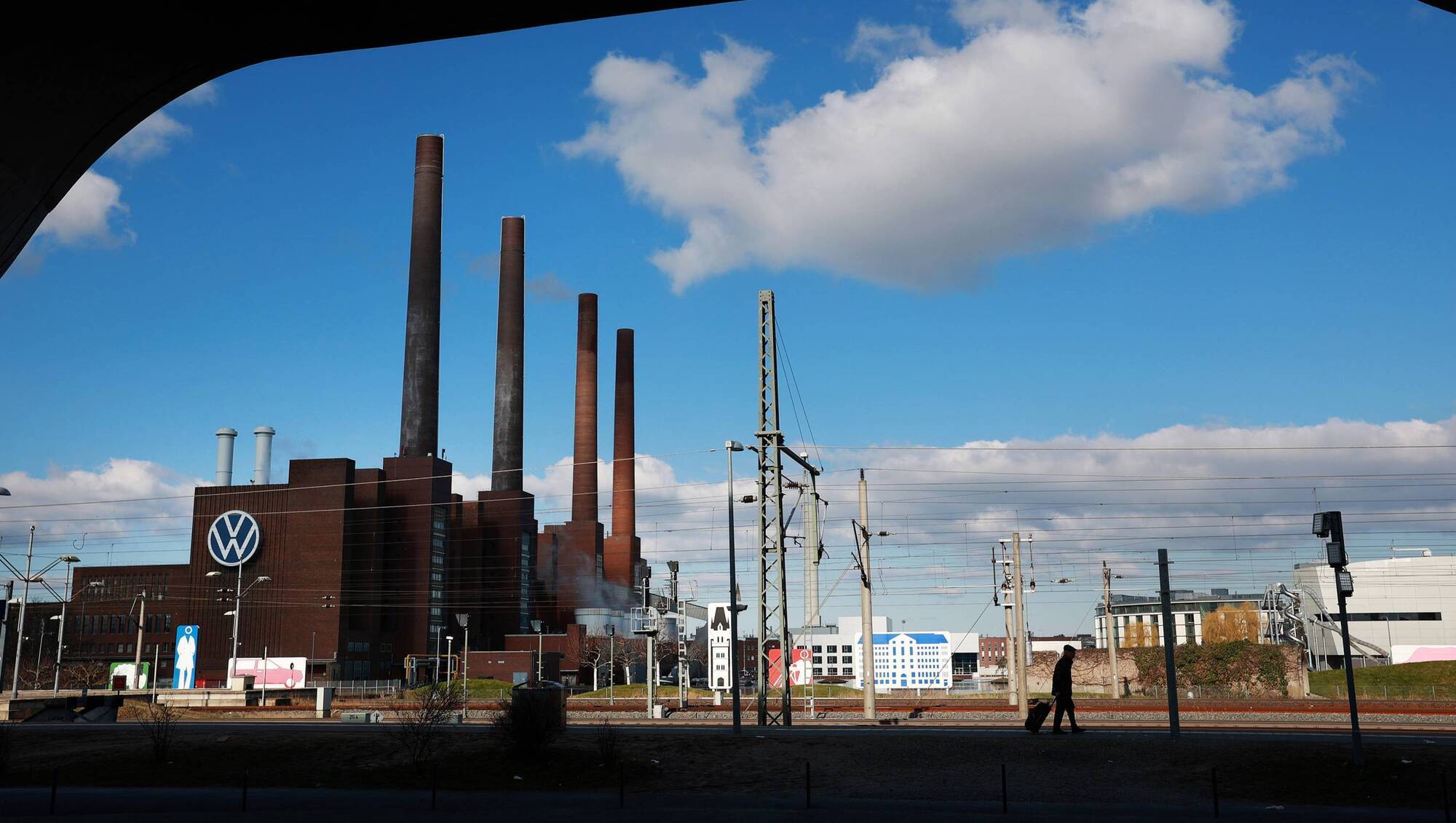
The Volkswagen AG (VW) headquarters and auto plant complex next to the train station in Wolfsburg, Germany, on Tuesday, Feb. 28, 2023.
Volkswagen CEO Oliver Blume may have got the green light from stakeholders for his turnaround plan, but he faces tough talks in Germany over job cuts and plant closures, as well as fundamental questions over the automaker's US strategy.
Here is a guide to what comes next.
Volkswagen's supervisory board met on Friday, with unresolved issues ranging from details of the restructuring to its strategy in the US, where the world's No 2 carmaker has lost billions of euros due to the impact of tariffs.
Volkswagen must also settle the long-standing question of whether premium brand Audi should get its own US production site, which would require the blessing of the committee.
The German company also wants to pivot towards the most profitable US segments, such as pick-up trucks and large SUVs.
While half of the 50,000 additional job cuts are likely to occur in Germany, Volkswagen is restructuring elsewhere too.
It has already cut its workforce in China from 90,000 to 70,000 as it adapts to falling sales, with more expected and Chinese production facing capacity reductions of 500,000 vehicles.
Bound to a strike truce until January 1, 2027, Germany's top industrial union is seeking other ways to pressure management.
On September 30, IG Metall representatives are expected to discuss with management concerns that the overhaul could breach a 2024 labour agreement.
That deal ushered in a first wave of 35,000 layoffs in Germany, in return for employment guarantees until the end of the decade and investment in plants now on the chopping block.
Despite dropping their opposition to the broad plan at a board meeting three weeks ago, labour representatives and the state of Lower Saxony, Volkswagen's second-largest shareholder, are still fighting to stem local job losses.
Read More
Unions want the 25,000 planned German job cuts to be a starting point for negotiations, with a focus on cost rather than a numerical layoff target.
Volkswagen will put together a European production plan by the end of June 2027, a key period for plants already at risk.
The company intends to remove more than 500,000 vehicles' worth of capacity in response to persistently low demand, with the Emden, Zwickau, Hanover and Neckarsulm plants scheduled to close on a staggered basis from 2031 until 2034.
Solutions could include pivots to defence or Chinese partnerships, but no concrete plans have emerged so far.
There is also room for manoeuvre with working hours, as the 2024 agreement says parties can agree a four-day week for workers if Volkswagen gets into financial difficulty.
China's Geely responded to the challenge posed by rival BYD this week with a system that can charge an EV in just four minutes, described by the company as the industry's fastest speed.
Geely also introduced a next-generation electric vehicle battery and an upgraded Galaxy E5 pure-electric SUV as it seeks to revive sales in China, where EV sales declined for 11 consecutive months through August.
China's EV market has moved into a battle over technology, with automakers competing on intelligent driving systems, range and ultra-fast charging capabilities to attract buyers.
Supported by a 2.2-megawatt charging infrastructure and a high-rate battery capacity, Geely said its new setup can charge a vehicle from 10% to 70% in 4.5 minutes, and from 10% to 97% in 8 minutes and 40 seconds under normal ambient temperatures.
"Current charging speeds are already approaching the physical limit, and the marginal gains from pursuing even faster speeds in the future will become increasingly small," Geely executive Zhang Dewang said at the launch event.
To ensure stability and safety under such high power, Geely is deploying AI across cloud and on-vehicle systems.
It uses cloud-based twin simulations paired with deep-learning models deployed directly on the EV to monitor battery health, manage thermal control and predict potential hazards.
The new technology is Geely's direct response to aggressive moves by rivals such as BYD, which have invested heavily in flash-charging and megawatt-level charging networks to ease range anxiety and win customers.
Earlier this year, BYD unveiled a new-generation flash-charging system that can charge a battery from 10% to 97% in nine minutes. It plans to build 90,000 stations by 2028, Deutsche Bank has said, citing a meeting with BYD's management.
Geely's Zhang said the broader charging ecosystem would in future resemble traditional petrol stations with diverse brands, adding that multi-party infrastructure development will accelerate the global rollout of fast-charging networks.