Dacia Spring review: Budget cars are back, and that’s great news

The Dacia Spring is as basic as it gets, but that simplicity means that it’s also one of the most affordable cars on Irish roads
Dacia Spring review: Budget cars are back, and that’s great news

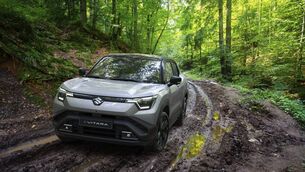
The all-new Dacia Spring

DACIA SPRING

Rating

★★★☆☆

Price

from €17,990 - €19,490 as tested

Power

A choice of either 44bhp or 64bhp electric motors

Range

225km

The Spec

pretty thin on the ground

Verdict

a cheap, workable electric with few frills and less thrills

THERE WAS a time when budget cars were a real thing that sold well to people who didn’t give a fig about being seen in a Fiat Bambino, or a Mini that was being advertised as “the last car for under £1,000” in Ireland.

That, obviously, was when social influencers were thing of the future and your responsibility to your own public image was infinitesimally small, so there was little chance of your being car-shamed on the still-to-be invented internet.

Those were times when cheap cars actually boosted your cred, because they illustrated that you were not fooled by the car industry’s more-is-better schtick and, actually were possessed of a level of street chic, even before society recognised that such a thing existed.

And when you look back at some of the cheap cars on offer back in the day, there were some classics: the Renault 4; the Citroen Deux Chevaux (2CV); the aforementioned Bambino, which had replaced the legendary 500 as Fiat’s bargain bin entry level model; the Mini, when it was a motoring necessity rather than a fashion icon, and so many others.

Even the East German Trabant, which truly was one of the worst cars ever made, became fashionable for a while, like the Tata Nano, which was made out of cardboard, or the diminutive but startlingly talented Daihatsu Domino.

All these cars were a statement in their own right, one which said clearly: “I need wheels — not a motorised Versace handbag.”

But the public’s desire for such things dwindled and almost vanished over the last two decades or so — until now.

The introduction of mass-market EVs led everyone to think that a new era of the budget car would descend upon us, but unfortunately, what happened was quite the opposite because these things proved to be hugely expensive.

The motor industry, like any other, used the EV era to capitalise on our desire to make the planet a better place to inhabit and started charging outrageous prices for the privilege of doing so. Even early iterations, which looked — and drove — like they had been assembled with the help of a couple of Halfords vouchers and a team of under 10s, cost a fortune.

Indeed, I remember reviewing an early Renault electric — the Zoe, maybe — and being startled by the fact it cost nearly double what the company had been asking for a similar sized Clio, with an internal combustion engine. And when VW entered the fray with their ID.3 and 4 models, we were all taken aback to find cars, which should have cost around the same money as a Golf, were in fact one-third again dearer. Suddenly, saving the planet didn’t seem quite so appealing.

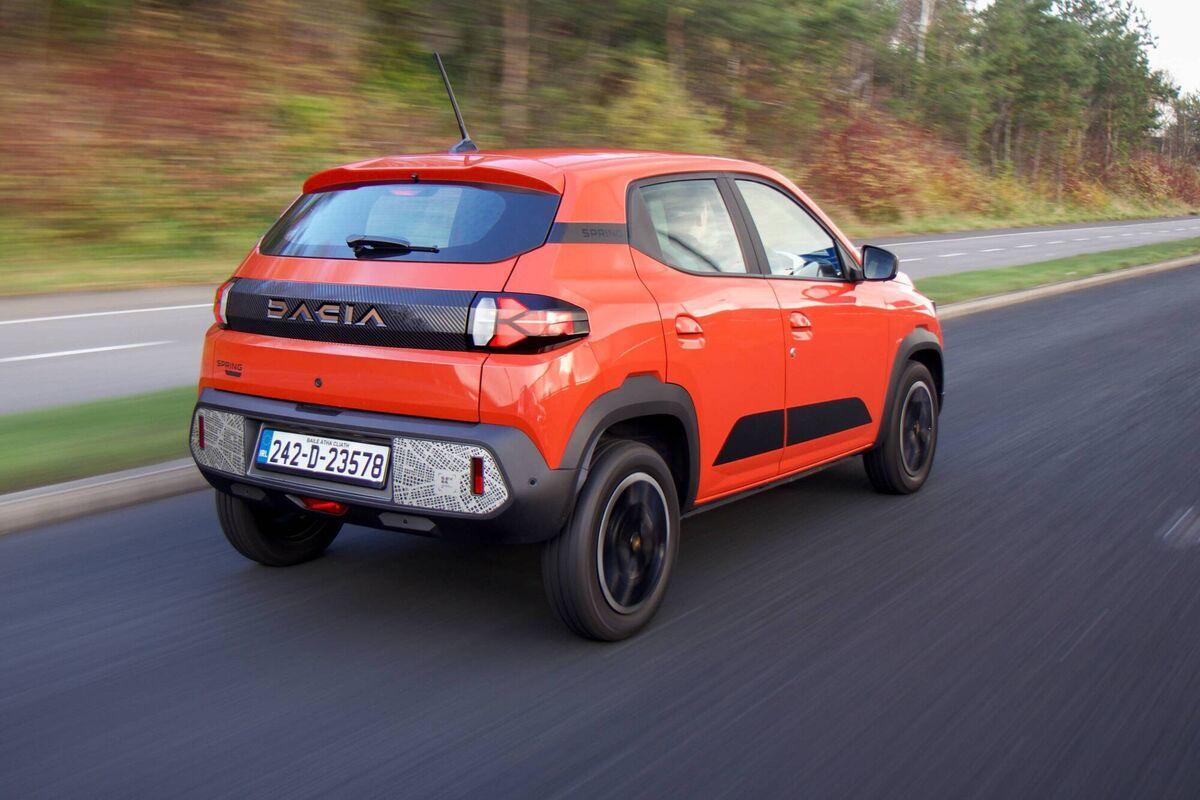
The Dacia Spring
The Dacia Spring

“Oh well,” the manufacturers moaned, “we’ve had to bear the burden of massive R&D expenditure and all sorts of other ancillary costs and that’s reflected in the list price.”

Nonsense. Car makers saw the chance of a quick buck and took it.

All of which brings us to this week’s tester which is — no prizes for guessing — a budget electric vehicle and comes to the market with a baseline price of under 20 grand. It is the Dacia Spring and, having tested it, we’re left wondering if this is going to become another automotive budget legend, or simply another blip on the radar screen of life.

With VW announcing a cluster of cheap EVs due to be with us within the next 12 months and many others set to follow suit, it seems that Dacia (and parent company Renault) has got a jump on the field with the Spring and that would tend to suggest that it will become a legend rather than a blip.

The thing about the Spring is that it actually looks cheap; a discerning eye along the flanks of the car pinpoint Minnie Mouse wheels and bicycle tyres, door locks, and a complete absence of any cosmetic touches to brighten up the look.

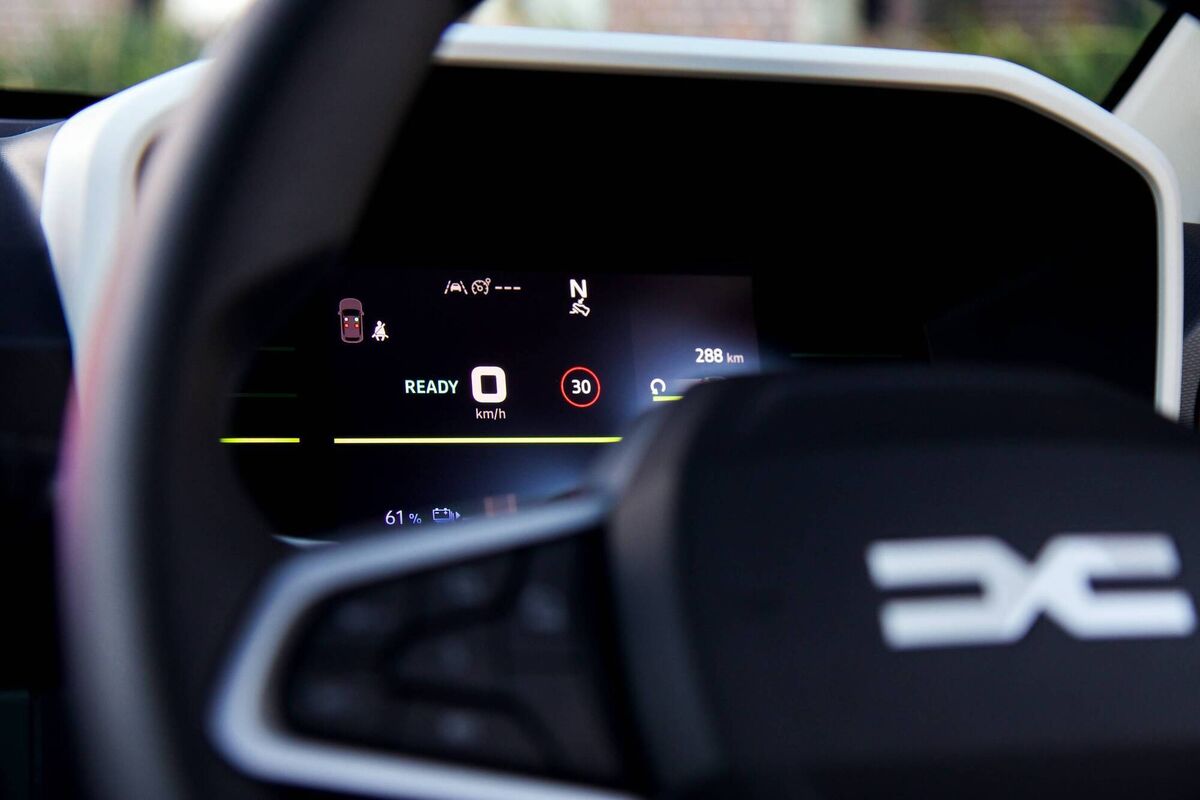
On the inside, you will find no upmarket upholstery or decor, no such thing as infotainment screens or other tech frippery and few, if any creature comforts.

You do get a radio and phone connectivity, but the whole thing is so basic it could have starred in the Flintstones movie.

This is a car that harks back to the era when a cigarette lighter was an optional extra (there isn’t one) and there is little here that would not have come as standard with, say, a 1968 Morris 1000.

NOW, while it may be that Dacia has established itself as the king of the cheap car and made a ton of money from budget busters such as the Stepway, the Logan, and the Duster, even by comparison with any of its siblings, the Spring is spartan central.

For all that, though, the interior is quite a pleasant place to be. It is far from sumptuous, but it has a sunny disposition and the bright fabrics and dashboard inserts lift what could otherwise be a very gloomy situation.

But that’s pretty much it as far as luxury goes. You do get a steering wheel, indicators, windscreen wipers, a heater, lights, and a key with which to start it, but there was little else.

OK, so there’s electric front windows and door mirrors, but no screens (at least on the mid-level model we tried), and you will have to look elsewhere or go up the Spring range if you desperately need them.

And, what of its ability on the road? Well, frankly, it handles as well as one of those gangly old 1960s prams — which is to say not particularly well — and it rides like a plank on wheels.

Dacia Spring futuristic interior

The steering is tight — and power assisted (!) — because this is a car that will spend most of its life in an urban environment, primarily because it does not have enough juice to get any further.

A choice of either 44bhp or 64bhp electric motors might sound a lot, but it’s not really.

The lesser version is slower than a two-tonne truck (19.1 seconds 0-100 km/h) and the 125 km/h top speed is, in reality, something you’ll never achieve.

The range? Well, it’s a claimed 225km but, were you to plan a Cork to Dublin trip, you will almost certainly have to factor in two charging stops en route.

The reality of EV motoring is that you will almost certainly have to disregard what the claimed range is, because it is rarely what the manufacturer says.

With the Spring that does not matter, simply because you know that if you’re venturing out of town, you will not be going terribly far. And once it sees a motorway, you can actually feel it blush as the range gauge plummets southwards.

No, this is a townie and don’t fool yourself otherwise. But once you’re acceptant of the fact it is what it is, the Spring makes sense as a car — as long as you have a second form of transport, or ready access to bus and train services.

Neanderthal and all as it is, this Dacia does have a purpose, and once you recognise that its limitations are many and you will have to work around them, it becomes a very cheap alternative to pretty much any other option you might have.

The biggest kudos here are to Dacia itself; on the one hand for recognising that people like and want cheap cars and on the other for building it.

Dacia has never been a brand for making braggadocio claims about itself of its products but — and it rightly shouts this from the rooftops — provide value for money. And, in this case, at over €500 shy of €20,000, it provides a lot of that, if little else.

More in this section

Revoiced

Newsletter

Sign up to the best reads of the week from irishexaminer.com selected just for you.

Cookie Policy Privacy Policy Brand Safety FAQ Help Contact Us Terms and Conditions

© Examiner Echo Group Limited