BMW 218s: Good looks and drive quality shows change triumphs over tradition
BMW 218s
|
BMW 218s |
|
|---|---|
|
|
★★★★☆ |
|
|
€ 37,364 - €42,407 |
|
|
An excellent three-pot petrol |
|
|
Sophisticated |
|
|
Change triumphs over tradition |
The great English writer William Somerset Maugham once averred that ‘tradition is a guide and not a jailer’ and I suspect that if today’s designers and planners at BMW ever heard the quote, they would heartily endorse the opinion.
Given the amount of flak the German company has endured for eschewing tradition by introducing its new 1 and 2 Series models with front wheel drive only (although the company actually first did it when it unveiled the 2 Series Active Tourer MPV), it might be no surprise that BMW insiders would enthusiastically back Maugham’s sentiments.
They might also advocate the views of another giant of English literature, G.K. Chesterton, who said that tradition “is the democracy of the dead,” but in truth there must have been an atmosphere of dread in Munich when the decision was made to make these cars.
Oftentimes car companies have tricked with tradition at their peril, but in this case, it would appear that BMW’s bean-counters won the day over any in-house orthodoxy in the design and application of these cars. Undoubtedly the cost factor in building front as against rear-wheel-drive vehicles was a huge influence here.
It may even have been – whisper it – BMW considered, in the case of these their two smallest conventional cars, today’s buyers were less constrained by history than a majority of the motoring press and that young people cared less about such matters as whether a car was front or rear wheel drive.
Sales of the cars would suggest BMW is right and younger purchasers are less likely to give a damn about which wheels drive their cars – tradition or not – and are more focussed on stuff like how green the car is, how well it looks and how much it costs.
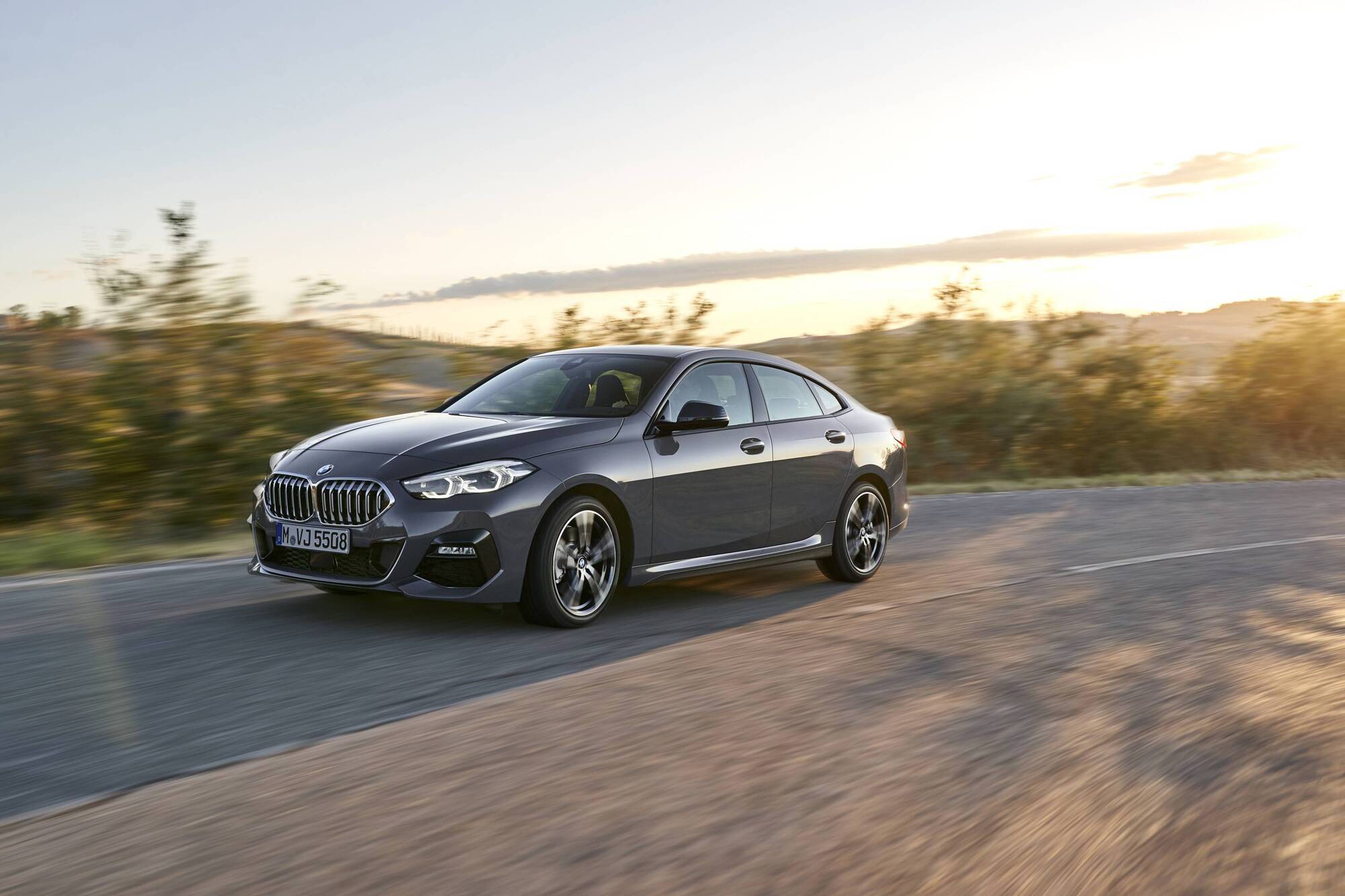
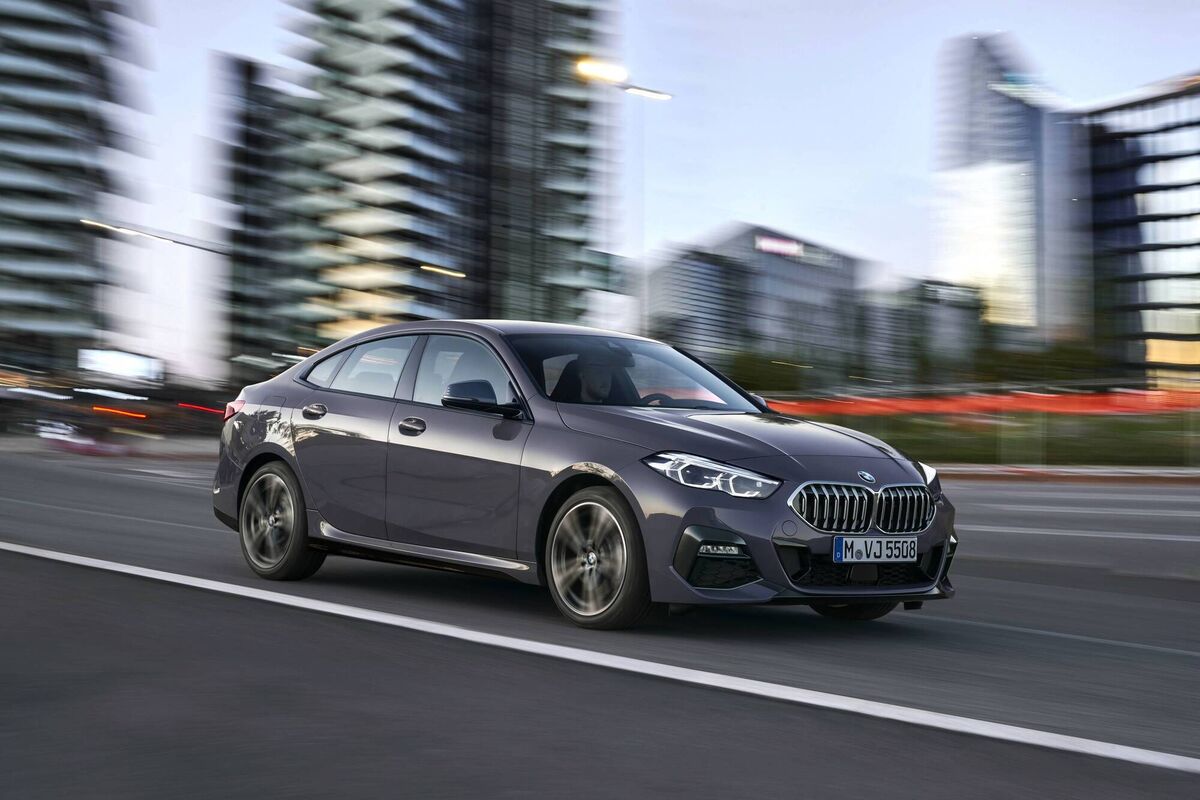
But, while we look this week at the BMW 218s which is another variant in the model line-up and specifically another ‘Grand Coupe’ 2 Series car, several interesting things emerge. Not alone it this a front driver, it is also powered by the smallest engine the company make.
Where it gets confusing, though, is the fact a new two-door version of the 2 Series – the coupe and not the Grand Coupe (which is a four door) – is on the way and it will be a rear driver. This will please traditionalists, but it perplexes the crap out of the rest of us.
Still, we are just bit-parters here and what would we know about much?
Anyway, the 218s is what it is and my job here is to tell you whether it is any good. And the answer to that is that it is the Curate’s egg of the range – i.e. there are good bits and bad bits.
One of the best bits, some might be surprised to hear, is the 1.5 litre three-cylinder engine. This is actually the same basic unit as is seen in the fantastic i8 supercar, albeit shorn of the electric motors which give the sports coupe a power output of 350 bhp.
In this guise, the engine is good for some 138 bhp, which is plenty for a car this size and weight. Having said that, however, the 8.7 second needed to get from 0-100 km/h will not peel the eyelids right off your head, but the power on offer is nevertheless good for a top speed of 215 km/h.
Obviously, with one cylinder less than many rivals, this is an engine which typically, has to be worked hard to extract the max from it and so for those with a craven eye on consumption figures, it might not be as suitable as the 220d turbodiesel option.
Even so, this car, with some small element of judiciousness in the driving department, will still return a 5.7 l/km figure (49.1 mpg) which is not at all bad.
As this is a BMW – and a sporty one at that, given its M Sport Spec and with frameless windows as parts of its ‘Grand Coupe’ designation – an element of playfulness is expected – and delivered.
With 220 Nm of torque on offer from just 1,480 rpm, it is no surprise drivers with a heavy right foot – that’ll be me – will generate an element of wheelspin from a standing start but, in truth, that’s really the only vice in evidence here.
Certainly you will encounter traces of understeer if you’re really pedalling this thing hard, but in fairness to the BMW engineers, they have managed to make it a very balanced car handling-wise, undoubtedly because it has not skimped on the suspension and that means an all-round independent layout with no sign of the far-from-flawless torsion beam system relied upon by so many competitors.
Another tick in the positive box for the engineers and designers is that the typically guttural and harsh aural accompaniment of the three-pot engine has been largely subdued by whatever NVH measures were adopted here.
The tester was fitted with the eight-speed auto ‘box (an €1,800 extra) and the combination of this, allied to those factors outlined above make the 218s a very relaxing car to drive and one which will allow long distances to be covered without leaving you a gibbering wreck needing hours of recovery from the trauma.
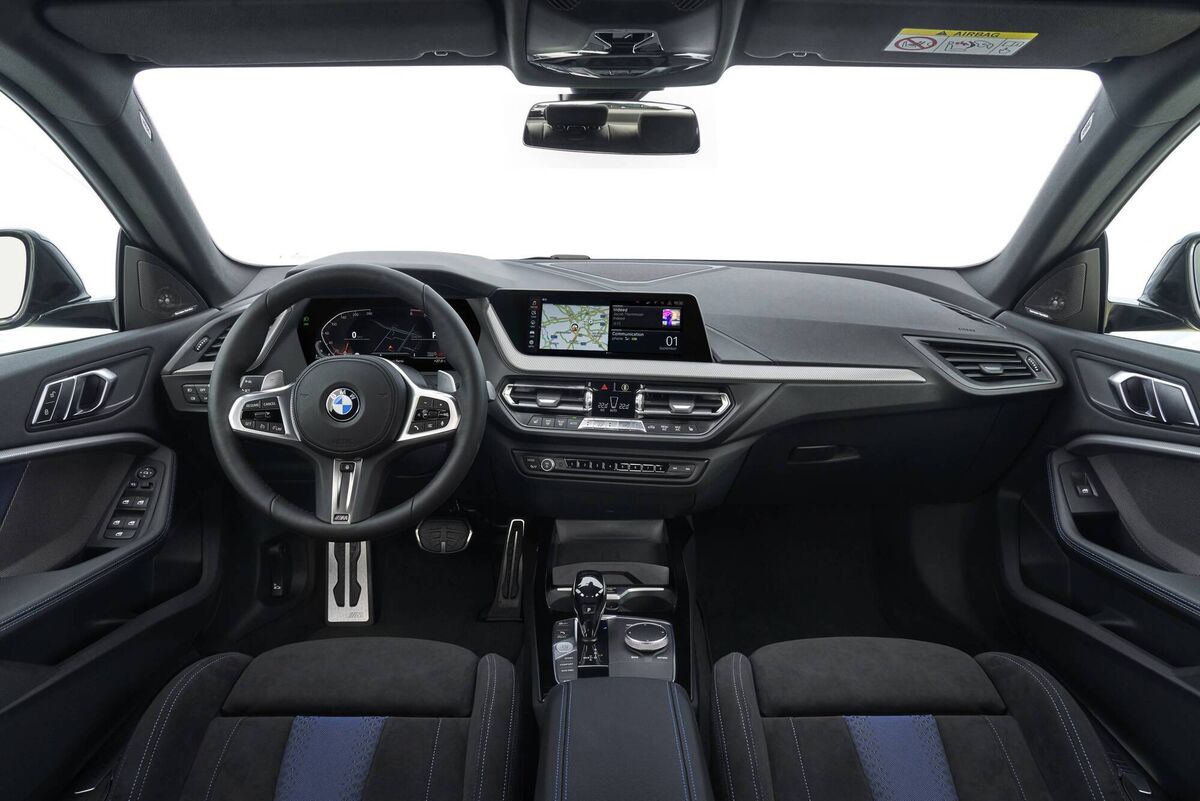
Excellent seating and a terribly (for a small-ish car) sophisticated interior – identical to the 1 Series and reflective of the 3 and the 8 – make this a very credible choice, although it is worth remembering that unlike the 1 Series hatch, this does have quite a sloping roof and lower rear window.
That means that leggy passengers will find it a little tough in the back of this thing, particularly over longer trips. And that’s a little bit of a surprise, really, because the kneeroom on offer here is among the best in the segment. Boot space is also surprisingly commodious.
Undoubtedly there are elements of this car which will force purists to run for cover, citing historical precedent as their stick of opposition. But I would urge even the most enthusiastic of enthusiasts not to completely rubbish this car simply because BMW has decided that the time is right for a new breed of mass-market vehicle.
I’m sure it caused the decision-makers in Munich considerable heartache that they have been lambasted by traditionalists moaning about this change of tack, but they can console themselves that to the last stitch on the leather steering wheel that this car embodies the sort of sophistication a car made by the company should do.
That it does not quite fit everyone’s view of the company’s traditions matters not one whit. What matter is – as always – the bottom line and in this regard the 2 Series Grand Coupe is meeting expectations in every market in which it competes.
And, the thing you have to cross-reference when talking about tradition is the simple fact that change is the biggest single thing we face on a daily basis. Tradition might be nice in certain aspects of life, but nothing is surer day-to-day than change.
But if BMW needs to console itself in the face of the considerable opposition it has met with the 1 and 2 Series models, it might reflect on the old German proverb which says: “To change and improve are two different things.”