A car that actually drives off and parks itself... coming soon-ish

Maybe there's a bright spot on the horizon for those who dread parking their car. Picture: iStock
It has been said that the absolute worst thing about parallel parking is the witnesses.
Are you the sort of person who just relishes getting your car into a space pretty much the size of your vehicle? If so, then there's nothing more for you here.
But if parallel parking was the dreaded part of your learning-to-drive experience or if you routinely park 500 metres or more from your destination rather than face the heart-rate elevating wrestle into an awkward spot then maybe there's a bright spot on the horizon.
With so many drivers fretting about their parking and some prepared to avoid difficult spaces altogether, several manufacturers did try to come to the rescue by offering parking sensors and reversing cameras. The 'Parktronic' technology is useful but you still have to be involved in the process.
Typically you'll be alerted to gently edge backwards and brake while the car steers for you. The cameras and sensors in the next generation of self-parking technology didn't even need the 'driver' to touch the pedals. A handful of luxury cars even offered a simple ‘remote control’ feature, where you could park the car while standing next to it, using the key or your smartphone to instruct it. Pretty 'Knightrider' in fairness.
That was a fairly big step for 'touch' parkers but you still had to be involved in the parking d̶r̶a̶m̶a̶ process to a good extent.
Now the world's first fully self-parking car is on the way.
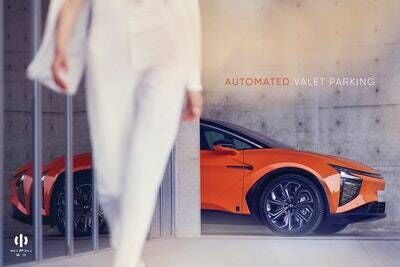
Human Horizons, a Chinese smart mobility and autonomous driving research company is launching the 'autonomous valet parking' (AVP) system on the HiPhi X production vehicle at the Beijing International Automotive Exhibition 2020. This expo runs from Saturday, Sept 26 until Oct 5.
Fixed sensory equipment such as lasers, radar and communications devices in parking areas can identify and track vehicle and obstacle positions, send this information via 5G to the vehicle and guide it to a safe parking space. Basically, what this means is that you will be able to exit your car anywhere in the parking area and leave the car to park itself autonomously. Like, park itself!
Upon returning, you will be able to summon the vehicle to your current location using a mobile app — and then just drive away. Yes, you still have to drive it.
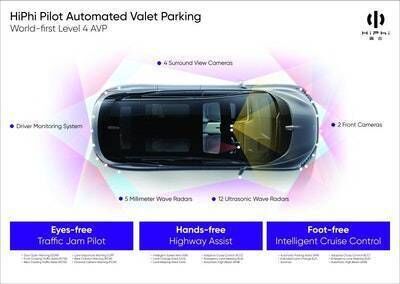
The system employs the same principles as aircraft safety design, using a dual-redundancy system meaning backup components ensure the reliability of the system even in the case of single-component malfunction.
This system can start, stop, turn and drive the vehicle within a 0-130km/h speed range. This allows drivers to take their foot, hands, eyes — and attention — away from the road and is achieved by 24 sensors placed throughout the car (including smart front view and surround-view cameras, millimeter-wave radar, ultrasonic radar, driver status detection DMS cameras and more).
And they're looking at bring this technology to the mass market too. Human Horizons founder and CEO, Ding Lei, noted: "Human Horizons leverages technology to enhance the driving experience and efficiency while prioritizing user safety for our projects. With this in mind, we seek to promote autonomous driving and launch V2X technology ready for mass-market application."