Here's what it's like to visit Greenland, a country much in the news due to Donald Trump
A dive into Inuit culture and breathtaking landscapes makes Greenland an exhilarating adventure, writes Ben West
Here's what it's like to visit Greenland, a country much in the news due to Donald Trump

Serenity, simplicity and icy splendour await in GreenlandĀ 

The journey to the glacier is as thrilling as hiking on the glacier itself. It involves taking a boat ride cruising past the mouth of an ice fjord, then jumping into an off-road vehicle for a dusty, bumpy, yet exciting ride across rugged, hilly terrain.
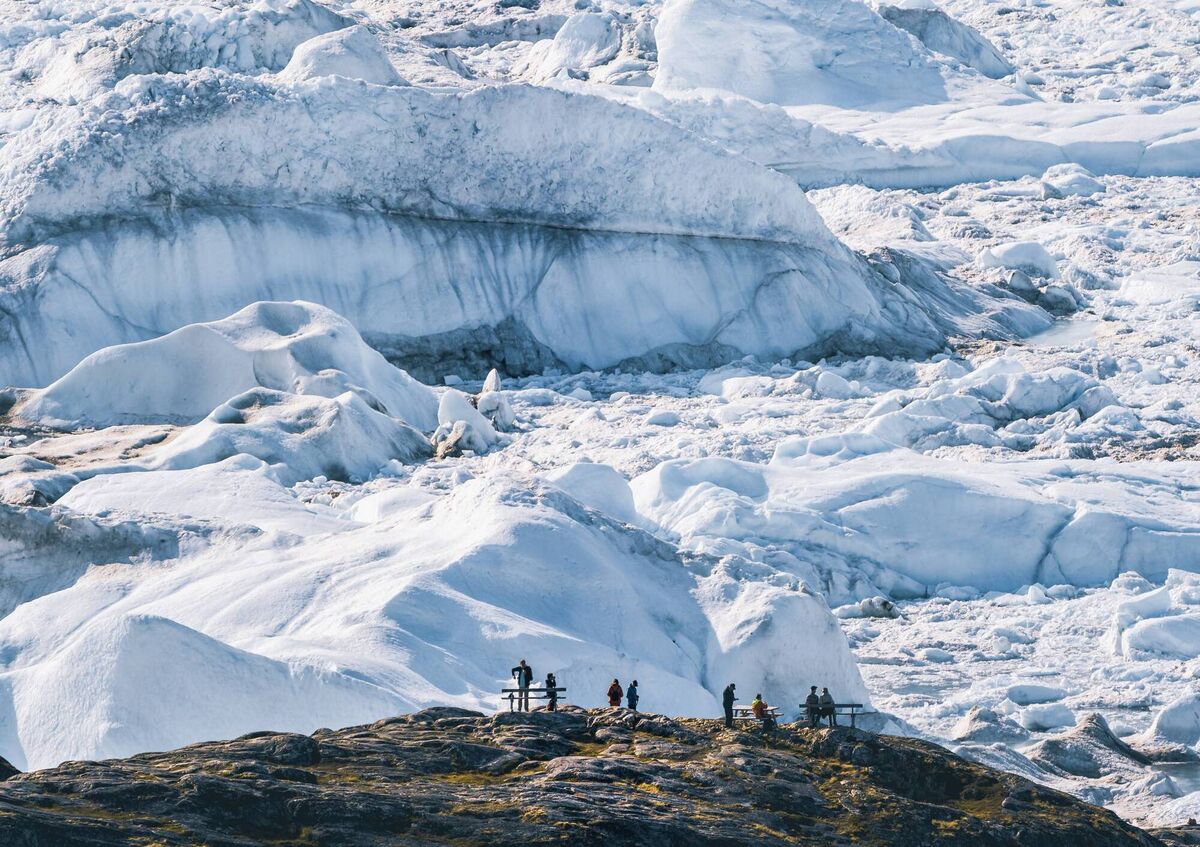
Another boat takes us 40km nearer the inland ice, gliding through a wondrous forest of towering icebergs, before a huge bank of white suddenly appears at last: The glacier. The temperature drops dramatically as we approach.

The striking thing is that once we reach the glacier, the majestic Saqqarliup Sermia glacier in southern west Greenland, located within the Sarqardleq fjord near Ilimanaq, there is complete silence. No birdsong, no wails from arctic foxes, no splashes from a playful and inquisitive walrus, no trees.Ā 

Standing by the water’s edge on this sunny yet freezing cold day, I see absolutely no wildlife in the water or on the land, not one bird flying above. Just water, ice, snow, sand, and silver rocks, and mosses on the nearby hills.

Yet I’m in Greenland, much in the news in the last year due to Donald Trump’s designs upon it, a place renowned for its unique Arctic wildlife.

Greenland is more accessible than ever

It is more accessible than ever since new flights and a new expanded airport accommodating bigger planes opened in late 2024.

Demand is being further fuelled by overtourism in many parts of the world, causing travellers to explore quieter climes, and temperatures rising in traditional holiday destinations triggering increased popularity of ā€˜coolcations’.

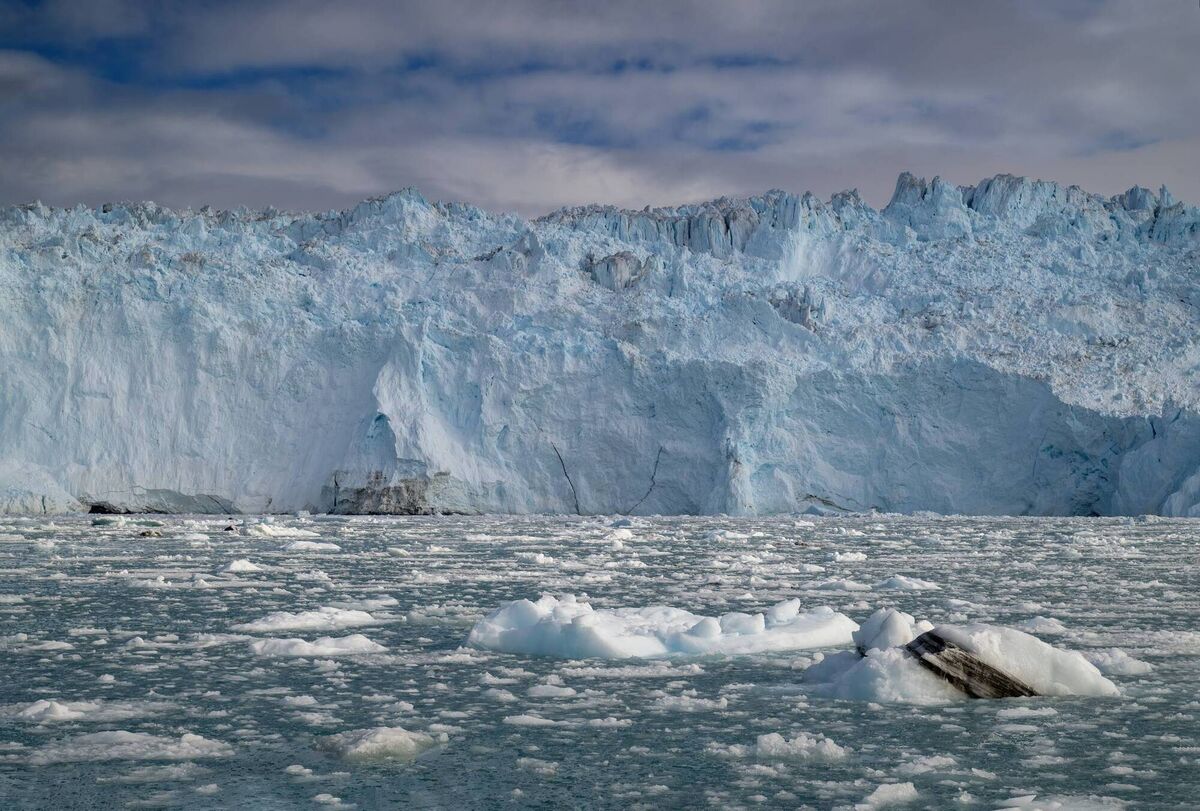
Despite the absence of creatures in this beautiful wilderness, the glacier I stand next to more than makes up for it. The dramatic setting of the gigantic range of ice towering over us is enhanced by distinct thunder cracks seemingly from the heavens, which more specifically is the process of calving, the breaking off of ice chunks from the glacier to form icebergs.

This sound is the loudest natural source of noise in the Arctic and can involve sections of ice so huge that in some cases can be measured in cubic kilometres. The sound is a chilling reminder that the Greenland ice sheet is losing mass, driven by rising atmospheric and oceanic temperatures — which in turn contributes to a rise in sea levels.

Despite the absence of creatures in this beautiful wilderness, the glacier I stand next to more than makes up for it.

Before tackling the glacier, we rest on the beach beside it. The sun is blazing, and you could almost sunbathe here if it wasn’t for the desperate cold. I reflect that there can’t be another soul for many miles — and hope very much that the two little boats we have arrived in don’t break down during our journey back.

My anticipation rises as we put on our insulated protection suits and crampons and start climbing the glacier, rewarded by a satisfying scrunch underfoot as the crampons hit the ice. This is one exhilarating walk! Now on the glacier and up close to the ice, I notice a surprising number of black areas on the surface. They have several causes, including dust from volcanic eruptions, soot from wildfires, organic matter that accumulates on the glacier surface, mud, sand, and rock.

Before long, being a novice, I walk too close to a crevasse. It doesn’t look particularly wide or too dangerous to me, but a companion on the trip, with much more experience, suddenly grabs me and pulls me back, explaining that these gaps in the ice are often far deeper and more dangerous than they look — and that if I fall down one that may be the end of me.
We are walking on the ā€˜dead’ glacier, the section that is no longer moving. We stop and turn back when we reach the part of it that is moving, where the ice is whiter. It moves around a metre a day. Being on a moving glacier is considered highly dangerous without adequate training and equipment as you can trigger ice avalanches; fall into deep, hidden crevasses; risk being hit by falling ice; or get trapped by rapidly shifting, unstable terrain that can change daily.

Being on a moving glacier is considered highly dangerous without adequate training and equipment

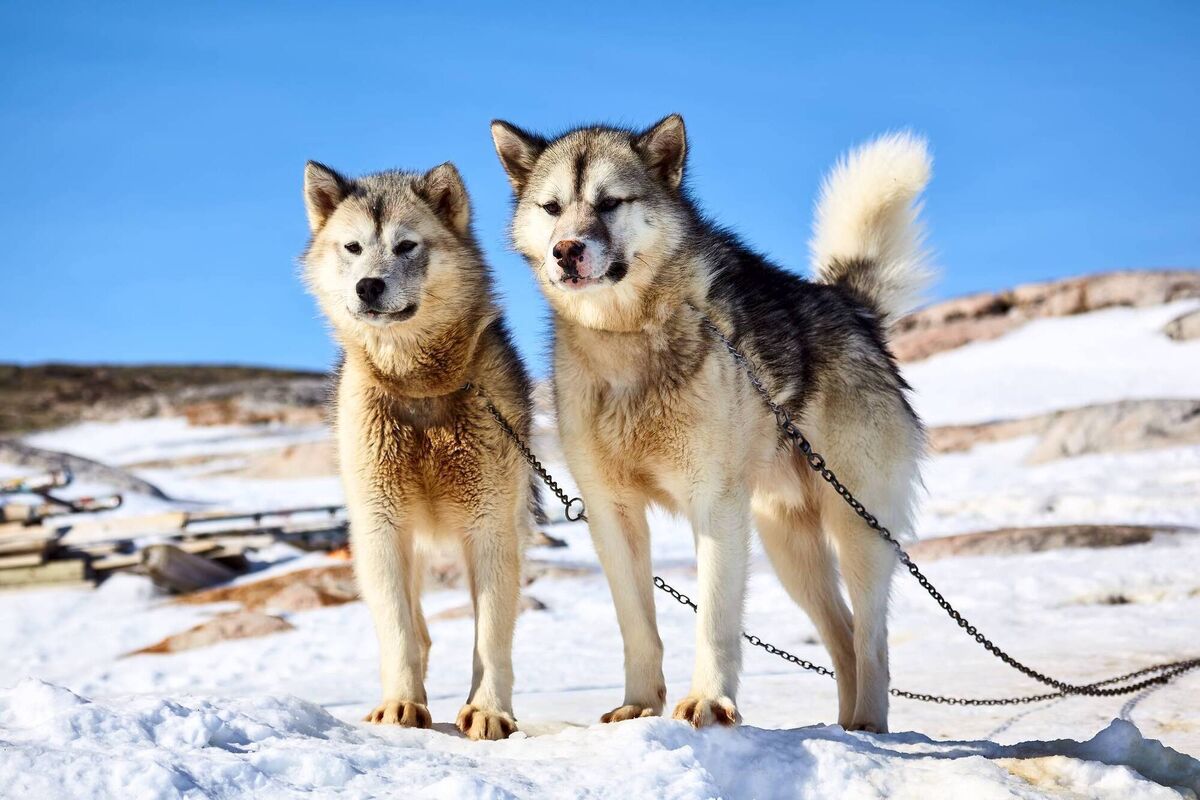
The next day demands a rather more gentle itinerary. So we visit NiviĆ© Heilmann, who has been devoting her life for 20 years to saving Greenland’s sled dogs, which are a protected wild species. Dogs have been in contact with the Arctic peoples for 9,000 years, and are becoming rarer and rarer. In the 1990s, there were around 30,000 of them in the country, and now they total around 11,000.Ā 

Although disease culled a number of them, with the disappearing ice they are less and less required. Also, many Greenlanders prefer to use snowmobiles and boats instead to get around, as the cost of feeding such dogs — 30kg of food per day — has become more and more prohibitive.

The population of sled dogs was greatly reduced between 1950 and 1970 when the the Canadian government and Royal Canadian Mounted Police slaughtered thousands of Inuit sled dogs in Canada’s Eastern Arctic regions, forcing Inuit to settle into communities and disrupting their hunting lifestyle. Canada did not issue a formal apology or compensation until 2024.

Greenland’s sled dogs are a protected wild species

ā€œThese are the only pure bred sled dogs left,ā€ says NiviĆ©. ā€œThere are no vets here, and only four vets in the whole of Greenland, all based in the capital, Nuuk. And so it is difficult when the dogs get ill.ā€

She runs tours of her dog sanctuary for visitors to help pay for the upkeep, where you can help feed the dogs. We learn about the vital role the dogs had in Arctic communities through history to their adaptation in the modern world, and are shown the specialised equipment used for sledding.

ā€œThe dogs in eastern Greenland differ from those in the west. There’s more ice in the west, and therefore over time they developed shorter legs, while in the east there is more snow, so they have evolved to have longer legs.ā€

Ilimanaq has only 51 inhabitants

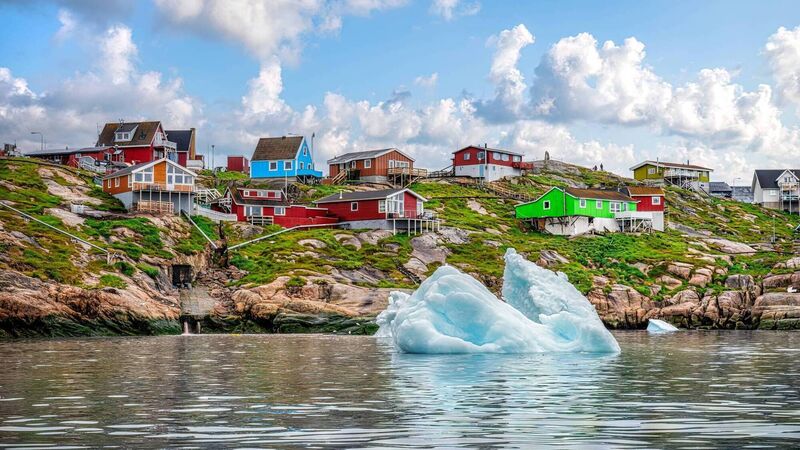
After this visit, spending a couple of days at Ilimanaq, a settlement 300km north of the Arctic Circle, is a special experience. Very remote — there are virtually no roads on Greenland, and travel between the handful of towns and villages is generally via boat, helicopter, or aeroplane. It has only 51 inhabitants, who mainly depend on fishing and hunting for their sustenance and income. Even though it is a tiny village, the language changes, depending on where you live, with one side of the settlement speaking more quickly than the other.

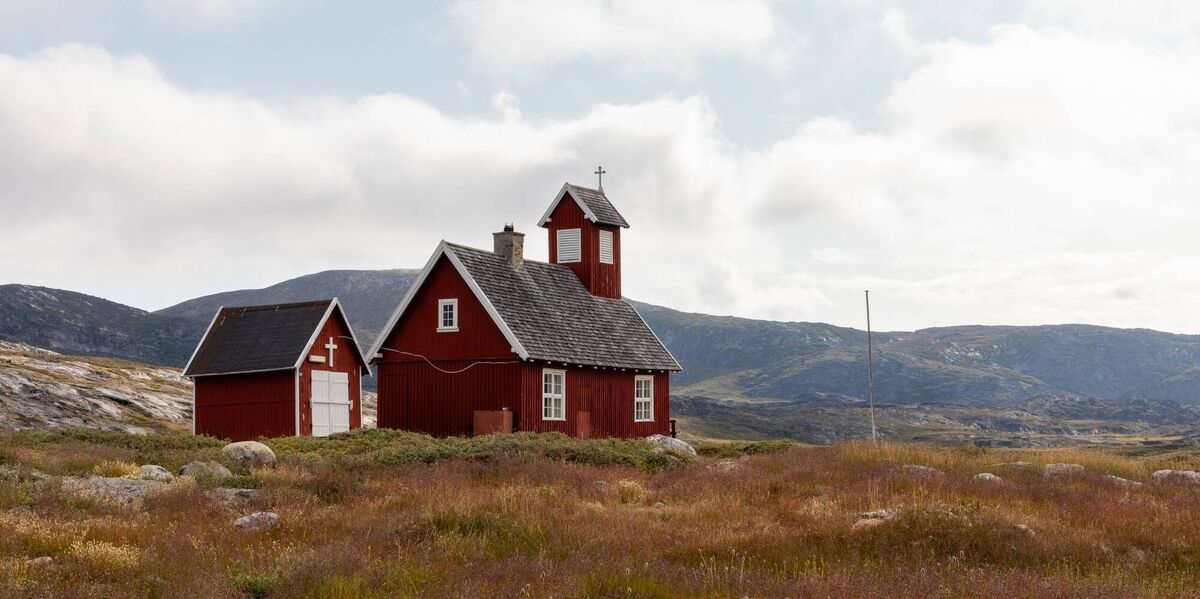
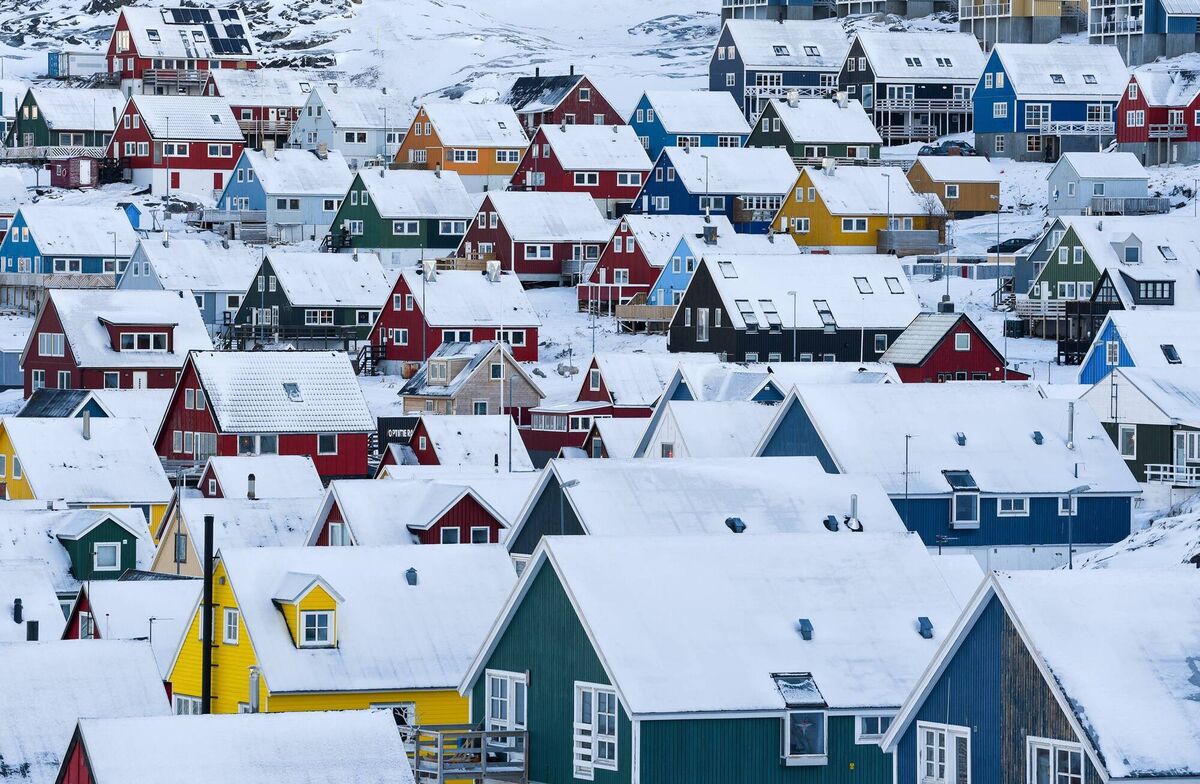
Homes are colourful, though surprisingly basic: Many don’t have running water, and a number of the village use a community bathhouse. There’s also a church — the priest travels to it by helicopter in the winter and by boat in the summer — and a school for the four children living here.

However, visitors can stay at Ilimanaq Lodge, with its comfortable, newly-built chalets situated on the edge of a cliff. The lodge also operates the wonderful Restaurant Egede here — in an old colonial manager’s house dating from 1741, one of Greenland’s oldest buildings. Its menu focuses on local ingredients like fish, reindeer, and musk ox.

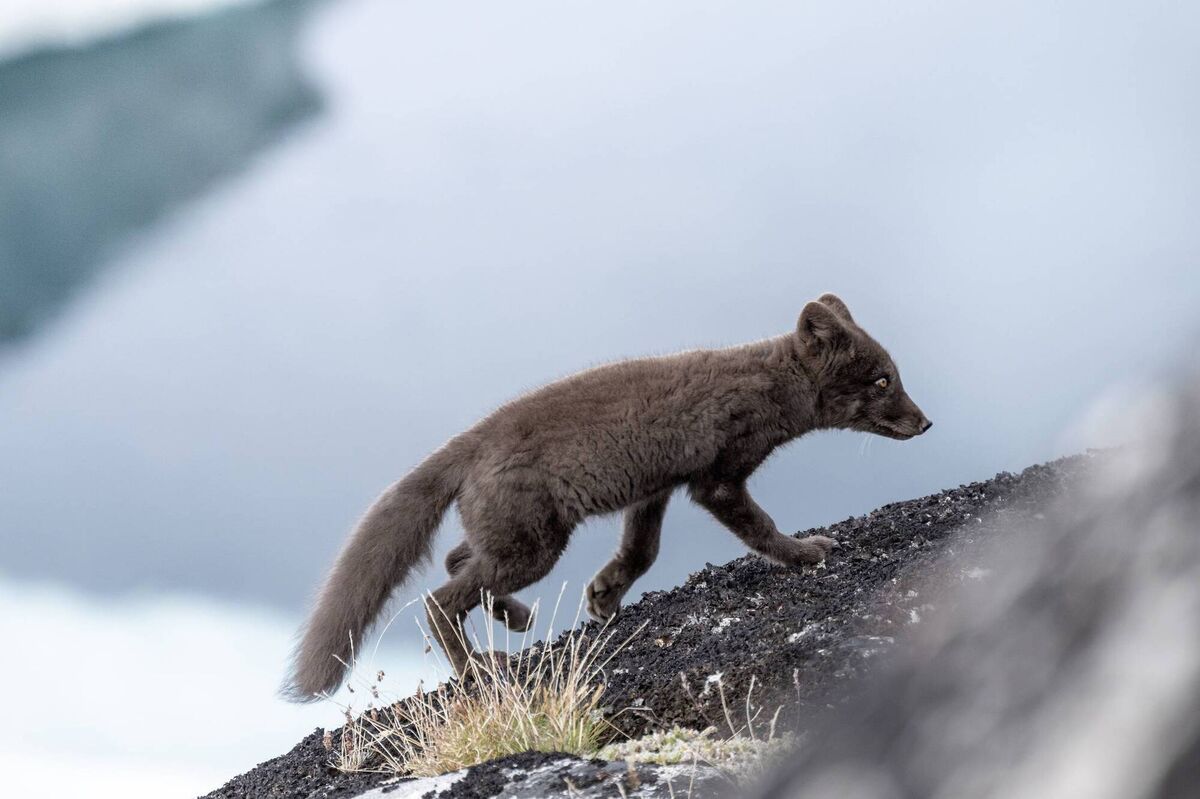
I take a guided walk that the lodge offers, with Inuit German John Geisler, who has lived at Ilimanaq all his life. We walk across thick mosses that are spongy underfoot, and spot Arctic fox holes among angelica plants, before reaching the coastline. It is so peaceful, except for the sound of Canadian geese, rock ptarmigan birds, and eagles flying by. An occasional Arctic fox runs across the nearby hills and the beach, which is covered in snow. The foxes are only hunted for their fur these days, as the possibility of rabies means eating them is too risky.

An occasional Arctic fox runs across the nearby hills and the beach, which is covered in snow.

Although I was told to prepare for all kinds of weather in Greenland, including clothing to avoid frostbite, it is so mild today that I am wearing a tee shirt.Ā 

Towards the end of the walk, we see some Inuit burial sites. To the uninitiated, they just look like a piles of rocks — yet these 1000-year-old monuments are sacred. As we re-enter the village, we see a tiny hut, which was lived in by eight people until the 1990s, which seems hard to believe.

John points to another home: ā€œA woman lives alone in that house and is still active, gathering fuel and shopping, despite being aged 95. The state supports her to stay here rather than move her to a city retirement home. I think that’s cool.ā€

Indeed, it is one of the many very cool things to discover in this fascinating and beautiful wilderness, the biggest island on Earth.

Escape Notes

Travelling to Greenland from Ireland requires flying from Dublin to Copenhagen, and then a direct flight to Nuuk with Air Greenland, costing around €1,050.Ā  airgreenland.com

Alternatively fly from Dublin to Reykjavik, and then to Greenland with Icelandair, costing around €575 — however this is around a 40-hour journey.

Glacier tour: 2,499DKK/€334.60.

Sled dog meet ’n’ greet: 300DKK/€40.17.

Both diskobay-tours.com

Ilimanaq Lodge: 1995DKK/ €267.13.

worldofgreenland.com/en-gb/ilimanaq-lodge

Learn more about Greenland at visitgreenland.com

x

More in this section

Lifestyle

Newsletter

The best food, health, entertainment and lifestyle content from the Irish Examiner, direct to your inbox.

Cookie Policy Privacy Policy Brand Safety FAQ Help Contact Us Terms and Conditions

Ā© Examiner Echo Group Limited