The lights that guide us — the story of Ireland's great lighthouses
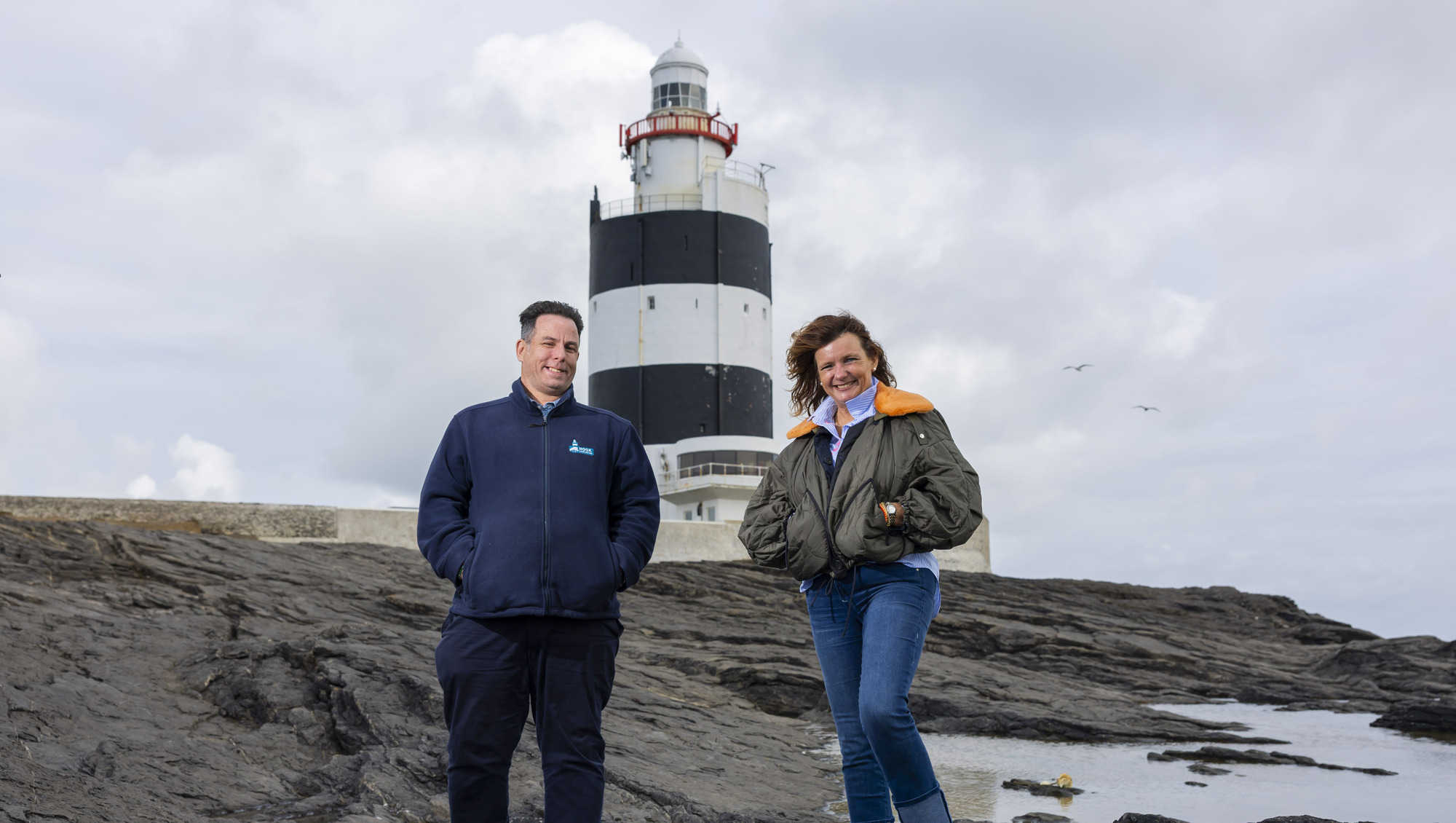
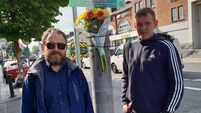
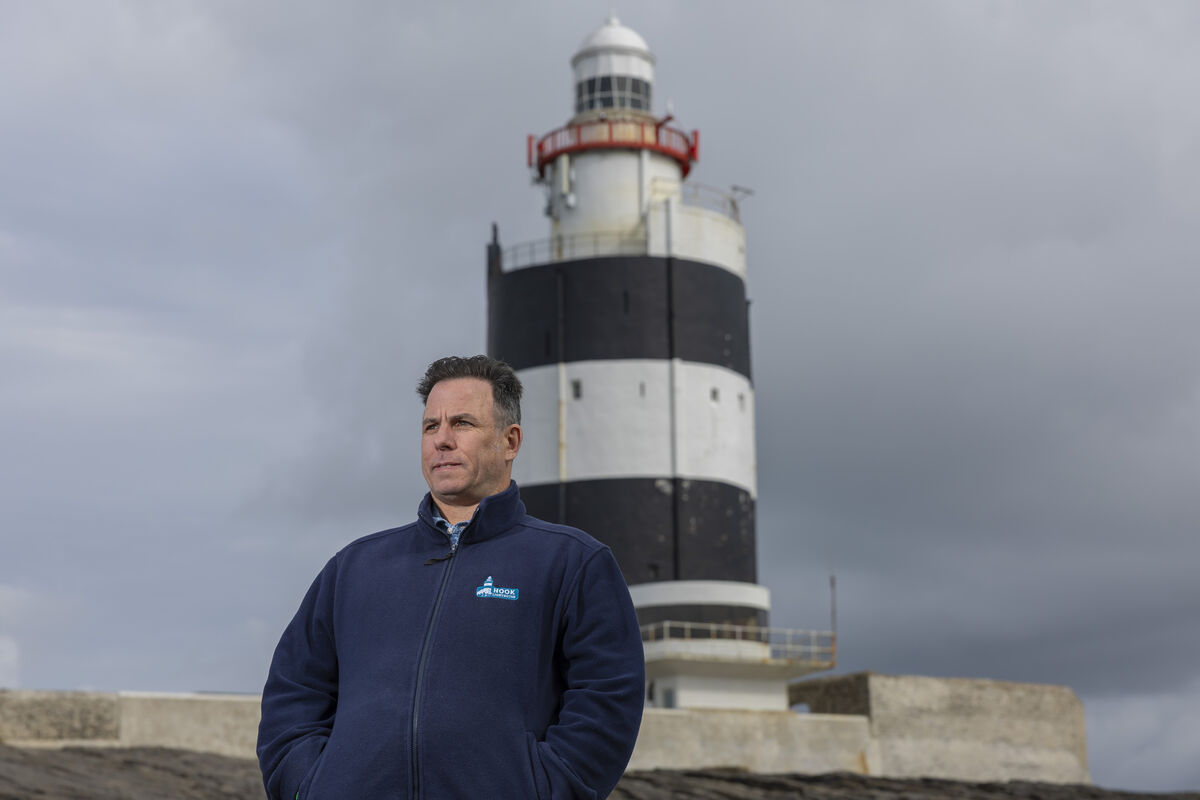
General Manager of Hook Lighthouse, Larry Colgan and writer Rachel Gaffey. at Hook Head Lighthouse and Heritage Centre, Co. Wexford. Photograph: Patrick Browne
In the early hours of June 3, 1944, in the square stone building housing Blacksod lighthouse, weather station and post office, a young woman quietly recorded weather readings. Maureen Flavin, originally from Co Kerry, had taken the job as an assistant post office clerk under the guidance of postmistress Margaret Sweeney.
On the morning of her 21st birthday, what seemed like a routine task of monitoring pressure, cloud cover, and other data at the remote Co Mayo outpost would, in fact, change the course of history.
Flavin’s observations of falling pressure, increasing rain and a steady wind pointed to a likelihood of unsettled, stormy weather in the English Channel two days later, on June 5. This date had been earmarked for Operation Overlord, an invasion of the Normandy coast, which had been two years in the planning. Thousands of Allied aircraft, ships, and troops were awaiting the signal to launch; clear skies and calm seas were crucial to their chance of achieving success.
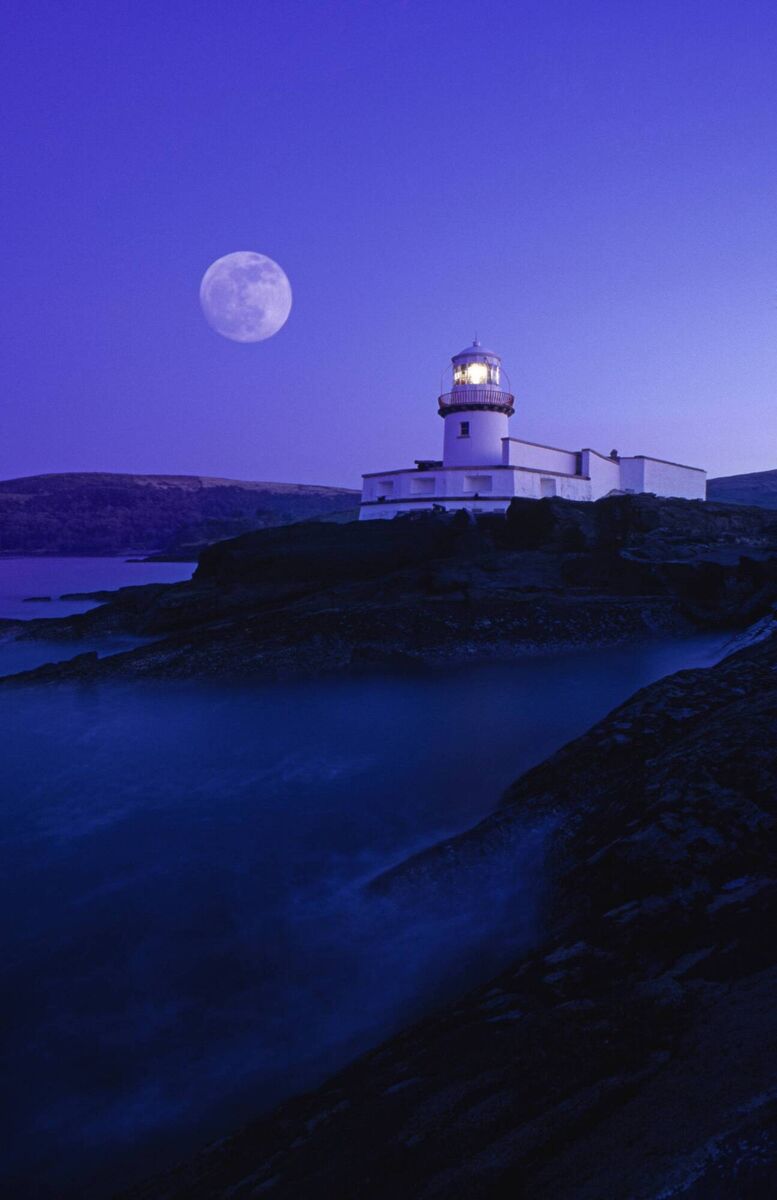
Flavin’s readings from Blacksod lighthouse — which, because of Ireland’s “friendly neutrality” policy were forwarded to the UK meteorological office — ultimately led to General Eisenhower delaying D-Day by one day. He chose instead to wait for the window of clear weather on June 6 which had also been forecast by Flavin’s reports. Thanks to the diligence of Maureen Flavin’s recordings from one of the most westerly lighthouses of Ireland, the Allied forces were able to land successfully on what would become a historic day, pivotal to the liberation of Europe.
Without question it’s an extraordinary story, but Ireland’s lighthouses have always been places where ordinary people have done extraordinary things. These centuries-old beacons of light have guided countless ships to safe harbour, and have borne witness down the decades to many tales of heroism, fortitude and fearlessness. George Bernard Shaw said: “I can think of no other edifice constructed by man as altruistic as a lighthouse. They were built only to serve.” Ireland’s lighthouses still serve, but in the 21st century, they do so much more, too.
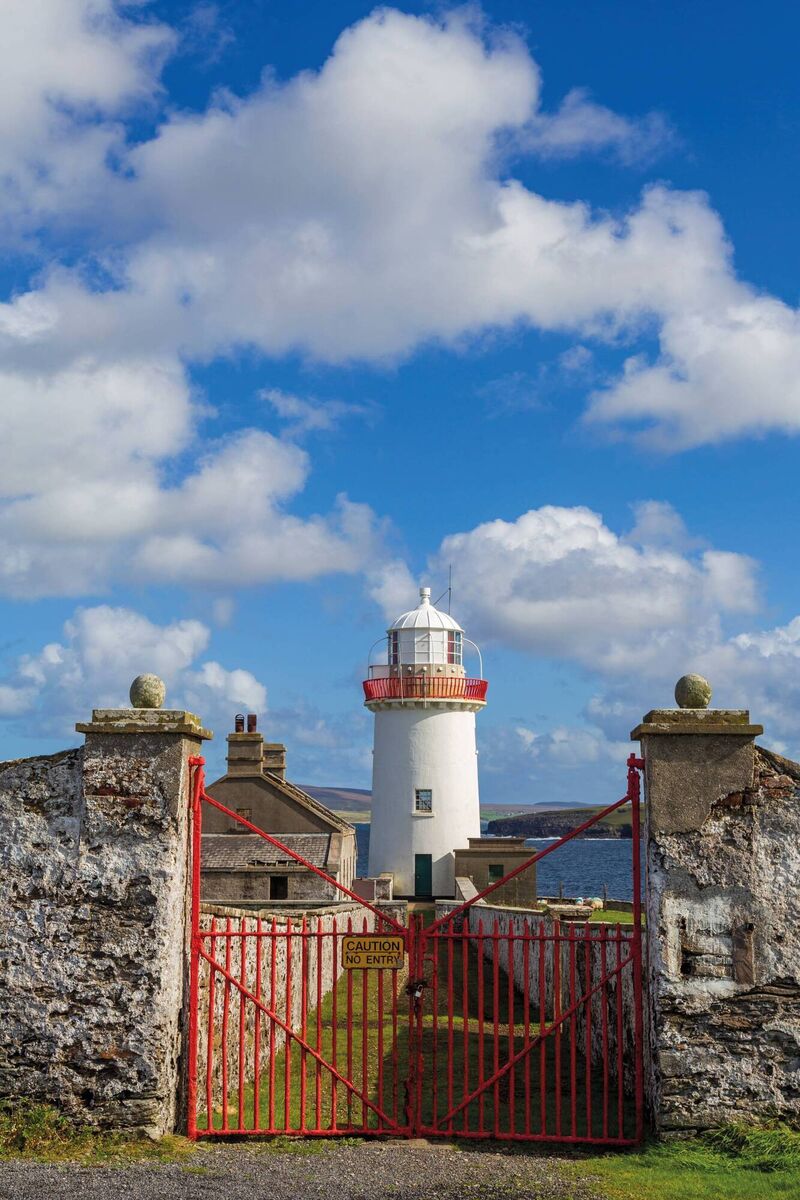
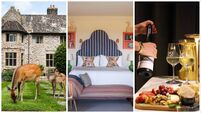
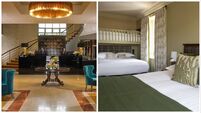
A decade ago, the Commissioners of Irish Lights launched The Great Lighthouses of Ireland (GLI), a tourism-led initiative which opened a selection of lighthouses to the visiting public. GLI offers heritage and history tours; maritime experiences, such as Cape Clear Ferries’ boat tour around West Cork’s iconic Fastnet Rock lighthouse; and accommodation. At eight of the Great Lighthouses, you can stay the night, either in lighthouse-keepers’ cottages or rooms in the towers themselves, a bucket-list experience if ever there was one.
Far from anywhere, yet close to everything that’s good for your heart and great for your soul. Fresh air, incredible views, and the sound of waves against the rocks. Surrounded by nature, with the sea stretching out before you, vast, powerful, and beguiling.
The Great Lighthouses’ locations are diverse and include St John’s Point (Ireland’s only black and yellow lighthouse) and Fanad Head in Co Donegal; Loop Head in Co Clare (guarding the entrance to the mighty Shannon since 1670); Wicklow Head Lighthouse (109 steps to the top-floor kitchen!), while Co Antrim has Blackhead, with stunning coastal paths at its door. (For the full list, see greatlighthouses.com.)
Also on the list is Co Wexford’s 13th century Hook Lighthouse, the oldest fully intact operational lighthouse in the world. It’s predated by a fifth-century monastery, whose monks, it is thought, lit beacons to alert seafarers to the dangers of this treacherous stretch of coast, ominously known as the “graveyard of a thousand ships”.
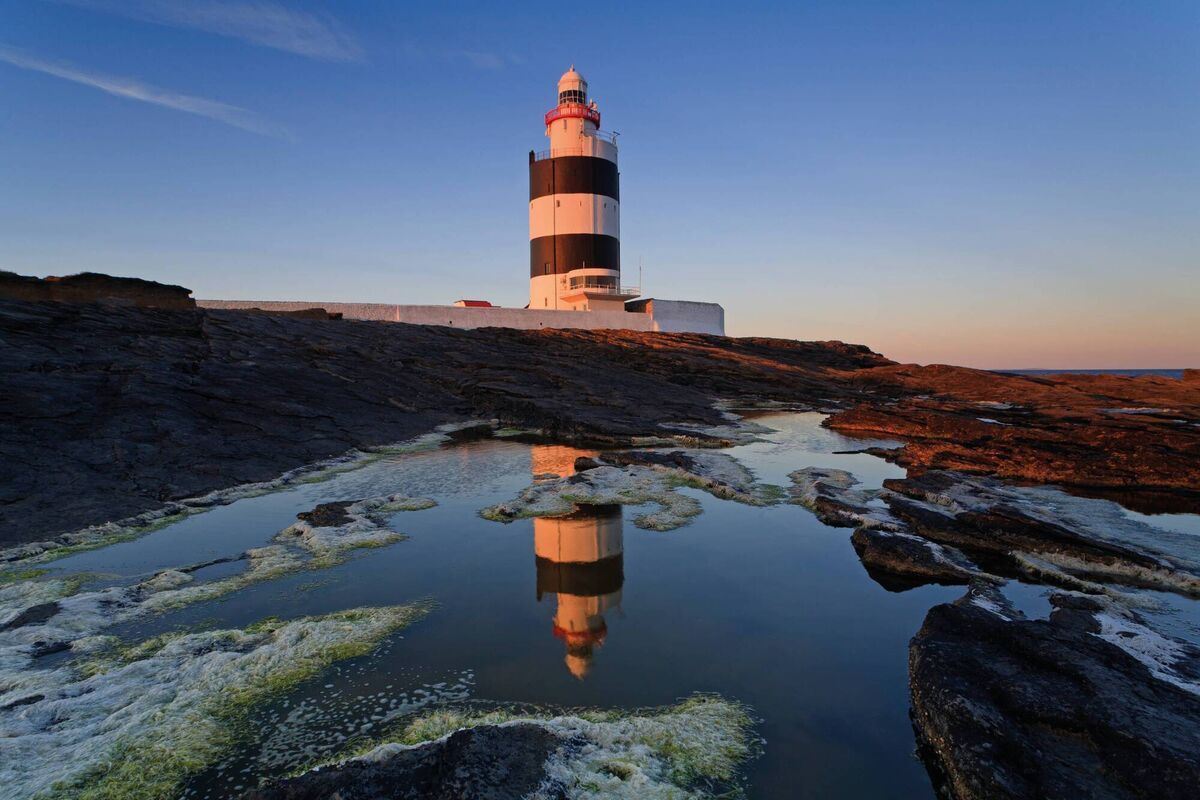
Hook Lighthouse was commissioned by William Marshall, the 1st earl of Pembroke, who also established New Ross, built Kilkenny Castle and in marrying Strongbow’s daughter, made himself the rich and powerful Lord of Leinster.
At Hook, history and community are happy bedfellows, with the lighthouse “not only a heritage site but also a gathering place,” Larry Colgan, Hook Lighthouse’s general manager, explained to me when I visited recently. Being a rural area, the lighthouse is a natural hub, with visitors and locals taking daily advantage of the home-made produce and locally sourced fish options its award-winning cafe serves year-round. “This creates a unique sense of community,” Colgan says, “where the lighthouse is both a destination and a shared space for connection.” The revenue generated at Hook lighthouse goes towards keeping things going and enriching the visitor experience, he adds, “ensuring Hook Lighthouse remains a cornerstone of both local life and regional tourism”.
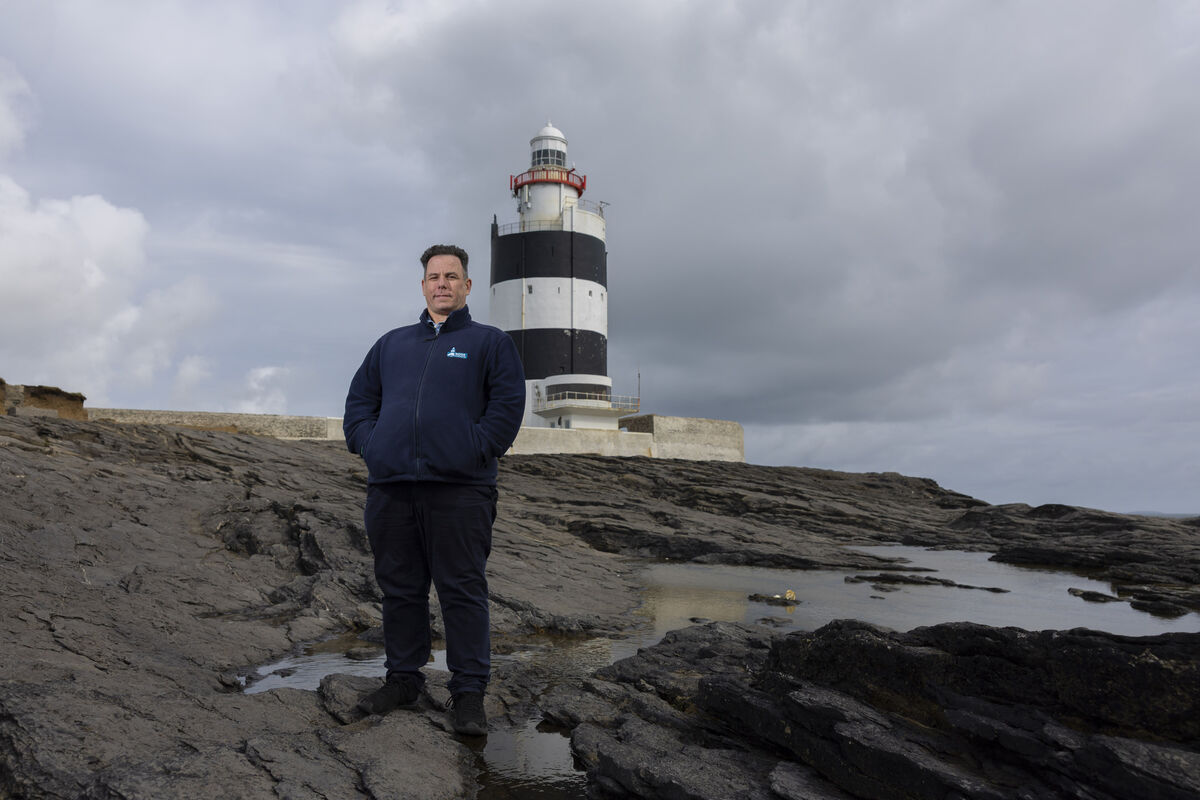
Colgan sees significant potential for future growth and development. “While formal plans are still under consideration, our vision is to continue enhancing the visitor experience through improved facilities, expanded programming, and deeper engagement with our heritage. Any future developments will remain true to our mission of preserving the lighthouse while ensuring it continues to serve as a vibrant cultural and tourism hub.” As he related the ancient tower’s storied history, guide Noel led me up its 115 well-worn steps, each one smooth from centuries of footfall.
Inside, the air carried the tang of salt and the thick walls seemed to breathe with memory, while at the top, out on the balcony, the wind whipped my hair as I looked out on where the Celtic Sea, St George’s Channel, and the Atlantic Ocean converge; a meeting place of powerful forces, strong currents, sudden fog, and fierce storms. Surrounded by the roar of wind and sea, I understood why Hook Lighthouse has remained such a vital guardian for centuries, and a hub of local life.
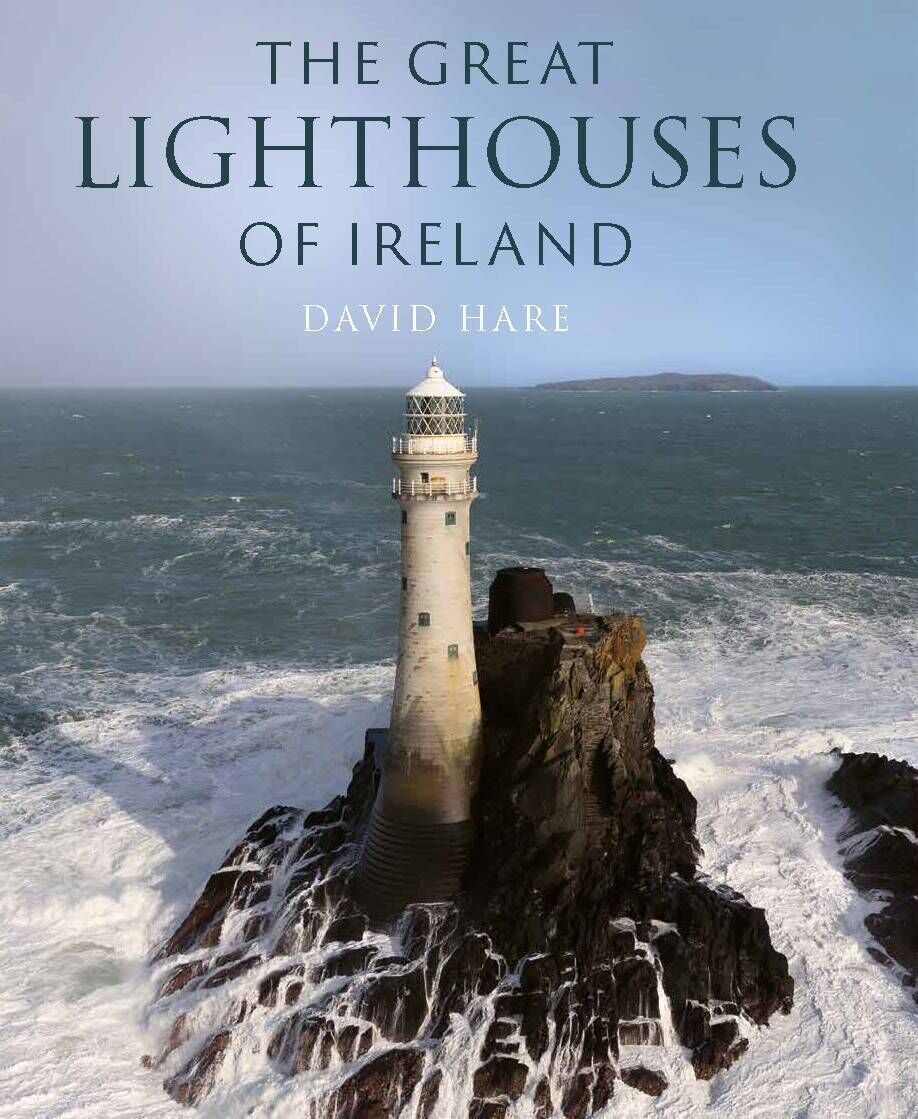
Our lighthouses continue to draw people to them, including photographers and documentary makers eager to explore their storied pasts. TV producer and director David Hare is in that category and not only developed and presented the acclaimed documentary series and its companion book, The Great Lighthouses of Ireland — stunning images from which are reproduced on these pages — he also wrote a children’s book on the topic, The Illustrated Encyclopedia of Irish Lighthouses.
The concerted push to promote our lighthouses and their many facets is bearing fruit. Last October, the International Marine, Lighthouse Tourism & Maritime Heritage Conference took place at Dublin Castle. The two-day event brought together policymakers, historians, and industry leaders to explore how Ireland can develop its lighthouses, marine heritage and maritime tourism.
At the conference, Yvonne Shields O’Connor, CEO of the Commissioners of Irish Lights, spoke about the impressive and burgeoning employment and revenue generated by GLI. “Great Lighthouses of Ireland, led by Irish Lights, now supports almost 700 jobs across coastal communities, including 137 direct roles at lighthouse sites, a 71% increase since 2018,” noted Shields O’Connor.
“In 2024, visitors spent almost €3.4m at Great Lighthouses sites, contributing to a wider economic impact of €33 million, much of which flows directly into local businesses and services. Ten years of Great Lighthouses shows how heritage can create real opportunity, protecting lighthouses while strengthening communities and supporting the economy.”
It’s a great foundation and one which Great Lighthouses of Ireland intend to build on, with a five-year strategic plan in place that seeks to increase tourism revenues by 25% by 2030, and make Great Lighthouses a global example of sustainable tourism.
Yachtsman, entrepreneur, and Great Lighthouses of Ireland chairperson Bobby Kerr sums up why GLI will continue to build on its successes to date: “We bring together community groups, local operators, public agencies, and tourism partners to create experiences that are authentic and sustainable.
“This collaboration has breathed life into remote places, creating opportunities for small businesses and families while keeping our maritime heritage alive. It shows what can be achieved when heritage, community, and enterprise come together with a shared vision.”
Blacksod lighthouse is, unsurprisingly, one of the Great Lighthouses of Ireland. During a coffee break at the conference, I met Fergus Sweeney, grandson of the late Maureen Flavin Sweeney (she died on December 17, 2023, aged 100) whose weather reports from Blacksod played a vital role in the success of D-Day. Fergus now shares the story of his grandmother’s quiet heroism, reminding us how individual acts can ripple through history.
It is through stories like these, rooted in courage, community, and connection, that draw people to Ireland’s coastal towns and lighthouse trails. As visitors come to experience these places, they are not only seeing the light that guides ships, but also the light that keeps our shared heritage alive.
- Rachel Gaffney’s Real Ireland is a luxury travel company based in Texas curating authentic Irish experience
Additional reporting by Gemma Fullam

CONNECT WITH US TODAY



Be the first to know the latest news and updates