Eoghan Daltun: ‘I knew this was where I wanted to spend the rest of my life’
On the Beara peninsula, a temperate rainforest thrives — the life work of Eoghan Daltun and his decision to move from Dublin to rewild a 73-acre farm. He tells his story in a new book
Eoghan Daltun: ‘I knew this was where I wanted to spend the rest of my life’

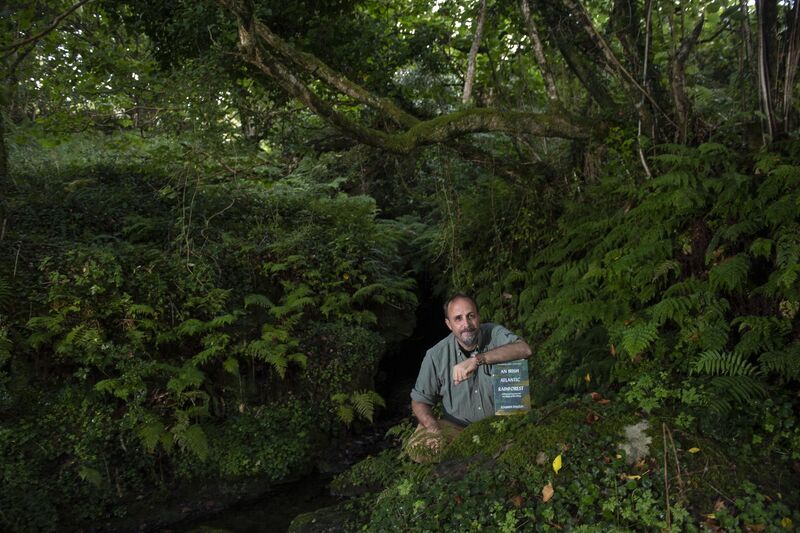
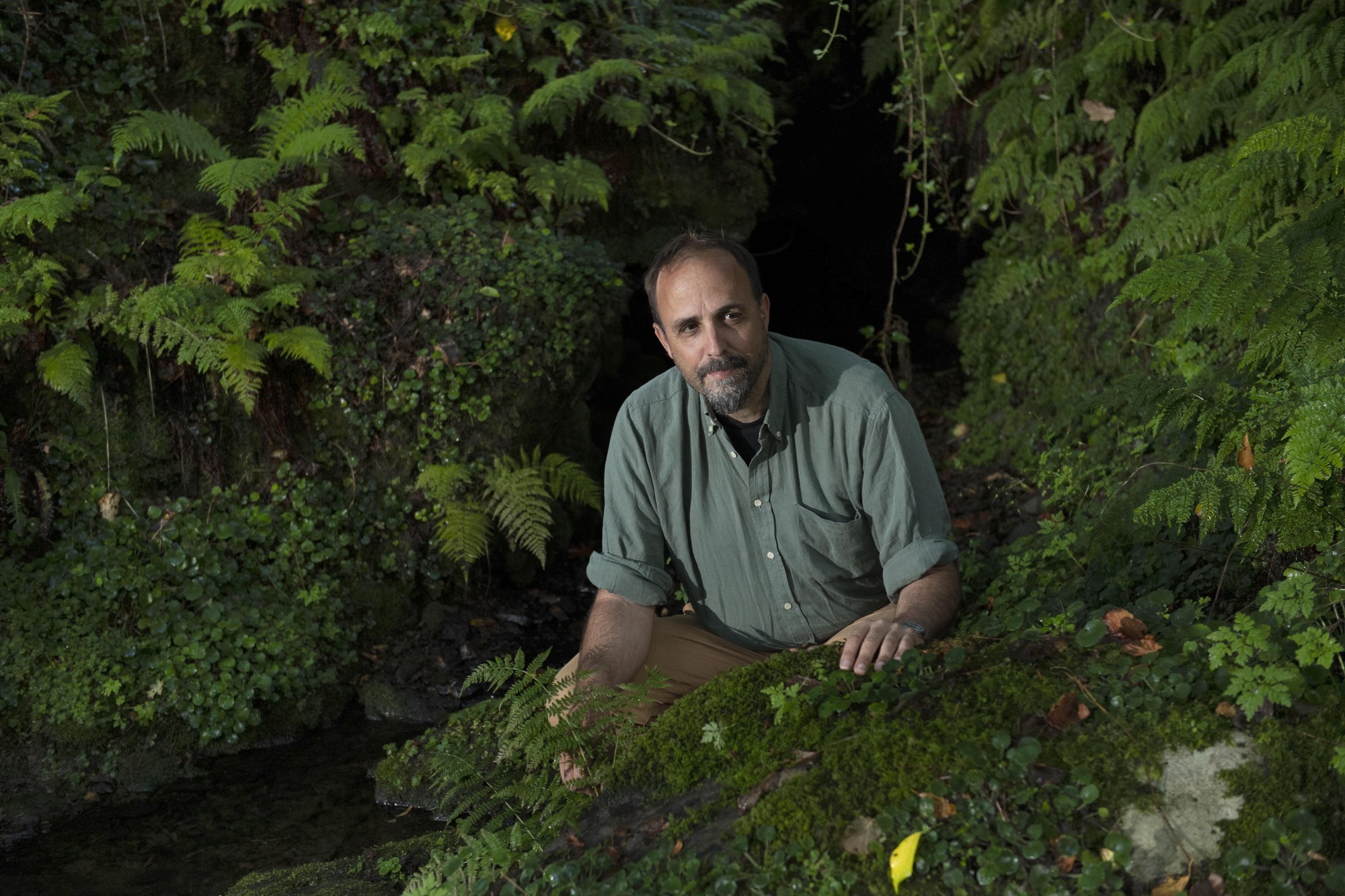
Eoghan Daltun at his home near Eyeries in West Cork. Picture: Don MacMonagle
Throughout my life I had always loved spending time in nature whenever the opportunity presented itself. In the area where I lived most as a child — Rathmines in Dublin — there seemed to be no shortage of the old ruined mansions and grounds of a departed gentry. They were essentially pieces of waste ground, but retained what had by then become incongruously regal sounding names like “Lady Longford’s”. 

Filled with broken sculptures, exotic trees, and bamboo plantations gone wild, they were the favoured and most constant playgrounds of myself and friends for years; places free of any adult supervision where there were no limits to our imagination.

But living in Carrara, Tuscany, for seven years, the many exquisite days I spent on Monte d’Armi, or walking in the surrounding Apuan Alps, were an introduction to an altogether new level of intensity in the deep sense of wellbeing and joy that can come from being in a wild or even semi-natural environment. That time aroused in me a visceral need for regular personal contact with nature in as raw a state as possible that has never left, and never will.

Returning to the southwest of Ireland, I visited the Beara Peninsula for the first time. With its epic landscape, I had never seen anywhere so stunningly beautiful, despite, for example, spending many childhood summers not far away on the Dingle Peninsula. 

The natural rock formations were sheer sculpture to my eyes, and, owing to several factors I was unaware of at the time, the area was far less spoiled than many others of comparable scenery in the west. For me there was another special appeal to this section of the coast: Pockets of wild native trees seemed more common in the less-exposed parts of the peninsula than anywhere else I had seen in Ireland. The search for a future place to live narrowed to Beara.

In July 2008, we decided to have a holiday on the peninsula, with the agreed intention of avoiding looking at any places on the market. But during the long drive down, a farm that had been up for sale for some time near Eyeries on the north coast came into my mind, and refused to leave. The auctioneer, JJ O’Sullivan, had posted me the details, my having left word about the type of thing we were looking for. There were over 33 acres of ground, plus almost another 40 acres of mountain commonage, an old ruined farmhouse, and what looked from JJ’s brochure like a decent view out to sea.

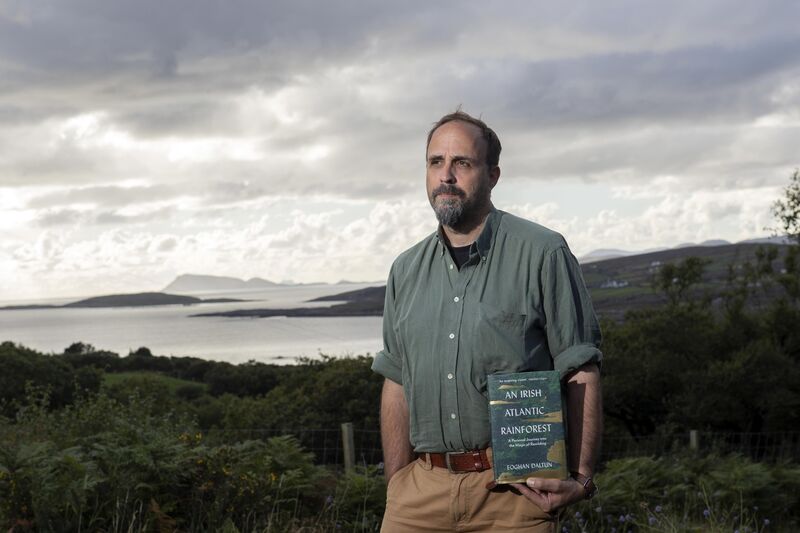
'With its epic landscape, I had never seen anywhere so stunningly beautiful,' says Eoghan Daltun of the Beara Peninsula. Picture: Don MacMonagle

I had spoken to JJ on the phone about the place a couple of times over the preceding months, but it seemed that several parties had been bidding against one another and pushing the price up quite high. And since I was also in the middle of tearing asunder my house in Kilmainham, I had let it slide. The thought must have remained in the back of my mind though, and I realised now that I was curious enough to want to at least take a look. So we agreed to make this one exception.

Calling into JJ’s premises on Castletownbere’s main square, he told us that the farm had been temporarily taken off the market. It had come to light that there were probate issues with the property title, and a sale would be impossible until these were resolved. He nonetheless gave me location and boundary maps, and I said we would check it out and perhaps come back to him. We made the quick drive out to the farm, which was divided by a stream between two townlands named “Bofickil” and “Faunkill and The Woods”, parked the car on the main road and climbed over an old stone wall onto part of the land.

Within seconds, I knew with absolute clarity that this was where I wanted to spend the rest of my life, if at all possible, and said out loud the words: “This is it.” That might sound a bit of a stretch, but for me, it really was a case of love at first sight. The land was extremely wild, with native trees, and enormous rocky outcrops of all shapes everywhere, and ran down to within 350m of the sea. On the landward side it rose up, very steeply in places, before giving way to the mountain commonages in which the farm had shares. The views were simply heart-stopping, with the nearby Atlantic and seven islands — including the Skelligs — glittering and glowing in the sunshine. Carrauntoohil, the highest mountain in Ireland, and the rest of the MacGillycuddy’s Reeks range were also visible to the northeast.

An Irish Atlantic Rainforest

For somewhere so untamed, it was also amazingly well located, bounding both sides of the main road between Castletownbere and Kenmare. The village of Eyeries, with its primary school, shops, post office, and pubs, was only about two minutes’ drive away, and Castletownbere — the “capital” of Beara — another five more. The old farmhouse and outbuildings, which were about 125m off the road down towards the sea, were total ruins, most of the roofs having caved in many years before. Mature trees were growing both within the house and from the walls of rubble sandstone.

Nevertheless, the place as a whole seemed ideal in every way, almost too much so to be real. The following day, I returned alone to spend a few hours walking the land and making sure there was nothing seriously negative we needed to know about before expressing an interest to JJ.
While doing so, I had great difficulty containing my emotions; everything I saw had my heart thumping with excitement and a fixed lump in my throat.

Essentially, most of the farm was a wild forest of oak, birch, holly, and a great variety of other native trees, including evidently very old behemoths. Underneath, a network of streams flowed through a terrain that was incredibly varied topographically, with rocky bluffs, valleys, high precipices, deep gorges, ravines, and vertical escarpment faces a good 10m high. Ancient weathered sandstone boulders, crags and wedges, some the size of trucks, were strewn all around, as if randomly tossed about by rampaging mythical ogres.

Knife-edge slabs stood on edge, pointing skyward at all angles. In several spots there were large cavities running into the sides of cliffs, with walls and roofs of enormous sheets of rock, cleaved and fractured into jumbled heaps like megalithic Jenga blocks. Much of the rock was living bedrock — exposed undetached sections of the underlying geological crust, in a multitude of forms.

The trees were growing from, through, around, into, and over this dramatic setting, their roots organically flowing across rock where it was naked, as though semi-liquid lava. But every available surface of tree or rock exposed to rain was clad in thick, lush, spongy layers of mosses up to 12cm deep, as well as a profusion of ferns and lichens. As a result, often it was difficult to determine where mineral gave way to vegetal, as rock, root, and trunk merged into one, mantled underneath a mini-forest of micro fronds.

'I had never before laid eyes on anything remotely like this wild, verdant and primeval landscape.' Picture: Don MacMonagle

The many streams varied greatly in mood, according to the type of ground being traversed: In some places gently meandering, in others, where there was a steep fall or sheer drop over sculpted bedrock, they became mini whitewater rapids or even Niagaras. They were everywhere surrounded by the same bewildering variety of mosses and ferns, all revelling in the raised aerial humidity. I had never before laid eyes on anything remotely like this wild, verdant and primeval landscape, and had no idea that such places existed anywhere in Europe, never mind Ireland. It looked as though it belonged more in the tropical jungles of Costa Rica or Papua New Guinea, than our wind-blasted island in the Atlantic. I was in complete awe of the place.

Nine months after first seeing the land in Beara, I finally reached a point with work on the house in Kilmainham where I felt satisfied that it was as ready to sell as it would ever be. Unbelievably, and as if by prearrangement, only a few days later JJ telephoned from Castletownbere to tell me that the probate issue had been dealt with, and the farm was now properly on the market. Within just a few more days our house was up for sale, and I was making an offer on the farm. It was the start of a journey more wonderful than anything I could ever have dreamed of.

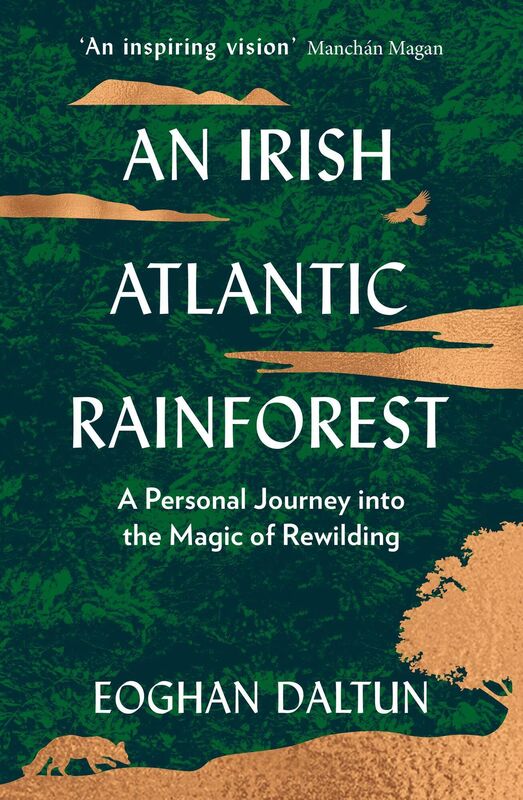
  • To learn more about Eoghan’s journey on the Beara Peninsula, pick up a copy of his new book, An Irish Atlantic Rainforest: A Personal Journey into the Magic of Rewilding, out now, £16.99.

x

More in this section

Lifestyle

Newsletter

The best food, health, entertainment and lifestyle content from the Irish Examiner, direct to your inbox.

Cookie Policy Privacy Policy Brand Safety FAQ Help Contact Us Terms and Conditions

© Examiner Echo Group Limited