Travel memories: Dreaming of Lamu island life and ice-cold beers at a floating bar
Nicola Brady: 'I wonder if the sea is as blue as I remember, and if the people are still as welcoming'
I’ve never considered myself to be particularly brave. Even when travelling, I’m not what you’d call a risk-taker. I’m sure I’ve missed out on some fantastic opportunities because my risk analysis skewed towards the overly cautious (though I’m also fairly confident that I’ve avoided some disasters, too).
All of that was challenged back in 2010, when I took myself off to Kenya for a month. This was before I became a travel writer — I was a mere 25 years old and, aside from the decision to move to Ireland on a whim, I had never travelled alone. The plan was to stay a couple of nights in the capital of Nairobi, then fly down to the coast and spend the guts of a month on the island of Lamu.
I don’t know what it was about this island that drew me in. I’d never been to Africa before, and I knew almost nothing about Kenya or its coast. What I wanted was a place where I could reassess, take stock and, most importantly, spend January hiding from the perpetual gloom of an Irish winter.
When I arrived in Nairobi, I felt a weird, unsettling sense of apprehension that I hadn’t felt in a long time. I checked into a hostel in the middle of the city and unlocked the door to a room that looked more like a cell. The concrete walls were as bare as the light bulb that swung from the ceiling. The drone of the mosquitoes as they flitted overhead made me panic about malaria and my tendency to erupt in an allergic reaction when anything bites me.
I felt far from adventurous. I felt like a wuss — too shy and jet-lagged to go out and meet the people congregating around the campfire in the courtyard. I was frustrated that I had, in the space of a few short hours, reverted back to the painfully shy kid I used to be before I forced myself out of introversion in my teen years. I desperately wanted to attach myself to a little gang, but couldn’t summon the courage to even say hello.
By the time I flew down to Lamu, the shadows of unease had started to dissipate.
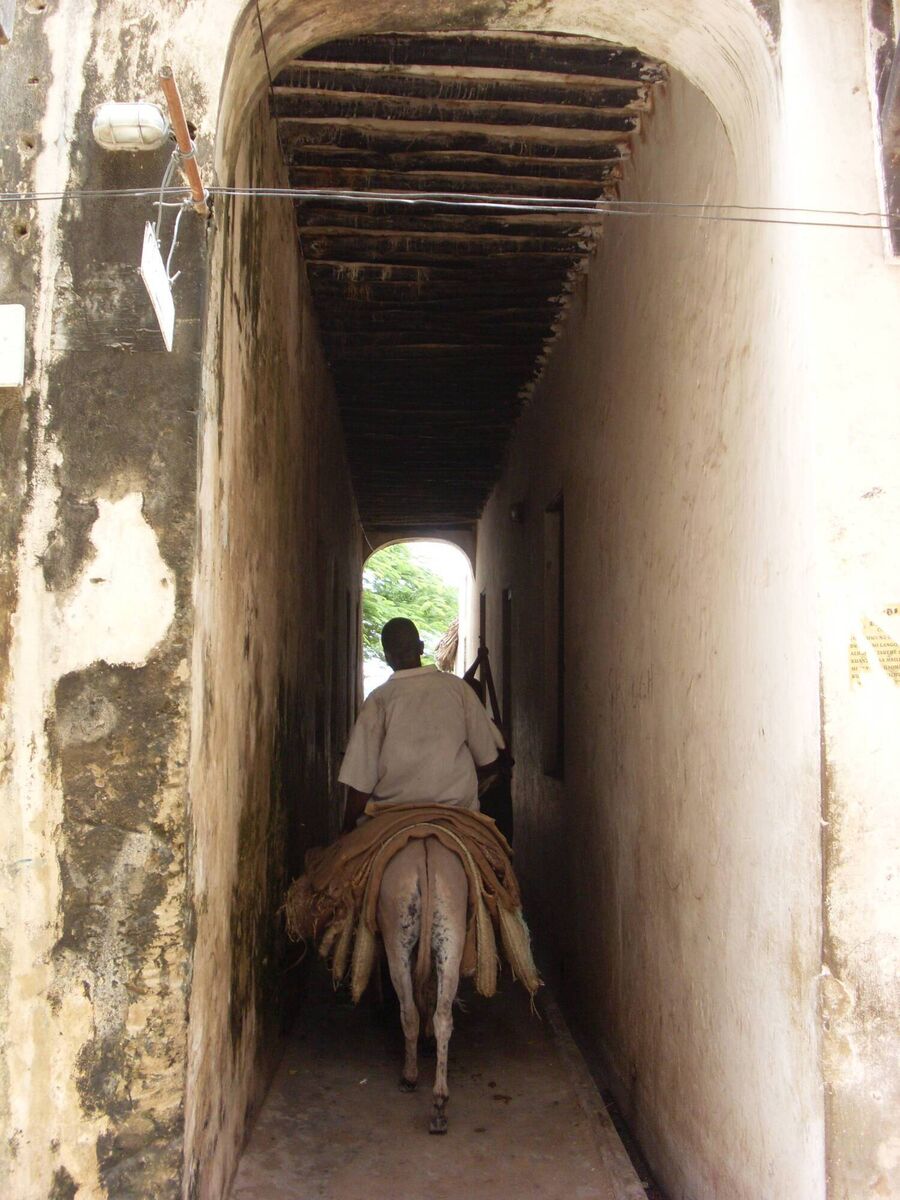
Arriving on the island felt like something of a dream. The tangled streets within the Old Town were so narrow I could reach out and touch both walls with my hands as I walked. There were no cars, only donkeys, whose bellies sometimes only just squeezed through the narrow lanes. Thick, elaborately carved wooden doors punctuated the stone walls, which I’d snag a quick peek behind whenever they groaned open.
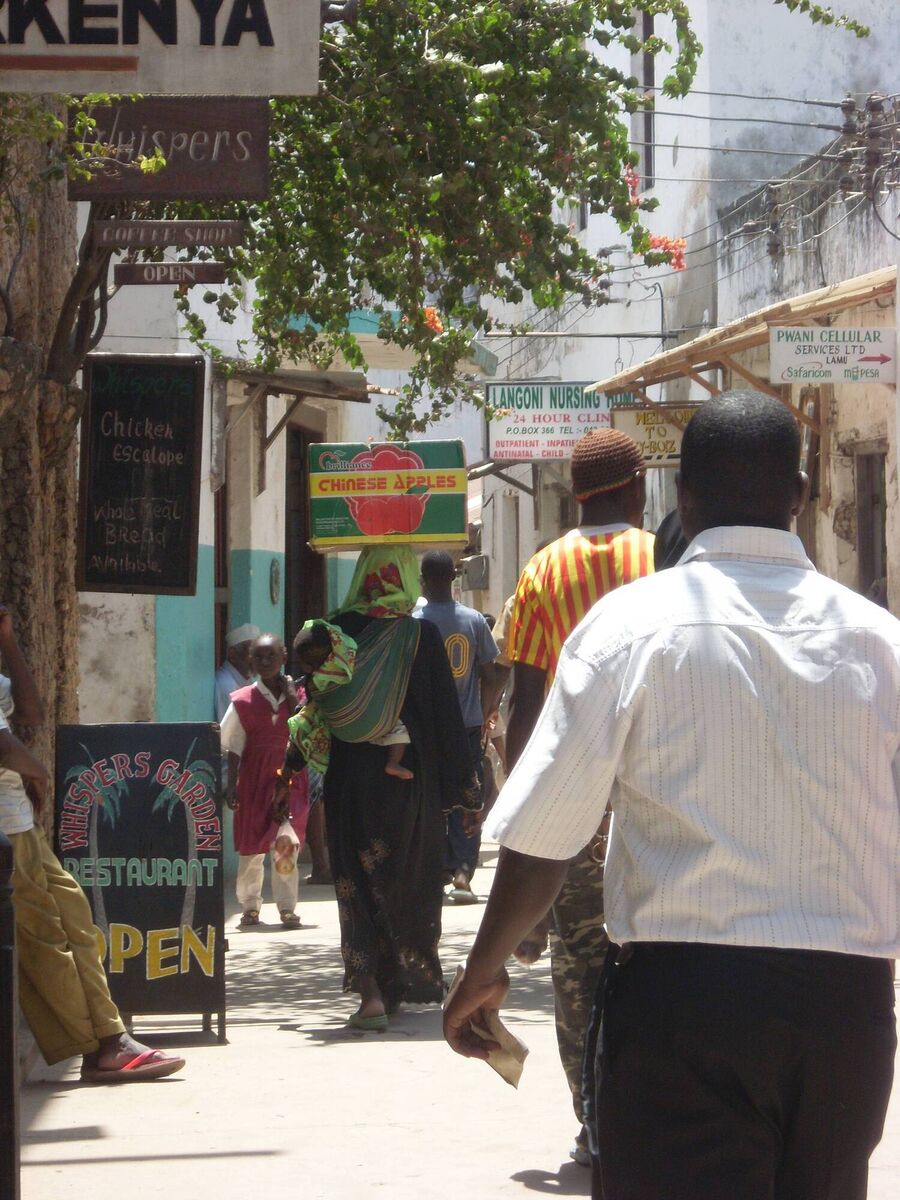
On my first evening, I went down to the shore to eat dinner. I had barely picked up my knife and fork before a local family insisted I eat with them. “No one should have to eat alone,” the mother said, as she moved my plate over to their table. That kindness was a running theme on the island. Whenever I got lost in the labyrinth that was the Old Town, someone would clock my confusion in seconds and guide me back to my guesthouse.
After a few days in the Old Town, I moved on to Shela, the beach village at the other end of the island. While I adored the Old Town, the heat left me craving the feeling of the wet sand beneath my feet. On Shela, I felt like I could breathe. I’d walk the long stretch of empty white sands in the morning, before the searing sun would sizzle my blue-tinged skin. I’d watch the wooden dhow ships skid along the surface of the channel between Shela and Manda Island, so close I could see the fishermen pulling in their hauls.
After years of staying almost exclusively in divey hostels and dodgy rentals, I basked in the glory of sleeping in a place called Fatuma’s Tower (fatumastower.com). Between the ornate, mahogany four-poster bed and the monkeys that leapt to steal my morning mango, I revelled in every languid moment.
Each evening, I’d return to my room after dinner to find the mosquito nets draped over my bed, the overhead fan spinning and a woven arrangement of fresh jasmine flowers on my pillow. To this day, the scent of fresh jasmine will immediately yank me right back to those days, to the sticky-skinned, balmy Lamu nights, and the feeling that I had not a care in the world.
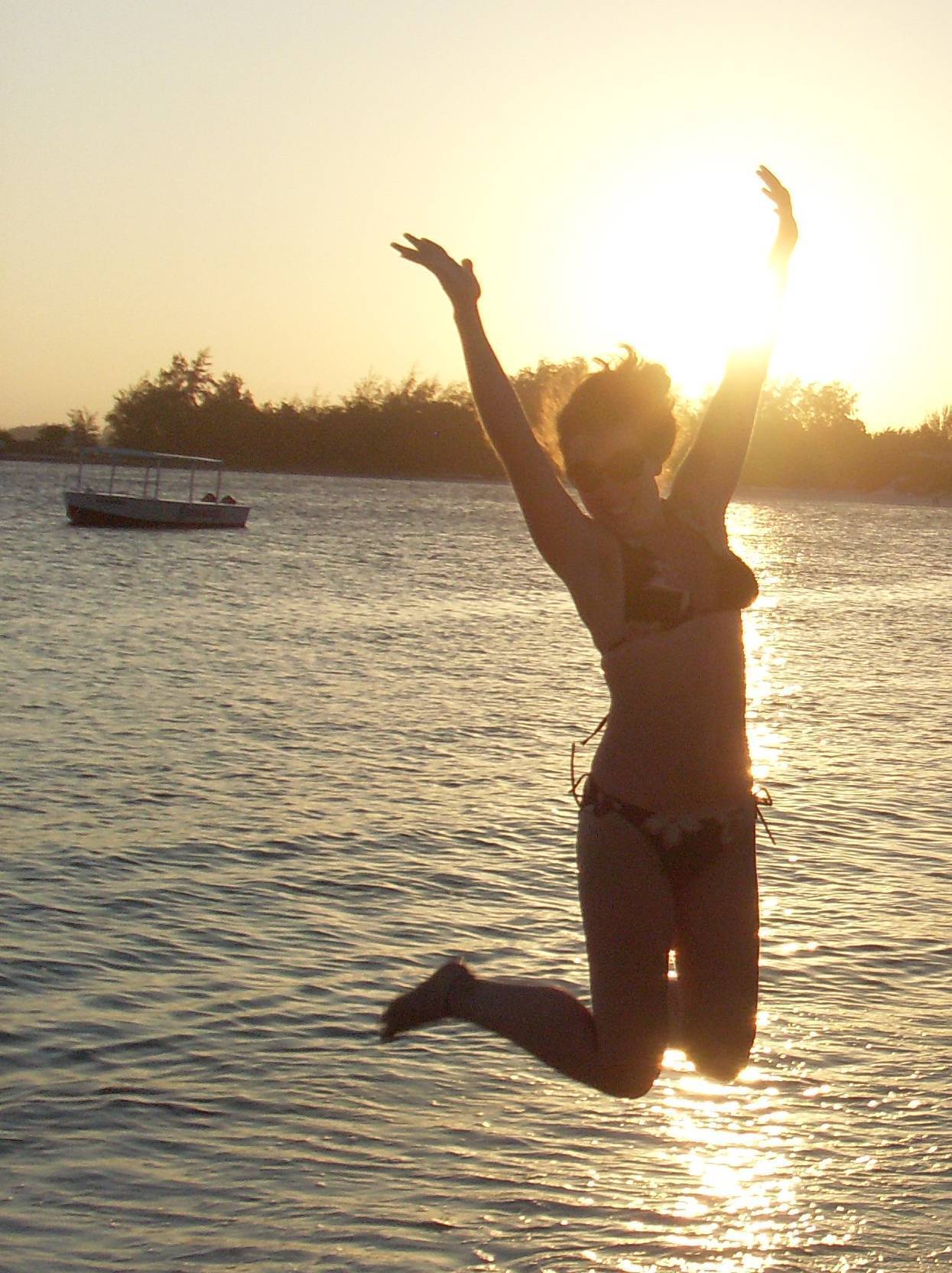
I spent my days doing things I’d never dreamed of doing. I’d set off on expeditions in dhows, learning how to fish and how to fling myself from the bow into the glittering sea. Despite the bumpy start, I made a gaggle of friends, from local dhow captains to two travelling Dutch girls who still pop up on my Instagram feed. We’d hop onto a dhow in the late afternoon, pitching up on deserted beaches at sunset, before lighting a roaring fire on the sand, cooking barracuda in banana leaf, and rice in fresh coconut milk.
I watched the sun rise over the Indian Ocean, and clapped eyes on the very first dolphins I’d ever seen, as the water morphed into shades of fiery amber. I’d buy fresh samosas every lunchtime from the guy who would miraculously start walking up the beach the second I’d feel the first pangs of hunger. One day, we swam out to a floating honesty bar, where we climbed a makeshift ladder and helped ourselves to ice-cold beers for a dollar apiece.
After a few weeks, I moved over to Manda Island, to stay in the ramshackle huts at the Diamond Beach Village (diamondbeachvillage.com). I thought the barefoot vibe would suit me down to the ground, but while I loved the sound of monkeys flittering about on my banda’s roof, the solitude started to get to me. It turns out the dream vacation for a honeymooning couple (of which I was exclusively surrounded by) wasn’t so hot for a girl travelling solo.
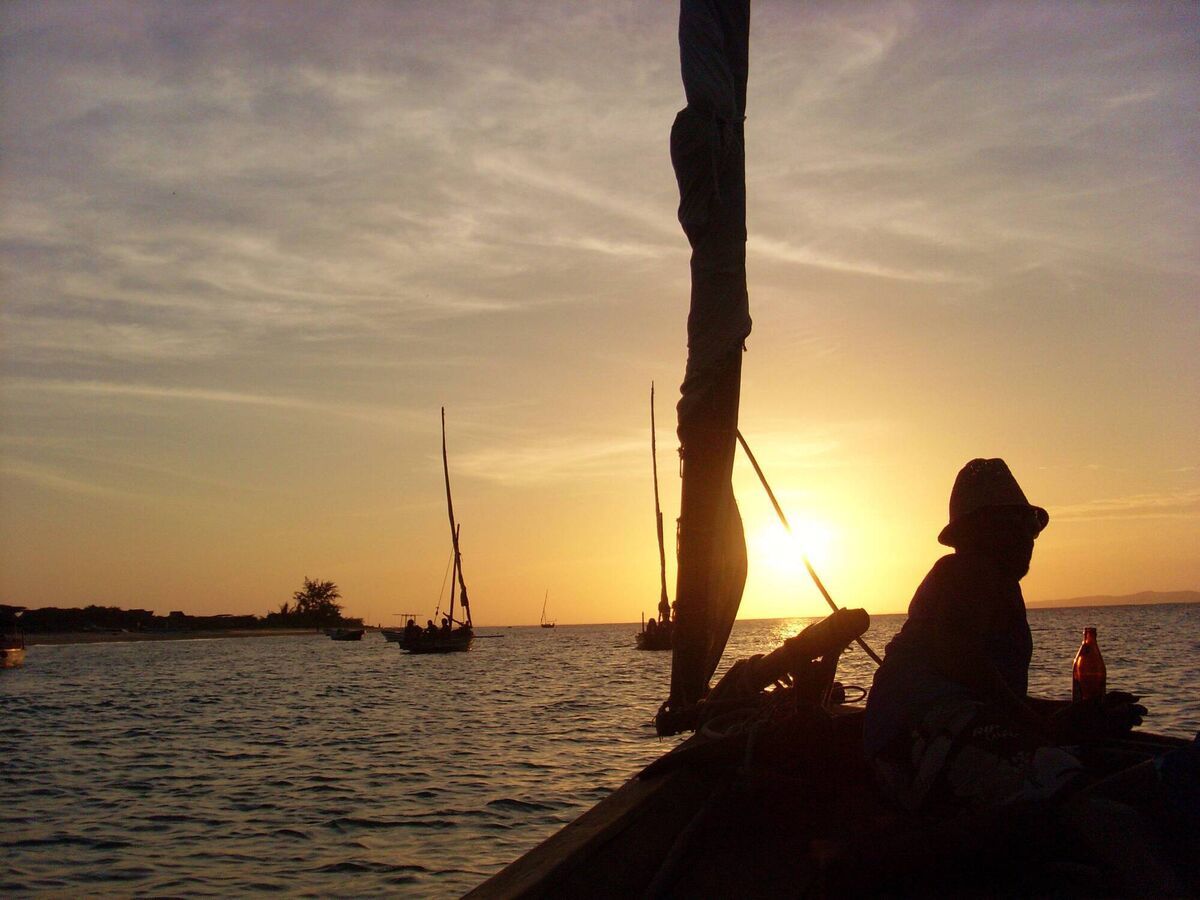
So I went back. Back to the sundowners, the samosas and the friends. One evening, after another beach bonfire, the dhow captain, Baji, took me down to the shore. He wanted to show me something. I wasn’t sure why — it was pitch black, with nothing to see but the flickering of lights on Shela. But when we reached the water’s edge, he kicked the surf, sending shockwaves of phosphorescence through the waves. I’d never even heard of phosphorescence, let alone seen it.
Dazzling shards of silver glitter danced around our feet, each moment of agitation leaving the water glowing around us. It was nothing short of magical.
Soon after my stay, the island was struck by tragedy. A French woman was kidnapped from her beach house by Somali militants, after which the majority of countries changed their travel advisories to the region. Tourism was effectively banned for many years. I’d often think of how the islanders were surviving.
Every single person on Lamu relied on tourism. Though travellers had returned, pre-Covid, I can’t help but imagine the impact it had.
I’ve dreamed of going back ever since I left. I wonder if the women from Shela village still leave jasmine flowers on the pillows in Fatuma’s Tower. I wonder if Baji still takes people out on his dhow, cooking up barracuda and coconut rice. I wonder if the sea is as blue as I remember, and if the people are still as welcoming. I wonder if I’d magically shed the anguish and wrinkles of the past 10 years, if only I were to walk through the surf at Shela once more, and plop myself down with a glass of white wine at Peponi’s.

CONNECT WITH US TODAY



Be the first to know the latest news and updates