Fiestas, food, and my own private hideaway
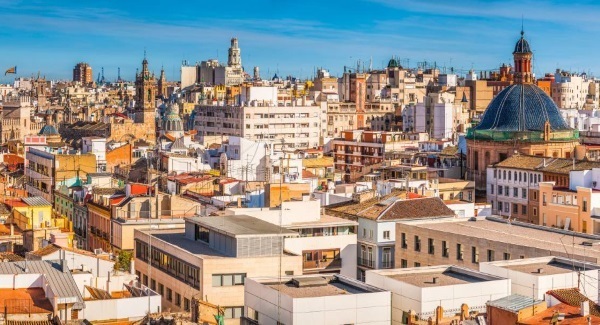
Given her love affair with the country, it’s no wonder dispatches characters in her books to Spain.
When Juno, the heroine of The Hideaway, my latest book, needs somewhere to recover from devastating news, I decided to bring her to a part of Spain that I know and love — the beautiful Comunitat Valenciana.
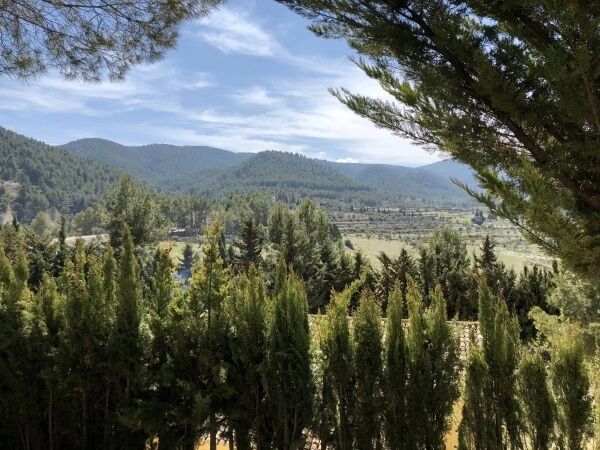
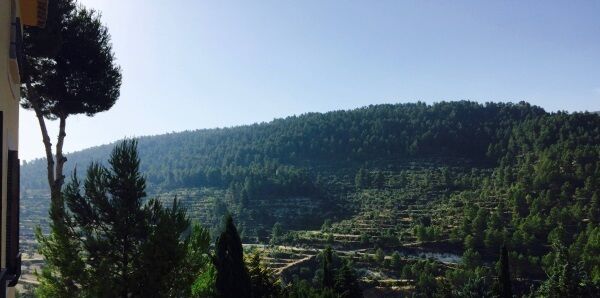
Thanks to its wonderful location bordering the Mediterranean coast, the region of Valencia is one of the most popular tourist areas in Spain; but I chose to bring Juno a little further inland where she’s surrounded by the calming scent of the orange groves, and where the views over the countryside are spectacularly beautiful.
I wanted her to have a place to get better, a place where time slows down and where the siesta is still a way of life.
My own love affair with Valencia started many years ago when my husband and I rented a tiny inland villa just north of Alicante.
I’m not sure if it was the orange trees in the garden, the vivid pink of bougainvillaea splashed against a whitewashed wall, or the spectacular blue of the sky, that did it for me, but I know that I felt more at home there than anywhere outside of Ireland I’d ever been to.
And so, long before having a house in the sun became a thing, we decided to buy a home there. It’s my personal hideaway, where I come to write without interruption, but also where I adapt to a different way of living, and where it seems perfectly reasonable to go out for tapas at half 10 in the evening and follow it up by watching a statue of the town’s patron saint being paraded through the streets at midnight.
Fiestas might seem to be a caricature of Spanish living, but they really are part of daily life. The most spectacular fiestas in Valencia are the Fallas, which happen in March and welcome the beginning of Spring, and the Hogueras (in Alicante), which celebrate midsummer.
Both involve elaborate parades and costumes, even more elaborate firework displays, and the burning of enormous effigies that have been created over the previous weeks to finish things off.
Celebrating the Moors and Christians, and therefore Spain’s multicultural past, is an ongoing fiesta during the summer, and although the battles are re-enacted with great enthusiasm, everyone’s a winner when yet another firework display marks the end of the ceremonies.
Away from the fiestas, however, both Alicante and Valencia are modern cities. Valencia is home to the Calatrava-designed City of Arts and Sciences, situated on the green swathe that is the old Túria riverbed. It’s an eye-opening construction that looks like a set from a sci-fi movie. And it has been — George Clooney’s Tomorrowland was filmed here.
It’s well worth visiting, because even if you don’t think you’re particularly interested in science, the displays and exhibitions are so clever that you learn things without even realising it.
My love affair with Valencia hasn’t stopped me from travelling to other places in Spain — in fact it has become a base for a lot of road trips, both to the cities and smaller towns that make up this fascinating country. I’ve travelled a lot by train too.
The AVE high-speed train (scrupulously clean and invariably punctual) links many other cities with Madrid — the stated aim of the service is to ensure that from any AVE station the capital city is no more than two and a half hours away.
Madrid as a destination tends to lose out in comparisons with funkier, hipper Barcelona, yet it is a fabulous city in its own right. Home to the Prado museum and Reina Sofia gallery, it has an abundance of culture.
But my favourite thing to do in Madrid is to go the Retiro park and have a mojito at the bar near the Alcalá gate. The prices are outrageous, but sitting in the dappled sunlight beneath the arching trees above, and feeling the warmth of the sun on your shoulders is medicine for the soul.
From here you’re also a short walk to the chic Serrano shopping district, though once again it’s the pavement café culture, with its myriad opportunities for people- watching that appeal most to me. Eating out in Madrid is always impossibly late, but there are plenty of bar-restaurants that still have atmosphere before midnight. My favourites are Dingo and Tatel.
Another favourite city — and another with an all-pervading scent of oranges — is Seville, where every April people in flamenco costumes descend for the fería. Yes, it means fair. But of course it’s another fiesta.
Late spring or early summer, before the temperatures climb to unbearable levels, is the best time to visit Seville with its impressive cathedral, enchanting gardens and non-stop buzz.
Climbing the bell tower of the cathedral is obligatory and well worth the effort for the panoramic views of the town. For a less strenuous climb with a perfect view of the cathedral, try the rooftop bar of the EME Catedral Hotel, which is very chic and happening (and makes an appearance in my book, If You Were Me).
Slightly off the beaten track for many tourists is the Andalucian city of Córdoba. Like better-known Granada and the impressive Alhambra, signs of its Moorish past are everywhere, not least in the Mosque-Cathedral, where the current Catholic cathedral shares its architecture with the mosque that had been there before.
However, one of the loveliest aspects of Córdoba is the fiesta (yes another one) of the patios in May, where homeowners in the old town throw open their courtyards to the public so that they can see the abundance of brightly-coloured flowers used to decorate them.
Córdoba is also famed for its silver jewellery (which is why I sent Bey, one of the main characters in What Happened That Night, to study jewellery- making there).
Spain isn’t all about the heat, though. Even in the summer months there are cooler places, both in temperature and in sophistication. There is no more beautiful city than San Sebastián, in the Basque country, just over the border from France.
San Sebastián boasts one of the most picture-perfect bays that has ever existed. As soon as you look at it, you can see why they named it La Concha (the Shell).
It is one of the most perfectly- named beaches in one of the most perfect cities in Spain. San Sebastián is famed for its cooking, and especially its pintxos, a type of tapas.
To be honest, some of the food isn’t for the faint-hearted — no part of an animal is left unused — but the flavours are sublime. One of the best hotels here isn’t a five-star luxury chain, but the quirky Niza which has an unrivalled position overlooking the beach. The old-fashioned lift is worth the stay by itself.
Many tourists go to Spain to walk in the footsteps of the pilgrims who travel to Santiago de Compostela, but for those of you who want to make a lighter version of the walk I’ve found the perfect alternative.
This is the Tren Peregrino (the Pilgrim Train) and it runs during the month of August. It takes in the Portuguese leg of the camino, departing Madrid and then calling at Vigo, Pontevedra, Vilagarcía de Arousa and finally Santiago de Compostela itself.
Each day the train stops and allows the passengers to walk or cycle a short or long route of the camino. Your luggage stays on board and is transported to the next stop for you. You have a small sleeper cabin with its own bathroom, you get breakfast each morning, and an evening meal on both the first and last nights.
If you don’t want to do the walks, other excursions are laid on. It’s a fabulous way of both experiencing the camino and visiting places you might otherwise never make it to. And with its Atlantic coastline and rugged countryside, this area of Galicia is a home away from home, but with the added advantage of less rain.
Spain is more than the sum of its parts, and definitely more than its well-known tourist spots. There’s something wonderful about getting to know this diverse country, steeped in a history that still reverberates with political issues today.
But whatever is going on, the people themselves really do know how to seize the moment and how to celebrate life with passion and with pride. And with fireworks!


CONNECT WITH US TODAY



Be the first to know the latest news and updates