Round up the family for trip to times past in the Castletown Round House
Everyone’s life is so busy now. Work is never really far away as a result of smart phones and tablet computers constantly reminding you that yet another work email has arrived and even though you might be on a holiday, the temptation to look at it and get involved in its contents is like trying to resist the draw of a powerful magnet. So when the chance came to go to a heritage home with no wifi or TV and really leave it all behind, I jumped at it.
Castletown Round House in Cellbridge, Co Kildare, is a heritage building under the care of the Irish Landmark Trust, which is a non-profit organisation that finds interesting and unusual buildings in need of conservation and gives them a new lease of life. Since 1992, it has turned 25 historic buildings into truly special self-catering holiday homes, ranging from lighthouses and schoolhouses, to castles and gate lodges.
The balancing act between conserving a historic building and making it a cosy holiday home is a difficult one to get right, but one the Trust has managed to achieve admirably.
On its own website it sets out its objective that Irish Landmark properties are living buildings, not museum settings, so while you get the feeling of being part of history, you still have the more modern advantages of central heating and fridges.
Looking through the paperwork that you must agree to as part of your booking can be a bit off-putting, especially with three boisterous young girls all under 10 years of age.
Many of the household ornaments and fixtures are themselves historical items and I have to admit I had a slight tightening of the chest muscles in dread of what might happen. Thankfully I need not have worried.
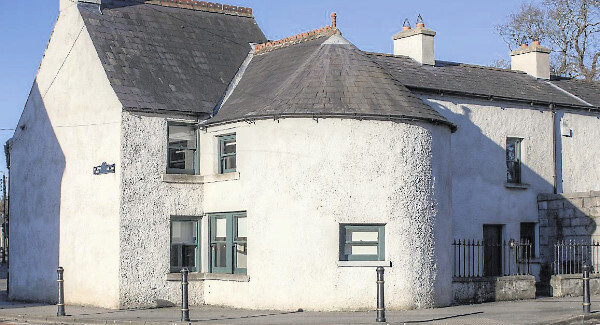
The house is tucked away at the end of the main street and is one of three adjoining gatelodge buildings — known separately as The Round House, The Pottery and The Gate House. They are on the grounds of the magnificent Palladian Castletown House, described as one of the most important 18th century estates in the country with miles and miles of walkways open to the public.
Having arranged to meet the house manager at a certain time to collect the keys, we stepped back in time as we entered the more than 200-year-old bow-fronted house.
Claw-footed armchairs, a large fireplace guarded by two porcelain King Charles dogs, and a mahogany writing bureau all create an atmosphere of times past. The fact there was no TV screen in the corner also helped. The kitchen had a Belfast sink and an old style dresser – as well as cooker, oven, microwave, dishwasher and fridge.
It was a lovely touch to have a pint of milk in the fridge and a packet of biscuits on the table. All of the doors have the old style latches which we had to show the girls how to use to prevent an inadvertent lock-in. There is also a downstairs shower room with a toilet.
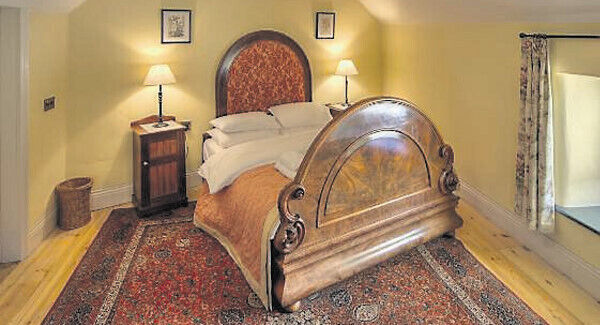
Upstairs is the real showstopper with high ceilings and exposed beams. The master bedroom was spacious with sparse furnishings to remind you of more austere times.
Next door was a twin room where the two older girls slept, complete with a bookcase, and through their room was another double bedroom where our youngest slept — declaring herself a princess sleeping in a tower.
Crisp white bedding throughout and extremely comfortable mattresses made for a great night’s sleep. There is also a family bathroom upstairs with a bath.
Last year during a storm we lost our electricity. After initial screams and tears from the smaller one, we soon found some torches and candles and talked about what is was like to live in a time with no electricity and how people played cards, or games, or read books or simply just talked and played music as entertainment.
So we got out the board games and played by candle light and later went to bed by torch light and they loved it.
Staying in the Round House was a chance to relive this experience and try and encourage the small people in my life to love history as much as I do.
In Ireland our history surrounds us, around every bend in the road is the chance to see a round tower, the crumbling ruins of a castle or a statue commemorating a historical figure or moment in time that connects us to our forefathers and the past decisions that shape our present.
So we decided to use the opportunity of staying in this historical home as a chance to plunge ourselves into history. By day we used Cellbridge as a base to go visit the National Museum and its magnificent gold exhibition and at night we played Scrabble or cards.
The Natural History Museum is also free as is the National Gallery. I have to admit that we did bring the laptop and played a DVD before bedtime as a total technology detox might have been too hard on all of us.
Cellbridge itself is just 12 miles from Dublin and although obviously in the commuter belt with a population of more than 15,000, it still manages to maintain an almost village-like feel to its main street with hanging baskets overflowing with flowers and a friendly atmosphere.
There are a range of restaurants, not only the typical Indian, Chinese and Italian fare almost a staple of every town in Ireland, but also a Japanese noodle bar.
We ate in The Village Inn in the centre of the town on both nights of our stay. We were there mid-week and both nights the bar and restaurant were bursting at the seams with a range of single people, families and groups of friends all enjoying the food and the atmosphere.
The Village Inn is also steeped in history, being the old site of Carberry’s Brewery, where Arthur Guinness brewed his first beer in 1709.
Kildare has loads of things to do whether you are interested in history or not. There is Maynooth Castle, Leinster’s largest maze in Prosperous, Mondello racing driving school, Japanese Gardens and National Stud and of course the Kildare Village shopping outlet.
On the way home we opted for the Newbridge Silverware Visitor Centre and the Museum of Style Icons where we got to sit in one of the cars from the musical Grease.
Whether you simply soak up the sights of Kildare or use the house as a base to go into Dublin, Castletown Round House in Cellbridge offers you a chance to take a step back from the daily routine. The Landmark Trust is an organisation well worth supporting to make sure these amazing properties are there for the next generation. There is no better way to keep our heritage alive then to live it – or live in it.
CONNECT WITH US TODAY



Be the first to know the latest news and updates