Pousada’s the way for historical luxury in Portugal
France has its chateaux, Spain its paradores and the UK and Ireland have their castles, but when it comes to sheer breadth of options, we’ll warrant it’s difficult to best Portugal’s pousadas. What, I hear you ask, as butter melts into your toast, are pousadas?
Many hundreds of year ago, Portugal, like most countries in Europe, was dotted with monasteries and convents, palaces and castles — large structures that housed either the religious or the aristocratic (and sometimes, of course, both simultaneously).
As the decades and centuries passed, natural wastage and disrepair; abandonment and pillage; disownership and disentitlement ensured that gradually, once-magnificent splendour fell into decay.
These former status symbols became something else entirely — a mixture of figments of the imagination and remnants of a glorious bygone era of wealth and a strict class system.

As the decades passed, and religious orders disbanded or disappeared, and various echelons of the aristocracy diminished, it came to a point where the Portuguese government was either going to allow history and heritage to die or do something to rehabilitate each.
Come the 1940s, the government (in actuality, Minister Antontio Ferro) created an office known as Pousadas of Portugal, with a strategy to preserve those buildings that hadn’t fallen into such a state of disrepair that it was financially imprudent to refurbish them.
Initially, the idea was to work on smaller structures, and to focus on the local cuisine, but with such preservation came another plan; the conversion of the much larger properties into luxury hotels.
A further development occurred in the 1950s, when a new designation (Historical Pousadas) gathered together the remaining convents, monasteries and castles and, within a few decades, a new form of heritage tourism was formed.

By 1995, what was slow to take off was given an international push by the American Society of Travel Agents (ASTA) and the renowned Smithsonian Foundation, which collectively awarded Pousadas of Portugal their annual prize — awarded to those institutions around the world that proactively promote the protection of cultural and environmental heritage for the purposes of tourism.
Which is why, last October, I found myself in Alentejo, Portugal’s largest region, and one that is overtly traditional and diverse in heritage, food; wine and history.
The first stop on our four-day visit is Beja, a pretty and historic city and municipality which dates back to 48 BC, when it was founded by no less a personage than Julius Caesar.
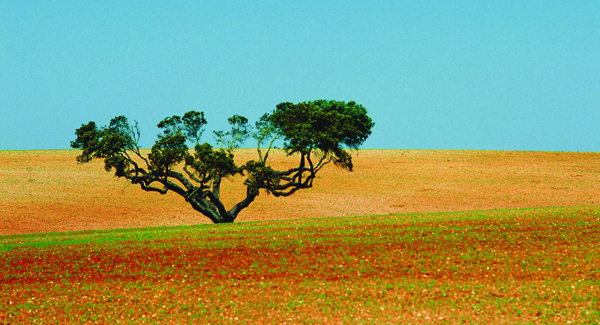
Though small (population less than 37,000), it is right in the centre of a regional area known as Planicie Dourada (Golden Plain), so named because of the virtually endless surround of wheat fields.
We checked in at Pousada Convento de St Francisco Beja, the first of five pousadas on our itinerary, and were immediately we’re struck by its impressive size.
Situated in the heart of the city, the Pousada de Beja (as it is abbreviated) is equal parts tourist refuge and history lesson — each arrive in the almost daunting spaciousness of neck-straining, vaulted ceilings and open spaces that come straight out of an episode of Game of Thrones.

Yet, there’s a brilliant sense of the here and now to it all; while many of the original features of the convent’s 800-year history have been retained, the rooms and restaurant are of 21st century stock.
The only groan is that the thickness of the convent walls makes in-room Wi-Fi impossible, but this is trivial compared to the architectural delights. Our rooms were once monks’ cells, but now are lessons in smart hotel design.
The following morning we leave Beja for lunch at Pousada dos Loios, in Évora. A UNESCO World Heritage Site, Évora’s old town centre is amazingly well preserved, is richly architectural, and is still partially fortified by medieval walls; it also houses numerous monuments (including one of the best-preserved Roman temples in the Iberian peninsula).
Pousada dos Loios was built as a convent in the 15th century, and was carefully restored from the mid-1960s onwards. The hotel itself is actually part of the convent’s former cloisters and, of all the pousadas was the smallest and by extension, the most charming.
It also helps that Évora is as picturesque as they come, with many restaurants, bars, narrow winding streets with pretty gift shops and last but not least, Saint Francis Church, which contains one of the strangest sights you will ever see: The small Capela dos Ossos, (Chapel of Bones), is covered (if not decorated), wall-to-wall with human skulls and bones.

Onwards to Pousada Vila Vicosa, which was once a 16th-century convent, and which is now a 39-roomed hotel themed across various topics such as botany, hunting, music, art, astronomy and royalty. Located opposite a humungous Ducal Palace, this particular pousada is a beauty, off the beaten track, and exuding a tranquility that takes some beating.
We wander into the centre of town (a mere few minutes walk away), for a beer in an empty bar and quietly marvel at the opulence. We also toast the Portuguese government for kick-starting such an endeavour and praise the Pestana Pousada Group, a private company that continues its work.
The final day is spent lunching in Estremoz, at the Pousada Rainha Santa Isobel, a 14th-century castle that is so sumptuous (think an abundance of velvets, silks, antiques) it’s almost overpowering, and then travelling on to the small town of Crato, where we stay overnight in pousada Flor da Rosa. We’re not sure whether it was a sneaky ploy on behalf of our hosts, but they kept the best for last.
Flor da Rosa is essentially an historical building (it was once the home of the Hospitallers of the Order of Malta), fused with contemporary architectural style.
The result, designed by Portuguese architect, Carrilho da Graça, is a stunning structure that almost beggars belief, and one that imperceptibly blends old with new.
When we hear that one of the luxury suites is located in the building’s medieval tower we experience wholly unnecessary pangs of guilt and envy.
There’s a lot of ground to cover in the Alentejo (especially over a four-day period), but you might not wish to have such a whistle-stop tour of the region as we had.
If I were heading back, I’d visit two pousadas: Flor da Rosa in Crato (because it’s so flipping lovely), and Pousada dos Loios, in Évora, which ticks all the boxes in the charm and heritage town departments.
Something of an eye-opener, and very much a window to an interior region of a country we would never have considered to visit, Alentejo is just over an hour or so from Lisbon, Faro, and the Algarve.
The next time you’re thinking of Portugal for a holiday, you’d be well advised to avoid the usual suspects and say hello to new friends. Castles, convents; palaces and monasteries; heritage; culture; cuisine; history and design, all wrapped up in big bunches of experience and enjoyment. What’s not to love about that?
FLIGHTS: Lisbon and Faro airports are approximately two hours’ drive from most of the pousadas and towns/cities written about here. Car hire is essential.
Wi-Fi: In all of the five pousadas we stayed in, wi-fi is available only in the public areas, due to the sheer thickness of the interior walls.
www.pousadas.pt
www.pousadasofportugal.com