Bologna is so dishy, stylish and charming
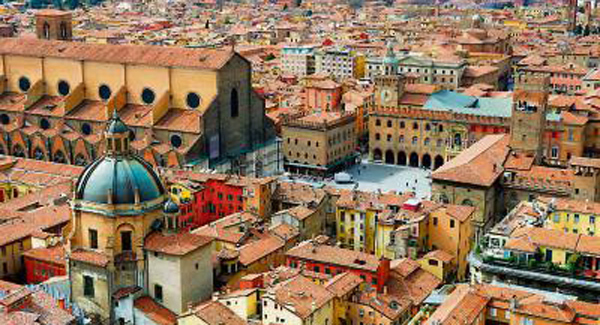
Red bricks, at that. In Italy, Bologna, the capital of Emilia-Romagna, is referred to as âLa Dotta, La Rossa, La Grassaâ, which translates, quite precisely, as âthe educated, the red, the fatâ.
âLa Dottaâ pertains to the cityâs university, which is the oldest in Europe and home to such intellectual greats as Umberto Eco (writer of, among many other works, the cerebral whodunit, The Name Of The Rose); âLa Rossaâ refers to two aspects that Bologna is renowned for: the bricks that most of the cityâs ochre-coloured porticoes and historic buildings are constructed with, and the cityâs long history of left-wing politics. âLa Grassaâ, meanwhile â and keeping strictly in line with the translation â reflects the, er, weight of Bolognaâs culinary history, one which is based on rich meat dishes and creamy pasta sauces. More about food later.
Located 50 miles north of Florence, Bologna is as well-known for its signature ragu dish (known as Bolognese all over the world) as it is for its miles of portici. These covered terracotta arcades lend the city a magnificent air, so for now letâs bask in the knowledge that even by its brick work Bologna is a vibrant, independent and dynamic contrast to Italyâs exceptionally popular tourist cities of Rome, Venice and Florence.
For some reason Bologna is viewed in certain quarters as less of a tourist destination than the aforementioned triumvirate. Usually, weâd be concerned about things like this, but in the case of Bologna it suits us fine that we donât need to shoulder our way through crowds of tourists in order to see and do things. In point of fact, you rarely see throngs of tourists in the city; and one of the best aspects about it is that â unlike other European cities we could mention â the centre is well and truly lived in.
It helps, of course, that thereâs a famous university here (the first in Europe â see Five Things Not To Miss), and this alone tells you to expect a lively nightlife. The old town part of Bologna is centered in and around the linked central squares of Piazza Maggiore and Piazza del Nettuno â the accumulated cobbled and medieval square footage forms the focal centre like no other city youâve seen. Indeed, the twin squares â jam-packed for most of the day and night â appear to function as much as a shopping centre (of sorts) as a natural social network.
It is this same medieval centre, however, that is the clincher for the visitor. Incredibly well preserved, there are gorgeous old churches and small (and also old!) palaces everywhere you turn. One of the finest palaces youâll surely ever set eyes on is the 15th century Palazzo Comunale. Located off Piazza Maggiore, the façade of the Comunale is graced with a huge statue of Pope Gregory XIII. Meanwhile, the interior courtyard leads into the palaceâs upper rooms, some of which host fine art works and intricately designed furniture (and some others, in typical pragmatic Italian style, local government offices).
All of this sightseeing and swanning around palaces might be an important cue to put some food into your moaning stomach, and if thatâs whatâs needed then youâve come to the right city. You might well wonder, however, why quite a few shops donât open at lunchtime. Itâs because Bologna takes its food very, very seriously, and as we noted at the start, itâs all about the food.
Not only did the cityâs cooking forefathers and mothers create Spaghetti Bolognese but they also concocted tortellini (invented, according to legend, in order to replicate the belly button of the Roman goddess Venus). Interesting fact: youâll rarely see locals tuck into Spag Bol (too much of a good thing?), but tortellini remains a firm favourite with stuffing that runs the foodie gamut from nutmeg to veal. Other local specialties (as well as those from nearby Emilia-Romagna region, which has both Parma and Modena within its reach) include gnocci and pasta in soup stock. And speaking of local specialties, we canât finish without mentioning the wine, and how reasonably priced it is. From sturdy Sangiovese reds (from the coastal hills at Rimini) to tangy Malvasia whites (from in and around the Parma region), there is little that isnât more and more-ish.
Which is, in essence, what Bologna is, too. Relaxed, away from the tourism beaten track, informal, stylish, cute, charming, historical, architecturally wonderful, full of beans (and Bolognese)? Yes, please, weâll have some more (and more) of that if you donât mind.
If youâre on a budget, you could do a lot worse than heading to one of the most financially friendly (and atmospheric) areas. Via Zamboni â as narrow as a pipe cleaner, and lined with cafĂ©s and bars â is cheaper than other city streets because itâs close to the university. And universities mean students, who canât really afford pricey places in which to eat and drink.
Bolognaâs primary landmarks â the sky-scraping Torre Garisenda and Torre degli Asinelli â are all that remain of the hundreds of towers that once surrounded the medieval city. If you have the inclination as much as the energy, you can climb Torre degli Asinelli, although be duly advised: itâs much taller than it looks from the ground.
Once the cityâs university, this building was constructed in 1565. You can stroll across the main courtyard or you can attend lectures. Thereâs also a beautiful library in the upstairs section â and Teatro Anatomico has a wonderfully preserved medical dissection theatre.
There are, let it be said, some truly awe-inspiring examples of religious architecture, and this 14th-century church is one of the best weâve seen. Originally intended to be larger than St Peterâs Cathedral in Rome (plans ditched through poor budgeting â so whatâs new?), this is now noted for two main features: the superb sculptural work by Giovanni de Modena of Madonna and Child, and an astronomical clock.
Very fine buildings surround it, the famous novelist Henry James described it as âa mighty square, with the Middle Ages and the Renaissance all frowning and smiling togetherâ, and itâs the throbbing heart of Bologna. The piazza of all piazzas from which to watch the world go by?