A world beyond the Big Apple
The neon of Times Square might be as relentless as the line of yellow taxis bouncing down Second Avenue at 2am on a Tuesday, but the majority of New Yorkers donât buy into those old songs and myths about their town; they need their beauty sleep as much as anyone else.
Now, thanks to a city-wide tourism campaign, visitors are being encouraged to look beyond the tired old rip-off that is Midtown Manhattan. The diverse neighbourhoods of Upper and Lower Manhattan, along with the outer boroughs of Brooklyn and Queens, offer a real alternative for the discerning visitor. Even the much-maligned Bronx and Staten Island are forging their own identities.

In 2012, Staten Island, a disconnected land mass south across the bay from Lower Manhattan, was swamped by Hurricane Sandy. But in the past couple of months, the City Council finally approved the construction of a true tourist attraction: a 625-foot-high Ferris wheel, the worldâs largest. An accompanying, 200-room hotel and the cityâs first outlet shopping centre will reinvigorate the North Shore. New York schoolchildren will ride the wheel for free for the first year, offering uninterrupted views of Manhattan and Brooklyn.
âOver two million tourists take the (free) Staten Island ferry and ... turn right around and get back onto the ferry,â local councilwoman, Debi Rose, said after the vote. âNow, they have a reason to get off of the ferry and we will no longer be the forgotten borough.â
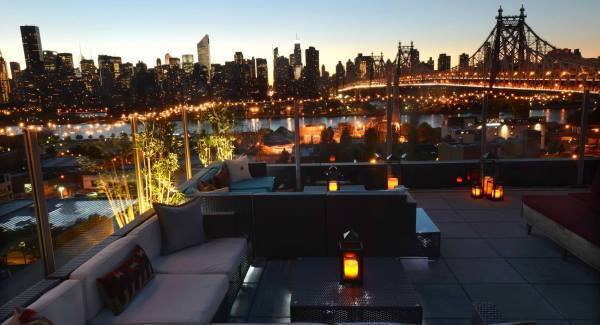
New York has placed its future back in the hands of the neighbourhoods and the dynamism of citizens. The transience of commercial activity around Wall Street and Times Square renders those areas hollow when the shutters go down. But a simple commute across the East River, to Long Island City in Queens, offers the more adventurous visitor two advantages: value for money and a free view of the Manhattan skyline.
A quick subway trip (three stops on the 7 train) leaves behind the brutality of Times Squareâs hustle and bustle. Waiting on the other side is the quickly evolving Long Island City, which, in five years of frenzied construction, has seen an increase in its hotel count from zero to 25, with the 26th nearing completion.
New Yorkers squeezed out of Manhattan have also been drawn into new residential spaces towering above the streets formerly dominated by Italian immigrants. As a result, many excellent new eateries have popped up, while the thriving arts scene that predated all this development is led confidently by the Museum of Modern Artâs more experimental offshoot, MoMA PS1, a former school and now a trendy headquarters for installation and live performance. One of the many new establishments on Vernon Boulevard is a quintessentially neighbourhood bar, Woodbines, which was opened earlier this year by West Cork-born Pat Burke. Craft beer, and fine food with a hint of Irish influence, is their mantra.
âOur main focus was not to be too complicated,â says manager, Carla Nicdao. âThere are so many young families in this area, who canât afford to live in Manhattan, and weâre trying to adjust to the way the neighbourhood is changing. Itâs extremely safe and itâs clean, but the arts scene is very strong. Thereâs more to the place than high rises.â
Itâs the view to Manhattan that is the chief selling point of hotels like the Wyndham Garden and the Z NYC, the latter a textbook, urban-chic location without the urban-chic price tag. Their market is the discerning customer who is no longer willing to be hurried in and out of shoebox rooms for the cost of a monthâs rent in the Lower East Side.
Speaking of which, Manhattan canât even lay claim to a real Little Italy anymore. For that, you must travel to Arthur Avenue, in the Bronx, not far from the world-famous Bronx Zoo and the picturesque Jesuit University, Fordham. Arthur Avenue boasts the sort of real New York pizza slice long ago forsaken by the chain restaurants. But its true gem is its large indoor market, which bears more than a passing resemblance to the Old English Market in Cork City.
The âmayorâ of this market is the passionate Dave Grecco, whose Italian immigrant father set up stall there and has now retired. âWe have no yuppies in the Bronx,â Grecco boasts, after delivering impossible quantities of cured meats, cheeses and pasta dishes to the table.
What the Bronx does have is the most famous baseball team in the world, the New York Yankees, and the lovingly preserved cottage in which Edgar Allen Poe lived in the mid-1800s. It survives as a public museum, on a large green space on the Grand Concourse, the architectural marvel of a street that runs north-south in the West Bronx. Even the most jaded Manhattanite accepts that tourists choose to be overwhelmed by the big-city chaos. Part of the appeal is the buzz and the intensity. Thankfully, just one stop north of Times Square, in the Upper West Side, is a rare example of an independently-owned hotel that offers substance behind the smile. The Beacon Hotel, adjoining one of the cityâs best live venues, the Beacon Theater, has luxurious and functional accommodation with self-catering kitchenettes that allow guests to cut costs on dining-out. The chance to immerse yourself in a true New York neighbourhood is what really sets the Beacon apart.
Aer Lingus flies twice daily from Dublin to New York and currently three times weekly from Shannon to New York.
From Apr 2014, additional frequencies will be added on the Shannon to New York service with up to six flights weekly.
Aer Lingus operates from user friendly Terminal 5 at JFK, known as JetBlueâs T5.
This allows for seamless same terminal connections with JetBlue to 40 destinations in North America. Fares start from âŹ229 each way, including taxes and charges.
Neighbourhood x Neighbourhood is an initiative by NYC & Company. It is designed to increase visitation, support across the five boroughs of New York City.
* See nycgo.com/neighborhoods for more information.