Abu-Dhabi-do look beyond the excess
THE plane banked hard to the right as it started its descent. I pressed my face hard against the elliptical pane of my window seat, as I peered beneath the wing. I couldn’t see much except for an ocean of sable desert, darker than the sky.
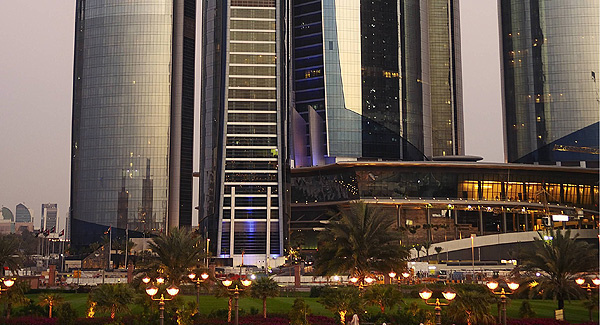
After a few minutes a scattering of lights appeared, tiny little pin pricks in the liquid sheet of black. Then suddenly, a bright glow erupted, first formless, then mushroom-shaped and in a moment, the city became visible, brilliant bright lights of downtown Abu Dhabi feeding into a long radiant strip, flanked by mammoth hotels, mega structures, and stunning wealth.
Such an assault on my senses forced me to blink and wonder had I arrived in Las Vegas.
I found it almost impossible to believe as I leafed through the glossy in-flight magazine that less than half a century ago, this was a sleepy, sun-scorched landscape occupied by pearl divers, fishermen, and traders who worked 16 hour days for a pittance. But in the meantime, they found oil, and what was once a drowsy village is now a tax-free business haven and world capital of glittering excess.
I was still rubbing my eyes with wonderment as the plane landed and we were welcomed into an airport shopping emporium where seductive goods like Gucci bags and Cartier watches entice, not to mention the 1 kilogram chunks of solid gold.
Abu Dhabi is like no other place on earth. This is the world capital of living large; the air practically crackles with a volatile mix of excess and opportunity. It’s the kind of place where diamond-encrusted mobile phones do brisk business at $10,000 apiece; where millions of people a year fly in just to go shopping. In fact, Abu Dhabi now attracts more tourists than the whole of India.
And its list of things to see and do is as vast as the wealth it has accumulated.
Take, for example, the Sheikh Zayed Grand Mosque. This is one of the biggest tourist attractions in the city and can house a whopping 41,000 worshippers, features 82 separate domes, umpteen 24 carat gold chandeliers and the best bit? It’s free of charge and easy to get to. It’s hard to miss, actually, and any of the red buses will take you there.
Twenty 20 minutes away is the Emirates Palace and this is another monstrosity — or feat of engineering — you won’t want to miss. Even though it’s essentially just a hotel, the sheer size and beauty of it makes it a must-visit. There are regular free exhibitions here too, and it’s just as well because one needs national debt level wages to even consider a stay here. But if you’re feeling flush, the afternoon tea is an experience in itself.
Just a few blocks away is the Corniche — a stunning promenade right in the heart of the city and ideal for leisurely walks or cycles (you can rent bikes here). The beach is combed for litter every morning and evening and a cleaner one I’m yet to find. Toilets, sun loungers, and basic facilities are all top notch and in essence, it’s those little details that sum up this city of head-spinning wealth.
It is here, every year that the Abu Dhabi triathlon is held while the F1 Grand Prix is another global sporting money-spinner, with week-long outdoor concerts and exhibitions.
Abu Dhabi is the largest of the seven sheikhdoms that make up the UAE and it occupies more than 80% of the land area of the country — startling in itself because it’s just smaller than Ireland.
If lounging and lazing isn’t your thing then fret not because for the young — and young at heart, — Yas Waterworld is your next stop. Set across 15 hectares of land the park offers 43 rides, slides and attractions, one of which is the world’s longest, fastest tornado ride. To see the locals rip through tunnels and down slides, fully-clothed in burkas, is as side-splitting as it is odd!
Admittedly, I got lost, but that shame wasn’t anywhere near as bad as jumping a queue of boys half my age for the slide.
If you’ve still the energy for adventure then take a taxi to Ferrari World about 40 minutes outside the city where the Grand Prix is held and where they’ve constructed — that word again — an enormous (and that!) museum to coincide with the race track itself. There’s the world’s largest indoor theme park and the fastest roller coaster, but it’s an educational centre as much as anything else. Jump into the pit lane with Fernando Alonso, take a scenic drive through Tuscany with Enzo himself, saddle up in the pit lane or jump in the G-Force and feel your face being stretched back around your head as you’re launched 62 metres into the sky. It is here that I learnt the true meaning of the term, breakneck speed.
This gave me a headache and an empty belly so when I saw an ad for a Desert Safari — with food included — I called up the number and before I could take a breather, I was being whisked into the middle of nowhere for an ‘authentic Arabian experience’.
Two hours later and I’m in a land a world away from megaliths and hummer trucks. After a quick briefing — “wear your seatbelt no matter what”, we were in amongst the rolling dunes in 4WD jeeps, ripping down them so fast I had to check was our driver slumped dead over the wheel!
After a half an hour of trying to kill us we pulled up at a desert camp isolated from all life, or so we could be forgiven for thinking. Here, we finally slowed down and in amongst intricately detailed carpets and cushions, we sat around and ate the most sensational barbecued food imaginable. Shawarmas, camel meat, goat, beef, falafels. I wasn’t sure how or in what order it was supposed to be consumed but it didn’t matter. Pile it up, chow it down.
In truth, the opulence does get overwhelming but there are parts of town that offer tourists a throwback to the city that was here before. In the old town, I went and haggled over prices for the sake of it, ate curry from a plastic bag at the spice markets and bought trinkets.
The best time of the year to visit is between November and April, when the weather is coolest. The rest of the year you’re more likely to be running from one air-conditioned environment to the next instead of getting out and exploring.
From Cork you can fly with KLM via Amsterdam to Abu Dhabi for around 800 return. Etihad are another option at a similar price and fly from London. Both Etihad Airways and Aer Lingus operate a direct flight from Dublin and will cost slightly less, around 650.
Where to start. Malls the size of towns with every single high street shop you’d expect to see is pretty much standard here. There are around 12 oversized ones with the Marina Mall being one of the best, situated very close to the Emirates Palace where prices range from mid to expensive. You could easily spend a day in most of them. There are ice rinks, hair salons and bowling allies, not to mind an infinite number of eateries and coffee shops and massage therapists to soothe your aching feet. The Abu Dhabi mall has around 25,000 visitors a day!!
April to September gets oppressively hot with temperatures up around the 40s after which it cools down then — but the lowest it reaches is the mid-20s in January.